

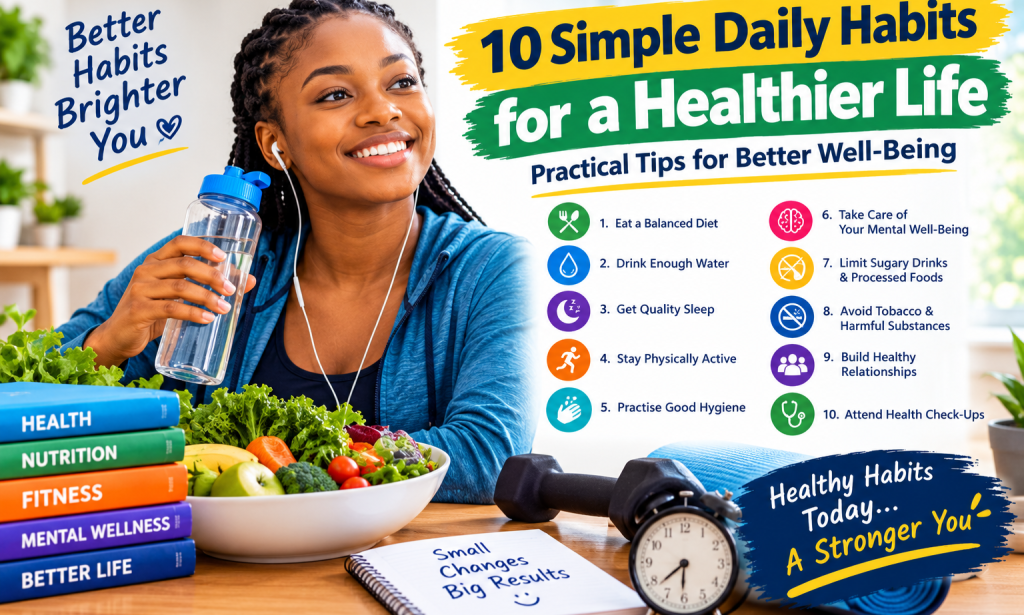
10 Simple Daily Habits for a Healthier Life: Practical Tips for Better Well-Being
Introduction
Good health is one of the most valuable parts of life. It affects how we learn, work, interact with others, and enjoy our daily activities. Yet, many people believe that staying healthy requires expensive products, complicated routines, or major lifestyle changes.
The truth is that simple daily habits can support your overall well-being. Drinking enough water, eating balanced meals, getting sufficient sleep, staying physically active, and managing stress are practical steps that many people can incorporate into their routines.
Although no single habit guarantees perfect health, making healthier choices consistently can help you feel better and support your body over time.
In this article, we explore ten simple daily habits that can help you build a healthier lifestyle without making your routine unnecessarily complicated.
1. Eat a Balanced Diet
Food provides the energy and nutrients your body needs to function properly. A balanced diet includes a variety of foods, such as fruits, vegetables, whole grains, beans, eggs, fish, and other sources of protein.
Try to include different food groups in your meals rather than relying on only one type of food. For example, a meal containing rice, beans, vegetables, and fish can provide a useful combination of carbohydrates, protein, fibre, vitamins, and minerals.
Fresh, frozen, and appropriately preserved foods can all contribute to a balanced diet. Choose foods that are accessible and affordable in your area.
You do not need to change everything at once. Start by adding a fruit or vegetable to a meal or including a wider variety of nutritious foods throughout the week.
2. Drink Enough Water
Water supports several important bodily functions, including temperature regulation, digestion, and the transportation of nutrients.
Your fluid needs vary depending on factors such as age, activity level, weather, and health conditions. Hot weather and physical activity can increase the amount of water you need.
Keep safe drinking water available and drink regularly throughout the day. Water is often a good choice for everyday hydration, although other drinks and foods can also contribute to fluid intake.
Avoid assuming that everyone needs exactly the same amount of water. Pay attention to your body's needs, and follow medical advice if you have a condition that requires you to limit fluids.
3. Make Sleep a Priority
Sleep is essential for physical health, memory, concentration, and emotional well-being. Insufficient sleep can make it harder to focus, learn new information, and manage everyday responsibilities.
Develop a consistent bedtime and wake-up time where possible. Create a comfortable sleeping environment and reduce distractions before bed.
If using a phone at night keeps you awake, try setting it aside before your intended bedtime. A quiet routine, such as reading or preparing for the following day, may help you relax.
Sleep requirements vary by age. Teenagers generally need around eight to ten hours of sleep each night, while most adults need at least seven hours.
If you regularly struggle with sleep or feel unusually tired despite getting enough rest, consider seeking advice from a qualified healthcare professional.
4. Stay Physically Active
Regular physical activity supports heart health, muscle strength, mobility, and mental well-being.
Exercise does not always require a gym membership or expensive equipment. Walking, dancing, cycling, playing a sport, gardening, and other activities can help you move more throughout the day.
Choose activities that suit your ability, interests, and circumstances. If you have been inactive, begin gradually and increase your activity as your fitness and comfort improve.
Students and people who spend long hours sitting can also benefit from standing up, stretching, or taking short movement breaks.
The goal is to make physical activity a regular and enjoyable part of your life rather than treating it as a punishment.
5. Practise Good Personal Hygiene
Good hygiene helps reduce the spread of many germs and supports everyday health.
Wash your hands with soap and clean running water, particularly before preparing or eating food and after using the toilet. If soap and water are unavailable, an appropriate alcohol-based hand sanitiser can be useful when hands are not visibly dirty.
Bathe regularly, keep clothing clean, and maintain oral hygiene by brushing your teeth with fluoride toothpaste.
Food safety also matters. Wash produce with safe water, cook foods properly, and store perishable items safely.
These small actions can help protect you and the people around you from preventable illnesses.
6. Take Care of Your Mental Well-Being
Health includes both physical and mental well-being. Schoolwork, work responsibilities, financial pressures, and relationship difficulties can sometimes become overwhelming.
Make time for activities that help you relax, such as listening to music, reading, spending time outdoors, practising a hobby, or talking with someone you trust.
Breaking large tasks into smaller steps can also make daily responsibilities feel more manageable.
Remember that experiencing stress does not mean you have failed. If feelings of sadness, anxiety, or stress persist or interfere with everyday life, consider speaking with a qualified healthcare professional or counsellor.
Seeking support is a positive step toward caring for yourself.
7. Limit Excessive Sugary Drinks and Highly Processed Foods
Sugary drinks and some highly processed foods can contain large amounts of added sugar, salt, or saturated fat. Consuming them frequently in place of more nutritious foods may make it harder to maintain a balanced diet.
You do not need to label foods as entirely good or bad. Instead, focus on your overall eating pattern and make room for a variety of nutritious options.
For example, you might choose water more often than sugary drinks or prepare a simple homemade meal when practical.
Small, sustainable changes are usually easier to maintain than extreme rules that are difficult to follow.
8. Avoid Tobacco and Harmful Substance Use
Avoiding tobacco is one of the important steps you can take to protect your health. Tobacco use increases the risk of serious conditions, including heart disease, lung disease, and several types of cancer.
Avoid exposure to tobacco smoke where possible. It is also important to use medicines only as directed by a qualified healthcare professional and to avoid misusing prescription or other potentially harmful substances.
If you are concerned about a substance affecting your health or someone else's well-being, seek advice from a trusted healthcare professional.
Making informed choices and getting appropriate support can help protect your long-term health.
9. Build Healthy Relationships and Social Connections
Positive relationships can provide encouragement, companionship, and emotional support. Friends, family members, classmates, colleagues, and community groups can all contribute to a sense of belonging.
Make time to communicate with people you trust. Listen when others speak, respect personal boundaries, and seek help when you face challenges you cannot manage alone.
Healthy relationships do not require constant agreement. They involve mutual respect, honest communication, and the ability to address disagreements constructively.
If a relationship consistently makes you feel unsafe or controlled, consider reaching out to a trusted person or appropriate support service.
10. Attend Recommended Health Check-Ups
Preventive healthcare can help identify certain health concerns before they become more serious. Depending on your age, medical history, and circumstances, this may include routine dental care, recommended vaccinations, blood pressure checks, and other appropriate screenings.
Do not wait for severe symptoms before seeking medical advice. If you experience symptoms that concern you, a qualified healthcare professional can help assess the cause and recommend suitable care.
Avoid relying on unverified online claims or taking medicines without appropriate guidance.
Health check-ups should be based on individual needs and established medical recommendations rather than unnecessary tests or products promoted on social media.
Conclusion
A healthier life does not have to begin with dramatic changes. Simple habits, including eating balanced meals, drinking enough water, sleeping well, staying active, practising good hygiene, and caring for your mental well-being, can support your overall health.
The most useful approach is to choose habits that fit your circumstances and maintain them consistently. You can start with one small improvement today and gradually introduce others as they become part of your routine.
Remember that healthy living is not about achieving perfection. It is about making informed choices, listening to your body's needs, and seeking professional care when necessary.
Start small, stay consistent, and make your well-being a priority.


You must be logged in to post a comment.