
Have you ever experienced a minor health problem and immediately wondered what you could find in your kitchen to help?
In many Nigerian homes, home remedies are part of everyday life. From drinking lemon water for a cough to preparing herbal tea for other common complaints, people have passed down different remedies through generations.
Sometimes, these practices come from personal experience. Other times, they are simply traditions people have grown up with.
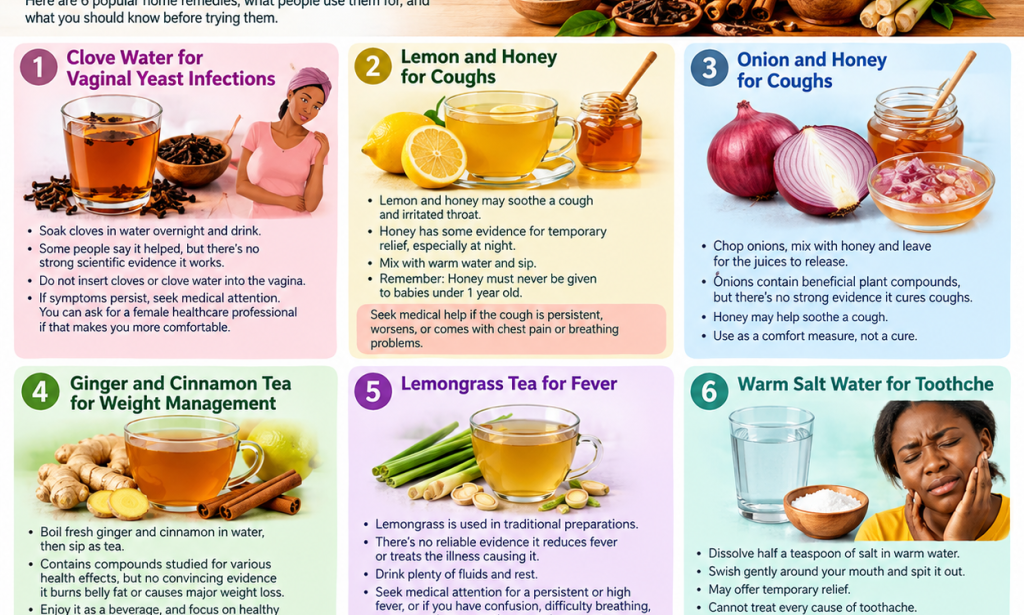
Today, let's explore six popular home remedies, what people use them for, and what you should know before trying them.
1. Clove Water for Vaginal Yeast Infections 🌸
Vaginal yeast infections are a common concern among women. Unfortunately, some women feel uncomfortable discussing their symptoms with healthcare professionals, particularly when they have to consult male doctors.
This discomfort can sometimes make seeking help difficult.
One home remedy people talk about is clove water. The preparation involves soaking cloves in water overnight and drinking the infused water.
Some people have shared testimonies claiming that this remedy helped them. However, I haven't tried it personally, and no reliable clinical evidence shows that drinking clove water treats vaginal yeast infections.
Cloves contain eugenol, a compound studied for its antimicrobial properties, but laboratory findings do not prove that clove water cures an infection in the human body.
A word of caution: Do not insert cloves, clove water, or other homemade preparations into the vagina. They may irritate, and relying on them could delay effective treatment.
If you experience itching, unusual discharge, soreness, or burning, remember that these symptoms can have several causes. A healthcare professional can help identify the problem and recommend appropriate treatment. You can also ask to see a female healthcare professional if that would make you more comfortable.
2. Lemon and Honey for Coughs 🍋🍯
A cough can be uncomfortable, especially when it interrupts your sleep.
One simple home remedy people use is lemon water. Some also combine lemon with honey to make a soothing drink.
Honey has some evidence supporting its use for temporary relief from coughing, particularly at night. Warm lemon water may also soothe an irritated throat and help maintain hydration.
How people use it: Mix a little honey and lemon juice into warm water and sip it.
Remember that honey must never be given to babies under one year old.
A persistent or worsening cough, breathing difficulties, chest pain, or coughing up blood requires medical attention.
3. Onion and Honey for Coughs 🧅
Another traditional remedy involves onions and honey.
Some people chop onions, mix them with honey, and leave the mixture to release its juices before consuming a small amount.
Although onions contain beneficial plant compounds, there is insufficient scientific evidence to establish that onion-and-honey mixtures cure coughs. Honey itself may help soothe coughing.
If you try this mixture, treat it as a comfort measure rather than a cure, and seek medical advice when necessary.
4. Ginger and Cinnamon Tea for Weight Management 🫚
Have you heard people talk about ginger-and-cinnamon tea for belly fat?
This combination is popular among people looking for simple ways to manage their weight.
To prepare the drink, some people boil fresh ginger and cinnamon in water, allow the mixture to steep, and sip it as tea.
Ginger and cinnamon contain compounds that researchers have studied for various health effects. However, there is no convincing evidence that drinking this tea specifically burns belly fat or produces substantial weight loss.
You can enjoy it as a beverage, but sustainable weight management generally depends on your overall eating habits, physical activity, sleep, and other health factors.
Avoid consuming excessive amounts of cinnamon, particularly cassia cinnamon, because its coumarin content may harm the liver.
5. Lemongrass Tea for Fever 🌱
Lemongrass is used in traditional preparations in different parts of the world. Some people boil its leaves to make a herbal tea, which they drink when feeling unwell.
However, there is insufficient reliable human evidence that lemongrass tea reduces fever or treats the illness causing it.
If you have a fever, drink enough fluids and rest. You should not rely on lemongrass tea to bring a fever down or replace appropriate treatment.
Seek medical attention for a persistent or high fever, or if you experience confusion, difficulty breathing, severe weakness, or other worrying symptoms.
In Nigeria, fever can have several causes, including malaria, so prompt assessment is important when malaria is possible.
6. Warm Salt Water for Toothache 🧂
This is one home remedy that can offer temporary relief in some situations.
A warm salt-water rinse may help soothe the mouth while you arrange dental care.
How to prepare it:
1. Dissolve half a teaspoon of salt in a glass of warm water.
2. Swish the solution gently around your mouth.
3. Spit it out. Do not swallow it.
Remember that saltwater cannot treat every cause of toothache, such as a dental abscess or a severely damaged tooth.
Arrange a dental appointment if you have tooth pain. Facial swelling, fever, or worsening pain needs urgent assessment. Difficulty breathing or swallowing requires emergency care.
Final Thoughts ❤️
Home remedies are part of many families' traditions, and personal experiences can be interesting to share. However, a remedy helping one person does not necessarily mean it will work for everyone.
The goal isn't to dismiss traditional practices. It's to understand their limitations, use safe options where appropriate, and recognise when professional care is needed.
Your health matters. Home remedies may sometimes offer comfort, but they should never become a reason to delay necessary medical treatment.


You must be logged in to post a comment.