
"England girl lucy in Japan"
A British flight attendant's tragic death in Tokyo: a cement bathtub holds the key to her crimes, and 400 videotapes uncover an eight-year-old monster.
Over 400 videotapes and a bathtub filled with cement hold the full truth behind the case of a British flight attendant. She mysteriously disappeared in Roppongi, Tokyo, and after 221 days, her body was recovered from a seaside cave. Even the British Prime Minister had to personally intervene and exert pressure to barely uncover the tip of the iceberg in this case.
This true unsolved case occurred in Tokyo, Japan in 2000, and the protagonist was 22-year-old British flight attendant Lucy. How did this glamorous woman become involved with a cement bathtub in the dark corners of Tokyo? The answer lies in an adventure to pay off her debts.
Lucy and her best friend Louise owed £10,000. To quickly turn their lives around, they quit their flight attendant jobs and flew to Roppongi, Tokyo on 90-day tourist visas to work illegally as escorts. Lucy, due to her striking looks, quickly became a top escort at the club. With her debts nearly paid off and her visa expiring, an invitation from a client became the end of her life.
On July 1, 2000, a male client invited Lucy out, saying he would give her a cell phone. That day, Lucy called Louise three times to let her know she was safe, saying in the last call that she would be home in half an hour, but then disappeared. Louise waited all night but no one came. On the third day after her disappearance, she received a call from an unknown number; the caller lied and said Lucy had joined a mysterious religious practice. Louise sensed something was wrong and, disregarding the risk of exposing her illegal work, promptly reported the case to the police. However, the Japanese police were indifferent, assuming that the disappearance of a foreigner was mostly to avoid deportation, and simply took a brief statement before dismissing her.
Louis then sought help from the British Embassy, and the case finally began to receive attention. Lucy's father, Tim, rushed to Tokyo, printed missing person flyers, offered a reward of £10,000, and held a press conference, attracting international attention. At the time, British Prime Minister Tony Blair was attending the G8 summit in Japan. Blair personally pressured the Japanese Prime Minister, prompting the Tokyo Metropolitan Police Department to mobilize 200 officers for a large-scale search.
The investigation initially stalled. Lucy's new phone and the unfamiliar call both used untraceable prepaid SIM cards. Later, although police received a forged letter from Lucy, attempting to mislead the investigation, handwriting analysis confirmed it was an impersonation.
Just as the case reached a stalemate, the high profile of Lucy's case unexpectedly uncovered a large number of hidden victims. These foreign women working illegally had similar experiences: a Japanese man in his forties, dressed like a wealthy man, invited them, and after drinking his beverages, they fell unconscious. When they awoke, they found themselves covered in injuries, and he made various excuses. Fearing exposure of their illegal employment, they had never reported the incidents before.
The victims' testimonies pieced together the suspect's appearance and provided crucial phone numbers. Police tracked down a man named Joji Orihara, discovering he owned a seaside villa and had purchased seventy prepaid mobile phones in one go, making him increasingly suspicious.
On October 6, 2000, police arrested Orihara and searched his villa. What they found sent chills down the spines of all the officers—over four hundred videotapes were hidden in the basement, labeled with the names and dates of the victims. The victims numbered between 150 and 400 foreign women, mostly shown being assaulted while unconscious. The man wearing a "Zorro" mask in the videos was none other than Orihara. In addition, a diary was found, detailing his crimes over the past eight years, even unexpectedly uncovering an eight-year-old cold case.
In 1992, an Australian woman named Kalita was brought to the hospital already dead, initially diagnosed with food poisoning. However, the videotapes clearly showed Orihara drugging her with chemicals and subjecting her to prolonged abuse, leading to liver failure. He even impersonated her boyfriend when taking her to the hospital. Police re-examined Kalita's liver sample, confirming her murder.
Police also found Lucy's blonde hair, nail fragments, and a roll of undeveloped film from the beach at the villa. But what's puzzling is that there's no footage of Lucy in any of the more than four hundred videotapes. At first, Shiroji Orihara denied knowing Lucy, but later changed his story in the face of physical evidence, saying that he had only taken her for a drive, but he never admitted to the crime.
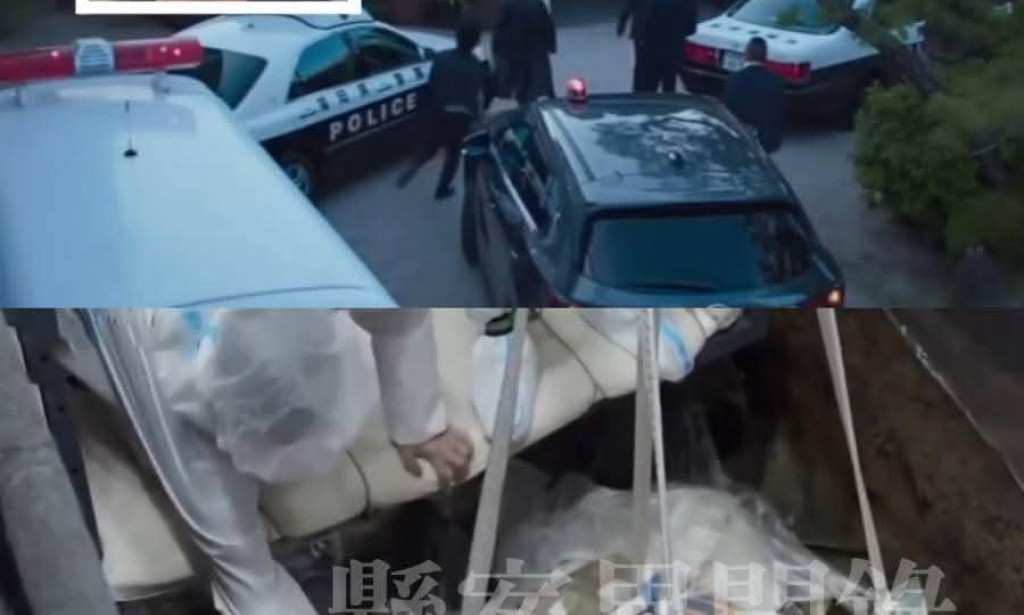
Police interviewed neighbors and learned that on the night Lucy disappeared, there were screams of a woman and the sound of a chainsaw near Joji Orihara's apartment. The next morning, Joji Orihara appeared at the beach, his hands covered in cement. His shopping records also showed that he bought large quantities of cement and sand after the incident. Based on this, police deduced that Lucy had been murdered, and her body was likely buried in a bathtub. Subsequently, police launched a three-month search along the coast of the Miura Peninsula.
On February 9, 2001, police unearthed a 200-kilogram cement bathtub from a sea cave, containing the dismembered body. DNA and dental records confirmed that the body was indeed that of Lucy, who had been missing for 221 days. However, due to the severe decomposition of the body, no drug residue or Shiroji Orihara's DNA could be detected, introducing uncertainty into the subsequent trial.
Shiroji Orihara's true identity was also revealed. His real name was Kim Sung-jong, a South Korean. After experiencing racial discrimination in Japan, he underwent plastic surgery, changed his nationality, and laundered his identity. He inherited a staggering $38 million, which gradually warped his mind, leading him to prey on vulnerable, undocumented foreign women.
In 2001, Shiroji Orihara was indicted. However, the Japanese judicial system heavily relies on direct evidence, and Orihara consistently pleaded not guilty. His defense lawyers argued that the lack of crucial evidence, such as the videotapes related to Lucy and the body, was insufficient. The trial dragged on for seven years.
In the 2007 trial, Joji Orihara was sentenced to life imprisonment for other sexual assault cases and the case that resulted in Kalita's death. However, in the Lucy case, due to doubts about the evidence, the charges were dismissed based on the principle of "presumption of guilt."
Lucy's family appealed resolutely, and the police did not give up. In 2008, crucial evidence was finally found—on the night of the incident, an anonymous distress call was made from Orihara's apartment. The caller said "someone overdosed on drugs," and voiceprint comparison confirmed it was Orihara himself. The call time also perfectly matched the time of Lucy's disappearance.
At the second trial, the phone recording became irrefutable evidence. The court overturned the first-instance verdict, finding Orihara guilty of kidnapping, sexual assault, murder, and abandonment of Lucy's body, sentencing him to life imprisonment without parole. This monster who had committed crimes for eight years finally faced legal punishment.
The case subsequently sparked some controversy. During the trial, Joji Orihara paid Tim 100 million yen as a condolence payment. Tim accepted the money, but his wife and daughter accused him of accepting it, believing it was money stained with blood. Tim explained that the money was used to pay off debts incurred while searching for his daughter, to support his family, and he also established the "Lucy Foundation" to help the families of those who have gone missing or been murdered overseas, and to promote legal reform related to sex crimes.
This case exposed the dark side behind the glitz and glamour of Roppongi, Tokyo, and revealed the vulnerable situation of foreign women working illegally. Justice may be delayed, but it will never be absent. Joji Orihara was ultimately punished, and Lucy's name will be forever remembered through the foundation. This story also reminds us that no matter where we are, we must adhere to safety principles and protect ourselves—behind seemingly prosperous facades, unimaginable dangers may lurk.

You must be logged in to post a comment.