
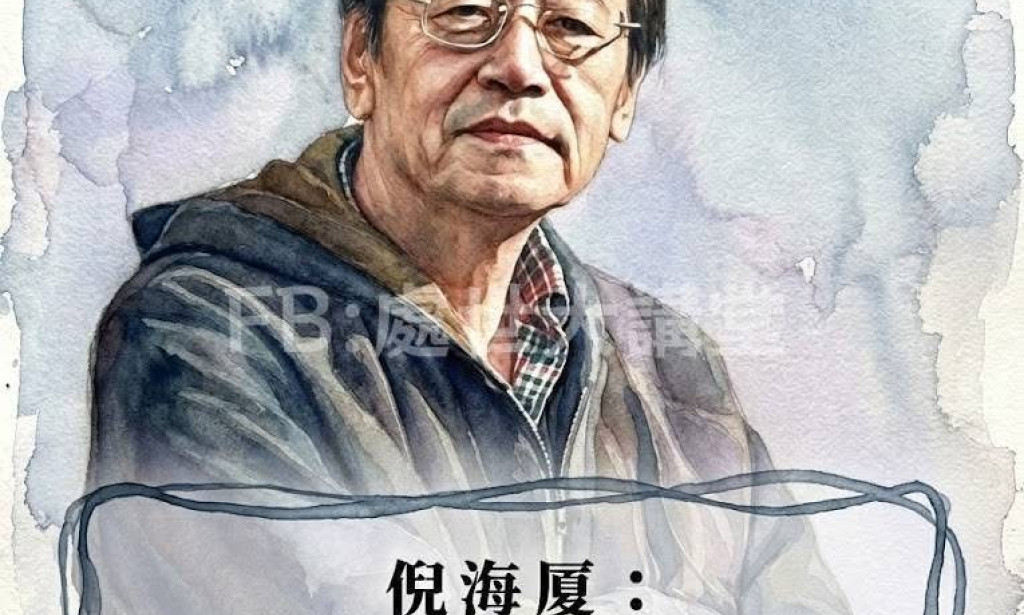
"You can never control your own lifespan. Don't think that just because you exercise regularly, eat very little and healthily, and pay close attention to sleep, you can live a long life. When a person dies is predetermined. Some people maintain their health all the time, but they die in middle age." I think this statement sounds harsh, even a bit discouraging, but it actually reminds us of a very real thing—we can work hard, but we can't necessarily control the outcome; we can be very self-disciplined, but that doesn't guarantee a "controllable life." And this statement, to some extent, is the cruelest and most realistic portrayal of Ni Haixia's life.
Ni Haixia's life actually began as a very ordinary boy. Born in 1954, he grew up in a military dependents' village in Taipei, Taiwan. As a child, he was mischievous, playful, and loved comics and music; he even once wanted to be a rock guitarist. To be honest, if you only read this part, I think it's hard to associate him with labels like "prodigy of traditional Chinese medicine" or "master of fortune telling." The real turning point in his life began with something small but painful—his second sister suffered from chronic menstrual cramps, so much so that she was rolling around in bed in agony. That feeling of helplessness is something many have experienced—watching loved ones suffer, yet being powerless to do anything. It was at that moment that he began to delve into his family's heirloom, the *Medical Mirror*, page by page, experimenting bit by bit.
He wasn't formally trained, had no renowned teachers, just a young man. Through repeated trials, contemplation, failures, and more attempts, he actually managed to concoct a prescription that alleviated his second sister's symptoms. You could call it talent, or you could call it obsession. But I think it's more like a "forced seriousness." After that, he began treating patients in the village, gradually gaining a reputation, but he knew very well—this was far from enough.
He began visiting renowned doctors, reading classic texts, and studying medical principles, while also exploring the *I Ching*, feng shui, and fortune-telling. Many would see these as two completely different paths, but he integrated them, viewing people and illnesses with a "holistic" perspective. I believe this is the key to his later legendary status—he wasn't just learning knowledge, but building his own system.
By the age of 25, he had already gained some fame in Taiwan, with long lines forming outside his clinic every day—people coming for treatment, others for fortune telling. At such a young age, he had already become a "master" in the eyes of others. But he didn't stop there. In 1980, he went to the United States alone to start from scratch, pursuing a doctorate in Traditional Chinese Medicine, completing his studies in just two years. This experience could easily be glossed over in a single sentence, but I believe it was the true "period of solitude"—language barriers, cultural unfamiliarity, lack of resources, all borne by himself.
Later, he founded the Han Tang College of Traditional Chinese Medicine in Florida, teaching, practicing medicine, writing books, and recording courses. His systematic works, such as *Tian Ji* and *Ren Ji*, rapidly spread his influence. He used classical formulas to treat intractable diseases, and many patients deemed "incurable" by Western medicine found a turning point with him. Many people saw him as their "last hope." He was not only a doctor but also a teacher, with students all over the world.
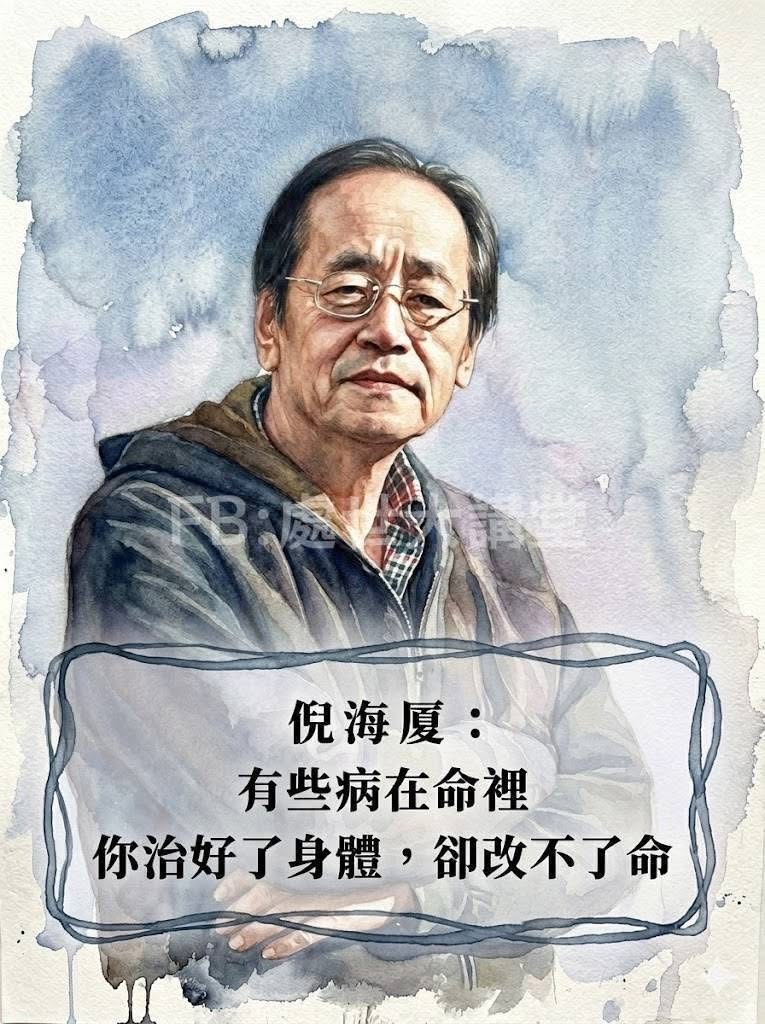
Even more remarkably, he not only treated illnesses but also told fortunes. He once said something in class that I found crucial: "Some illnesses are predetermined; you can cure your body, but you can't change your fate." Many students at the time took this as mere "theory," even as an expression of mystery. But later, we realized this wasn't something he said to others; it was something he had long ago seen through, even foreseen, his own life.
He had repeatedly stated publicly that he would face a major calamity in middle age and wouldn't live past 59. Was this confidence? Or pessimism? I think it was more like a state of "knowing the answer, but unable to change the problem." Someone asked him, since he understood medicine and destiny, why couldn't he resolve it? He simply smiled and said, "The calamity in one's fate cannot be avoided." This statement carries a heavy weight. It's not giving up, but acknowledging the limits.
In his later years, he had already noticed health problems; his liver was failing, and he prescribed medication and tried to regulate it. But I think he knew deep down—some things cannot be changed by effort alone. In 2012, at the age of 59, he suddenly passed away from heart and lung failure. The "ending" he had spoken of countless times finally arrived as predicted.
This story has deeply impacted many people. Logically, it doesn't make sense—why couldn't someone who could save others, tell fortunes, and understand health preservation save himself? But I believe this is precisely the most realistic aspect. His medical skills addressed "illness"; his fortune-telling revealed "fate." But life isn't just about skills and knowledge; there's something much greater—the part you can't control.
His younger brother later said that he had known his condition for a long time and had tried various treatments, but to no avail. The saying "a doctor cannot heal himself" wasn't ironic in his case, but rather a testament to it. I think he didn't fail to save himself, but rather accepted that "some things are simply beyond our control."
If you look closely at his entire life, you'll find a contradictory yet very real aspect—on one hand, he desperately "fought against fate," using his medical skills to save others and his knowledge to change outcomes; on the other hand, he acknowledged early on that "fate has its limits." These two things aren't conflicting, but coexist.
So, I actually think his story isn't about "effort being useless," but about something even harder—you can fight tooth and nail, but you also need to know when to let go. You can fight, but you also have to admit that some endings are predetermined.
Ni Haixia's life was both a legend and a reminder. He saved many people and saw through many things. But what he left behind wasn't just medical skill, but a cruel yet clear-headed realization—a person can be strong, but that doesn't mean they can control everything.
If I had to summarize, I think his life is more about telling us: it's not about whether you can win, but whether you can accept it calmly when you know you can't win some situations. Because true understanding is never about being omnipotent, but about knowing where to fight and where to accept defeat.

You must be logged in to post a comment.