

WHAT HAPPENED IN BENGHAZI
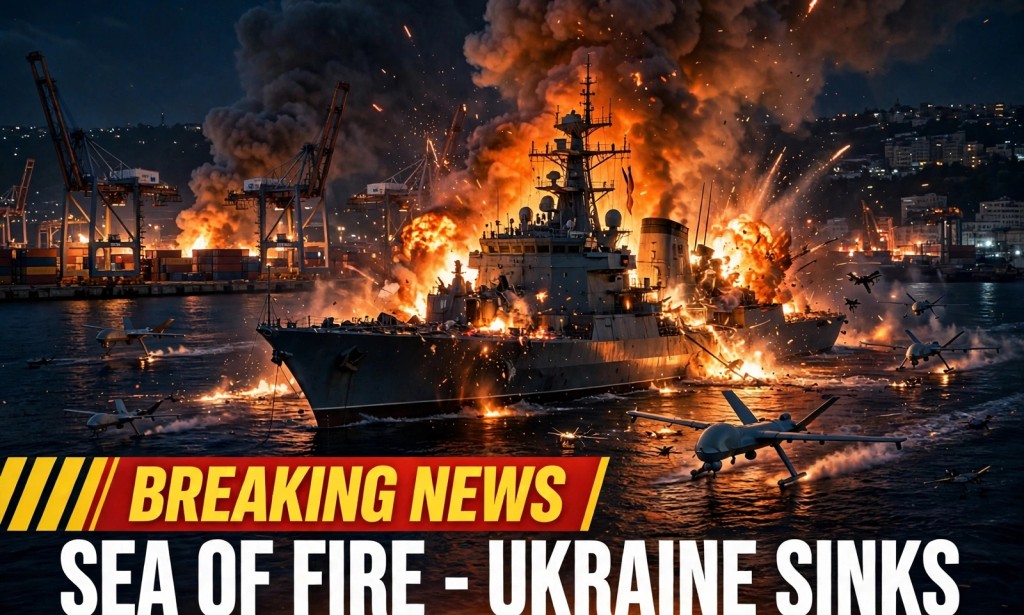
In the early hours of the morning, residents of Benghazi woke up to a sound that shook windows and lit up the night sky. A huge explosion ripped through the naval base at Benghazi port. Fire rose high into the air. Thick black smoke covered the area. People living near the port said they thought there had been an earthquake. Others said they thought a fuel depot had exploded. Within minutes, videos and pictures began to circulate on social media showing a warship burning fiercely while emergency teams rushed to the scene.
According to reports from multiple sources, the vessel that was destroyed was the Russian Navy corvette Merkury, a Project 20380 Steregushchiy-class warship. The ship was docked at the port when it was attacked. The explosion was so powerful that it caused severe damage to the vessel and to parts of the port area. Firefighters and port workers battled for hours to bring the blaze under control. As at the time of filing this report, the full extent of casualties and damage had not been officially confirmed by Libyan or Russian authorities.
Ukrainian sources later claimed that the attack was carried out using naval drones. They said the operation was carefully planned and executed over a long distance. They described it as a successful strike against a legitimate military target that was supporting Russian operations. The claim, if confirmed, would mark a major expansion of the war beyond Ukraine and the Black Sea into North Africa and the Mediterranean.
WHY A RUSSIAN WARSHIP WAS IN LIBYA
To understand why this attack matters, it is important to understand why a Russian warship was in Libya in the first place. Libya has been divided and unstable for more than a decade. Since the fall of Muammar Gaddafi in 2011, the country has been split between rival governments and armed groups in the east and the west. Foreign powers have taken sides, supplied weapons, and built influence in different parts of the country.
Russia has built a growing presence in eastern Libya, particularly around Benghazi, which is controlled by the Libyan National Army led by Khalifa Haftar. Over the years, Russia has been accused of sending mercenaries, weapons, and military advisers to support Haftar. The port of Benghazi has become an important hub for Russian logistics in the region. It provides Russia with access to the Mediterranean Sea, a strategic waterway that connects Europe, Africa, and the Middle East.
For Russia, a presence in Libya is about more than just Libya. It is about projecting power in Africa. It is about having a foothold close to Europe. It is about securing access to oil, ports, and military bases. It is about showing that Russia can operate far from its own borders, even while it is fighting a major war in Ukraine.
For Ukraine, striking a Russian warship in Libya sends a powerful message. It tells Russia that its ships are not safe anywhere. It tells the world that Ukraine can reach far beyond its own coastline. It tells Moscow that the cost of the war will continue to rise, even in places that were once considered safe havens.
THE RISE OF DRONE WARFARE
The Benghazi attack is the latest example of how drone warfare has changed modern conflict. In the past, sinking a warship required another warship, a submarine, or a fighter jet. Today, small, fast, and relatively cheap naval drones can do the same job. These drones are hard to detect. They can travel long distances. They can be controlled remotely. They can carry explosives and strike with precision.
Ukraine has become one of the world leaders in drone warfare. Since the start of the war, Ukraine has used drones to attack Russian ships in the Black Sea, to strike airbases deep inside Russia, and to target oil facilities and military installations. The sinking of the Moskva, the flagship of the Russian Black Sea Fleet, in 2022 was a turning point. Since then, Ukraine has sunk or damaged several other Russian vessels using drones and missiles.
Military experts say the Benghazi attack, if confirmed as a drone strike, shows that Ukraine has taken its drone capabilities to a new level. It shows that Ukraine can project power over thousands of kilometres. It shows that even a port in North Africa, thousands of kilometres from Ukraine, is no longer beyond reach. It also shows how vulnerable large warships can be when they are docked and not expecting an attack.
For other countries, including Nigeria and other African nations, this is a lesson. Ports, naval bases, and coastal infrastructure must be protected against drone attacks. The era when a country could feel safe because it was far from a war zone is over. Technology has made distance less important. A small drone launched from far away can cause damage worth millions of dollars.
REACTIONS FROM AROUND THE WORLD
The international reaction to the Benghazi explosion has been cautious but intense. Russia has not yet issued a full official statement confirming the loss of the Merkury. Russian officials have in the past denied or downplayed losses of warships. But military bloggers and independent analysts in Russia have expressed shock and anger over the incident. Some have called it a major embarrassment for the Russian Navy. Others have demanded answers about how Ukrainian drones were able to reach Libya undetected.
Ukraine has celebrated the attack as a major victory. Ukrainian officials have said the strike was a warning to Russia that it cannot hide its warships anywhere in the world. They have said Ukraine will continue to target Russian military assets wherever they are found. They have also said the operation was carried out in line with international law because the ship was a military target.
Libya is in a difficult position. The authorities in eastern Libya have close ties to Russia, but they also do not want to be dragged deeper into the Russia-Ukraine war. A major attack on their soil, in their most important port city, puts them in the spotlight. They will face pressure from Russia to explain what happened, pressure from Ukraine to distance themselves from Moscow, and pressure from the international community to prevent their territory from being used for foreign military operations.
Western countries, including the United States, the United Kingdom, and members of the European Union, are watching closely. They have supported Ukraine since the start of the war, but they are also worried about escalation. An attack in Libya could complicate efforts to find a peaceful solution to the war. It could also affect security in the Mediterranean, where NATO has a strong presence. NATO officials have said they are monitoring the situation and assessing the implications for regional security.
WHAT THIS MEANS FOR AFRICA
For Africa, the Benghazi attack is a wake-up call. For years, African countries have tried to stay neutral in the Russia-Ukraine war. Many African leaders have said the war is a European conflict and that Africa should focus on its own problems, such as poverty, insecurity, and climate change. But the war is increasingly coming to Africa.
Russian mercenaries and military advisers are active in several African countries, including Mali, Niger, Burkina Faso, the Central African Republic, and Libya. Ukraine has also been accused of carrying out operations in Africa to counter Russian influence. The Benghazi attack suggests that Africa may become a new battleground in this proxy war.
This is dangerous for Africa. African countries do not want to be caught between two powerful nations fighting a war that is not theirs. They do not want their ports to be attacked. They do not want their cities to become targets. They do not want their young people to be recruited to fight in a foreign war. African leaders must now decide how to respond. They must protect their sovereignty. They must ensure that foreign military presence on their soil does not turn their countries into targets.
For Nigeria, the lesson is clear. Nigeria has a long coastline, busy ports in Lagos, Port Harcourt, and Warri, and growing security challenges. Nigeria must invest in coastal security, drone detection, and port protection. Nigeria must also strengthen its diplomacy to ensure that it is not dragged into foreign wars. Nigeria must speak with one voice in defence of African peace and African sovereignty.
THE HUMAN COST
Behind the strategic analysis and the military headlines are real human beings. Sailors were on that ship. Port workers were nearby. Families lived close to the port. When the explosion happened, they were the ones who felt it first. They were the ones who ran for safety. They were the ones who breathed in the smoke. They were the ones who lost their loved ones.
As at the time of this report, there has been no official confirmation of the number of casualties. Some reports suggest that several crew members were killed or injured. Others suggest that port workers were also affected. Lodpost will not publish unverified casualty figures. We will wait for official confirmation from credible sources.
But we know that every warship that sinks means families will mourn. Mothers will lose sons. Wives will lose husbands. Children will lose fathers. That is the human cost of war, whether the war is fought in Ukraine, in Libya, or anywhere else in the world.
WHAT HAPPENS NEXT
There are many questions that still need answers. How did Ukrainian drones reach Benghazi. Were they launched from Ukraine, from a nearby country, or from a ship at sea. Did Libya know about the Russian warship and its mission. Did NATO know about the attack in advance. Will Russia retaliate. Will Russia increase its military presence in Libya. Will Ukraine carry out more attacks outside Ukraine.
Military analysts say Russia is likely to respond in some way. Russia could increase air defences around its ships and ports. Russia could launch more missile strikes on Ukrainian cities. Russia could also try to strike Ukrainian drone facilities. The danger is that each attack leads to a counter-attack, and the cycle of violence continues to grow.
Diplomats are urging restraint. They are calling for dialogue and for a peaceful resolution to the war. They are warning that the longer the war continues, the more it will spread to other regions. They are warning that the world cannot afford a war that spreads from Europe to Africa to the Mediterranean.
For now, the port of Benghazi is trying to return to normal. Emergency teams are clearing debris. Investigators are examining what is left of the ship. Security has been tightened. Residents are trying to go about their daily lives, but the memory of that night of fire will stay with them for a long time.
WHY LODPOST IS COVERING THIS STORY
Some readers may ask why a Nigerian news platform like Lodpost is covering a story about a Russian warship in Libya. The answer is simple. In a connected world, no story is truly foreign. What happens in Libya affects Nigeria. What happens in Ukraine affects food prices in Lagos. What happens in the Mediterranean affects migration from Africa to Europe. What happens in Russia affects oil prices, fertiliser prices, and global security.
Lodpost believes that Nigerian readers deserve to understand the world, not just their own street or their own city. We believe that a reader in Lagos, Abuja, Kano, or Port Harcourt should be able to follow a story in Benghazi and understand why it matters to them. That is why we are committed to bringing you global news with a Nigerian perspective, explained in clear language that everyone can understand.
We will continue to follow this story. We will bring you updates as soon as they are verified. We will speak to experts, diplomats, and analysts to help you understand what this attack means for Africa, for Nigeria, and for the world.
A SEA OF FIRE, A WORLD ON EDGE
The image of a warship burning in Benghazi port will remain one of the defining images of this war. It is a reminder that war is no longer confined to battlefields. It can reach ports, cities, and civilian areas far from the frontline. It is a reminder that technology has changed warfare forever. It is a reminder that peace is fragile and that the world must work harder to protect it.
From Lodpost, our message is clear. War brings only destruction. Diplomacy brings hope. The people of Libya, Ukraine, Russia, and Nigeria all want the same thing. They want to live in peace. They want to go to work without fear. They want their children to grow up without hearing the sound of explosions. They want a world where ships carry goods, not weapons, and where ports are places of trade, not places of war.










































You must be logged in to post a comment.