
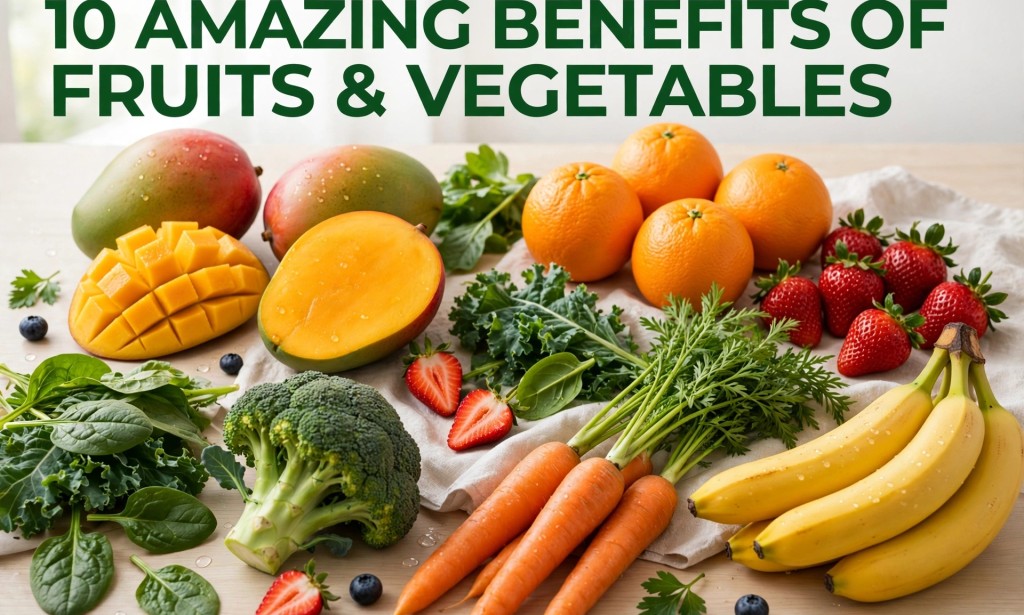
10 Amazing Benefits of Eating Fruits and Vegetables Every Day 🍎🥦
Have you ever wondered why health experts constantly encourage people to eat more fruits and vegetables? The answer is simple: these natural foods contain a variety of nutrients that help your body function properly.
From sweet mangoes and juicy oranges to crunchy carrots and fresh spinach, fruits and vegetables come in different colors, flavors, and textures. They can make your meals more delicious while helping you maintain a balanced diet.
The best part? You don't need expensive ingredients or complicated recipes to enjoy their benefits!
Let's explore 10 amazing reasons to include more fruits and vegetables in your everyday meals.
🍊 1. They Help Support Your Immune System
Your immune system helps your body defend itself against infections and other illnesses. Certain nutrients found in fruits and vegetables support its normal functioning.
For example, oranges, guavas, and bell peppers contain vitamin C, while carrots and sweet potatoes provide beta-carotene, which your body can convert into vitamin A.
These nutrients contribute to normal immune function, making fruits and vegetables valuable parts of a balanced diet.
Simple tip: Add an orange, guava, or another vitamin-rich fruit to your daily meals.
❤️ 2. They Support a Healthy Heart
Your heart works continuously to circulate blood throughout your body, so taking care of it is important.
Many fruits and vegetables provide potassium, fiber, and other beneficial nutrients. Potassium helps support normal blood pressure, while a fiber-rich diet can help maintain healthy cholesterol levels.
Bananas, tomatoes, leafy greens, and sweet potatoes are examples of foods that can contribute to a heart-friendly eating pattern.
Remember, no single fruit or vegetable guarantees a healthy heart. The overall quality of your diet and your daily habits matter too.
🌱 3. They Help Keep Your Digestion Moving
Have you ever experienced discomfort because your digestion wasn't working as smoothly as you'd like?
Fiber is an important part of digestive health, and many fruits and vegetables are excellent sources.
Apples, pears, carrots, green peas, and broccoli provide fiber that helps support regular bowel movements. Fiber also contributes to a healthy digestive system.
For the best results, increase fiber gradually and drink enough water throughout the day.
Did you know? Eating fruit with its edible skin, such as an apple, can provide additional fiber compared with eating the flesh alone.
👀 4. They Provide Nutrients That Support Eye Health
Your eyes need certain nutrients to function properly, and some colorful vegetables provide them.
Carrots contain beta-carotene, which the body converts into vitamin A. Vitamin A plays an important role in normal vision, particularly in low-light conditions.
Spinach and other dark leafy greens also contain nutrients such as lutein and zeaxanthin, which are found in the eyes.
Instead of relying on only carrots, enjoy a variety of colorful fruits and vegetables to obtain a broader range of nutrients.
⚡ 5. They Can Help You Feel Satisfied After Eating
Fruits and vegetables contain water and, in many cases, fiber. These qualities can help make meals and snacks more satisfying.
For example, an apple, a bowl of watermelon, or a serving of cooked vegetables can add volume and variety to your meals.
Pairing fruit with foods containing protein or healthy fats, such as plain yogurt or groundnuts, can make a snack more satisfying.
The goal isn't to replace meals with fruit. It's to enjoy fruits and vegetables as part of a balanced eating pattern that provides enough energy and nutrients for your needs.
🦴 6. They Contribute to Healthy Bones
When people think about bone health, milk is often the first food that comes to mind. However, some vegetables also provide nutrients involved in maintaining healthy bones.
Broccoli, kale, and other leafy greens can supply vitamin K, which plays a role in normal blood clotting and bone metabolism.
Some vegetables also provide calcium, although the amount the body absorbs varies by food.
For strong bones, combine a varied diet with appropriate physical activity and other healthy habits.
💧 7. They Help You Get More Water
Water is essential for regulating body temperature, transporting nutrients, and supporting many other functions.
Some fruits and vegetables contain a high percentage of water. Watermelon, cucumber, oranges, strawberries, and tomatoes are good examples.
Enjoying these foods can contribute to your overall fluid intake, although they don't replace the need to drink water regularly.
Refreshing idea: On a hot day, enjoy chilled watermelon or cucumber alongside your usual meals.
✨ 8. They Provide Nutrients That Support Healthy Skin
Healthy skin needs proper care, and nutrition is one part of the picture.
Fruits and vegetables supply nutrients involved in maintaining normal skin structure and function. Vitamin C, for example, contributes to collagen formation, while vitamin A supports the maintenance of normal skin.
Guavas, oranges, bell peppers, carrots, and sweet potatoes are useful options to include in a varied diet.
However, eating a particular fruit won't instantly remove pimples or guarantee flawless skin. Skin health is influenced by several factors, including genetics, hormones, skincare, and overall health.
🛡️ 9. They Help Protect Your Cells
Your body is constantly carrying out processes that can produce substances known as free radicals. Antioxidants help protect cells from oxidative damage.
Many fruits and vegetables contain antioxidant compounds, including vitamin C, carotenoids, and various plant chemicals.
Berries, tomatoes, grapes, spinach, and red cabbage provide different combinations of these compounds.
Eating a variety of colorful plant foods is a practical way to obtain a broad range of nutrients rather than focusing on a single so-called superfood.
🍽️ 10. They Make Your Meals More Colorful and Enjoyable
Healthy eating doesn't have to be boring!
Fruits and vegetables offer countless ways to experiment with colors, textures, and flavors. Sweet mangoes, tangy oranges, crunchy cucumbers, soft avocados, and spicy peppers can make meals more interesting.
You can add vegetables to rice, include tomatoes and peppers in stews, serve fruit with breakfast, or blend fruit into a smoothie.
Trying different combinations also helps you discover which foods you genuinely enjoy.
The secret is variety: You don't have to love every fruit or vegetable. Start with the ones you enjoy and gradually explore others.
🥗 Simple Ways to Eat More Fruits and Vegetables
You don't need to change your entire diet overnight. Small, consistent habits can make a difference.
Here are seven easy ideas to try:
- Start with breakfast: Add a banana, orange, or another fruit to your morning meal.
- Upgrade your rice: Include vegetables such as carrots, peas, spinach, or green beans.
- Choose fruit for a snack: Keep washed fruit available when you want something to eat between meals.
- Experiment with soups: Add leafy greens and other vegetables to your favorite soups and stews.
- Try different colors: Mix green, orange, red, and purple produce throughout the week.
- Buy seasonal produce: Fruits and vegetables that are in season may be more affordable and easier to find.
- Make frozen produce your friend: Frozen fruits and vegetables can be convenient, nutritious options when fresh produce isn't available.
In Nigeria, familiar options such as oranges, pawpaw, watermelon, garden eggs, ugu, okra, carrots, and tomatoes can help you build variety without depending on expensive imported foods.
Wash fresh produce thoroughly with clean running water before eating or preparing it.
⚠️ Fresh, Frozen, or Canned: Which Is Better?
You might assume that fresh produce is always the best choice, but the answer isn't that simple.
Fresh, frozen, and canned fruits and vegetables can all contribute to a healthy diet.
- Fresh produce: Great for snacks, salads, and everyday cooking.
- Frozen produce: Convenient and often frozen soon after harvesting, helping preserve nutrients.
- Canned produce: Can be affordable and useful for quick meals. Choose options with little or no added sugar or excess sodium when possible.
Your best choice depends on availability, price, storage, and how you plan to use the food.
Don't let the absence of fresh produce stop you from enjoying fruits and vegetables.
🌟 Final Thoughts
Fruits and vegetables are much more than colorful foods on your plate. They provide essential nutrients, support normal body functions, contribute to digestive health, and make everyday meals more enjoyable.
You don't need to purchase every fruit in the market or follow a complicated eating plan to get started.
Begin with what you can afford. Add vegetables to a familiar meal, enjoy fruit when it's available, and try something new when you get the chance.
Remember: eating a variety of fruits and vegetables regularly is more helpful than searching for one magical food that does everything.
So, here's a fun question for you:
🍉 If you could eat only ONE fruit for an entire week, which would you choose: watermelon, mango, banana, orange, or apple? Tell us in the comments!


You must be logged in to post a comment.