

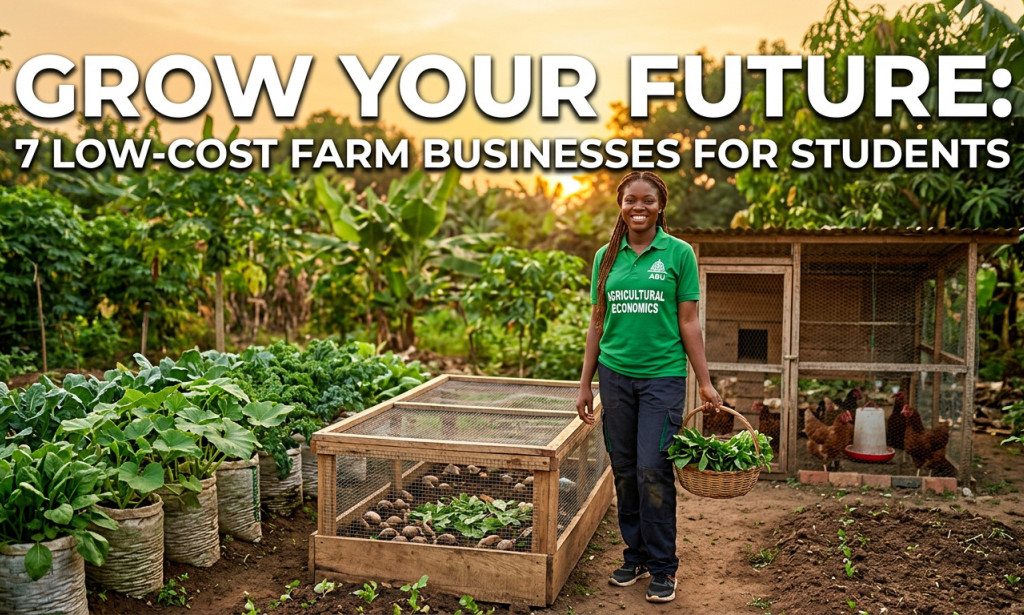
7 Profitable Agricultural Businesses Nigerian Students Can Start With Limited Capital
Many Nigerian students want to earn extra income but struggle to find opportunities that fit their budgets and academic schedules. Agriculture is often overlooked because many people assume it requires large farmland, expensive equipment, or full-time attention. However, some agricultural businesses can be started on a small scale with limited space and manageable capital.
The right business depends on factors such as your location, available time, access to water, local demand, and the amount you can afford to invest. Starting small can help you gain experience, understand your market, and reduce the risk of losing a large amount of money.
Here are seven agricultural business ideas Nigerian students can consider.
1. Snail Farming
Snail farming, also known as heliculture, can be a suitable option for students with limited space. Snails are quiet and can be raised in a small, properly protected enclosure.
A beginner may start with a simple snail pen, healthy breeding stock, and suitable feed. The actual cost will depend on the size of the project, the type of housing used, and local prices.
Snails can feed on a variety of fruits, vegetables, and plant materials, but good hygiene and proper moisture are important for their growth and survival. Because snail farming may take time before producing significant returns, it is better suited to students who are patient and willing to learn the basics of breeding and management.
Before starting, identify potential buyers such as local households, restaurants, food vendors, or other snail farmers. This can help you understand demand before investing heavily.
2. Leafy Vegetable Farming
Leafy vegetables such as fluted pumpkin (ugu), waterleaf, spinach, and lettuce are widely consumed in Nigeria. They can be grown on a small plot, in raised beds, or in containers, depending on the crop and available space.
Vegetable farming can be attractive because many leafy crops have relatively short production cycles. Some can also be harvested more than once when managed properly.
Students should consider:
- Access to reliable water
- The cost of seeds and planting materials
- Soil quality or suitable growing media
- Pest and disease management
- The availability of buyers
Vegetables are highly perishable, so it is wise to identify customers before harvesting. Potential buyers may include neighbours, campus food vendors, restaurants, and local market traders.
3. Small-Scale Broiler Poultry
Broiler production can provide relatively quick turnover because broiler chickens are raised mainly for meat and can reach market size within a few months under good management.
A student may begin with a small number of birds rather than starting with a large flock. This makes it easier to learn about feeding, housing, record-keeping, disease prevention, and marketing.
The major expenses usually include:
- Day-old chicks
- Feed
- Housing and equipment
- Vaccination and veterinary care
- Water and electricity
Poultry farming requires regular attention. Clean housing, good ventilation, quality feed, clean water, and proper disease prevention are essential. Students should also check whether poultry is permitted in their residential area before starting.
Demand may increase during festive periods, but prices and production costs can also change. It is important to calculate expected expenses and identify buyers before beginning.
4. Mushroom Cultivation
Mushroom cultivation is a promising option for people with limited land because some mushroom varieties can be grown indoors under controlled conditions.
Oyster mushrooms are commonly considered suitable for small-scale production. They can be cultivated using prepared growing materials such as agricultural residues, but successful production requires proper hygiene, suitable temperature and humidity, and quality mushroom spawn.
A student can begin with a small trial project to learn the process before expanding. The business may be suitable for people who have access to a clean, shaded space and can monitor growing conditions regularly.
Potential customers may include:
- Restaurants
- Hotels
- Food vendors
- Health-conscious consumers
- Local grocery stores
Because mushrooms are perishable, producers should plan how they will store, package, or sell the harvest.
5. Backyard Catfish Farming
Catfish farming is popular in Nigeria because fish is widely consumed and sold throughout the year. Students do not always need a large earthen pond to begin. Depending on local conditions, small tanks or other suitable fish-holding systems may be used.
However, fish farming requires consistent management. Important areas include:
- Good water quality
- Appropriate stocking density
- Quality fingerlings
- Regular feeding
- Proper record-keeping
- Disease and mortality control
The cost of feed can significantly affect profitability. Students should calculate their expected expenses carefully and avoid stocking more fish than they can manage.
Before starting, identify possible buyers such as households, restaurants, fish processors, market traders, or local food vendors. Direct sales may sometimes improve returns, but transport and marketing costs should also be considered.
6. Rabbit Farming
Rabbit farming can be suitable for small spaces because rabbits are relatively quiet and can be kept in properly designed hutches.
A beginner can start with a small number of healthy breeding rabbits and expand gradually. The cost will vary depending on the breed, housing, feed, and local market conditions.
Rabbit production requires attention to:
- Clean and well-ventilated housing
- Quality feed and clean water
- Proper breeding management
- Disease prevention
- Safe handling of young rabbits
Rabbit meat may have a smaller market than chicken or fish in some locations, so students should first determine whether there are reliable buyers nearby. Potential markets may include households, restaurants, specialty food sellers, and other rabbit farmers.
7. Agricultural Commodity Trading
Agribusiness does not always require raising crops or animals. Students with good market knowledge may buy agricultural products during periods of high supply and sell them later when demand or prices increase.
Products may include:
- Maize
- Sorghum
- Garri
- Dried pepper
- Beans
- Palm oil
This business requires careful planning. Prices can change unexpectedly, and poor storage may lead to spoilage, pests, quality loss, or financial losses.
Before buying, research:
- Current market prices
- Seasonal price patterns
- Storage requirements
- Transportation costs
- Expected demand
- Possible buyers
Start with a small quantity and keep accurate records. Do not invest money you cannot afford to lose.
How to Balance School and an Agricultural Business
Running a business while studying requires planning and discipline. Choose an agricultural activity that matches your class schedule, available space, and level of experience.
Students with demanding academic schedules may prefer businesses that require less frequent daily attention. Those with more flexible schedules may be able to manage activities such as poultry or fish farming.
Keep simple records from the beginning. Record:
- Money spent
- Equipment purchased
- Feed, seed, or stock costs
- Sales made
- Losses and unexpected expenses
- Profit or loss
These records will help you understand whether the business is truly profitable. They may also be useful when applying for grants, training opportunities, or agricultural support programmes.
Start small, learn from the first production cycle, and reinvest carefully. Expanding too quickly without understanding the market can create unnecessary financial pressure.
Final Thoughts
Agriculture can offer Nigerian students practical opportunities to gain experience, earn income, and develop useful business skills. You do not always need large farmland or a huge budget to begin.
Snail farming, vegetable production, broiler poultry, mushroom cultivation, catfish farming, rabbit production, and agricultural commodity trading all offer possible entry points. However, no agricultural business guarantees profit. Success depends on proper planning, good management, reliable buyers, accurate record-keeping, and the ability to adapt to changing costs and market conditions.
Choose one idea that fits your budget, location, available time, and skills. Start on a manageable scale, learn from the experience, and grow gradually.
Sources and Further Reading
- Food and Agriculture Organization of the United Nations (FAO) — Information on agriculture, fisheries, aquaculture, and food systems.
- Federal Ministry of Agriculture and Food Security, Nigeria — Agricultural policies, programmes, and sector information.
- National Agricultural Extension and Research Liaison Services (NAERLS) — Agricultural research and extension information.
- Agricultural universities and recognised research institutions — Technical guidance on crop and livestock production.
Note: Startup costs, market prices, production periods, and expected returns may vary depending on location, season, scale, input costs, market conditions, and management practices. Readers should confirm current local information and seek appropriate technical guidance before investing.


You must be logged in to post a comment.