
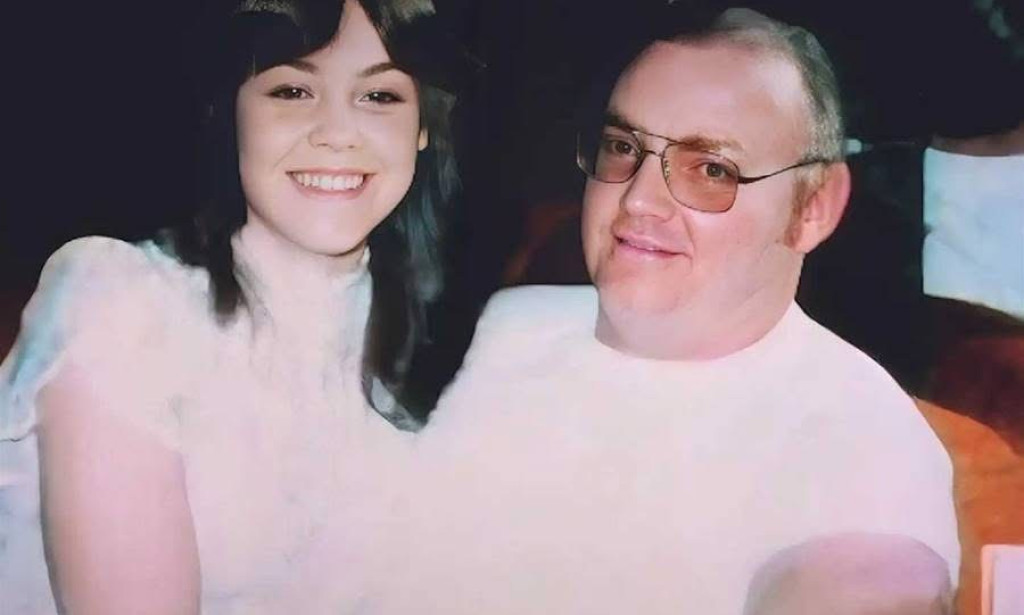
A 16-year-old girl, raped by her father for five years and with her 8-year-old sister also facing threats, desperately hired someone to kill her father, but the case took a dramatic turn at the end.
On February 5, 1986, in Long Island, New York, 42-year-old electrician James Pearson was shot and killed in his driveway. The killer fired five shots into his back, one of which struck him in the back of the head.
His 16-year-old daughter, Sheryl, discovered the body. She had gone to walk the dog that morning and found her father lying in the snow. Police and firefighters arrived quickly, but James was already dead.
The subsequent investigation baffled the police—while Sheryl was being questioned at the table, she suddenly blurted out, "Did you put on perfume? It smells so good." An officer glanced at her and said, "A little," but then realized something was amiss: Your father has just been murdered, and you still have the leisure to be so casual?
The police searched James's house and discovered that the electrician's possessions far exceeded the income of an ordinary worker—a luxurious townhouse, high-end motorcycles, and antique cars. Further investigation revealed an armory in the basement, containing a highly lethal Uzi submachine gun. Clearly, James wasn't just an ordinary electrician; he likely had a side business, and one that wasn't entirely legitimate.
According to Cheryl, her father had a violent temper and was easily angered. He owned several rental properties in upstate New York, and if tenants were late with rent, he would shoot out their tires to force them to pay. This suggested James had many enemies. Further investigation revealed that besides a few business partners, he indeed had few friends.
The autopsy report showed that the killer used a .22 caliber rifle, firing five shots into James from behind, one of which struck the back of the head, indicating the killer was targeting him specifically, not committing a crime of passion. But with so many enemies, where should one begin the investigation?
Further investigation revealed that James had been using his job to steal things—wires, light bulbs, various electrical materials—taking anything he could get his hands on. These items might seem scattered and inexpensive, but the sheer quantity made up for it. After stealing, he would use the stolen materials to take on cases after work, accumulating a fortune of over a million dollars over several years. In the 1980s, this was no small sum.
Just as the police were preparing to follow the leads of his thefts, another clue emerged. An insider said that James and his son Jimmy had a terrible relationship. The father and son had recently had a major argument, and Jimmy, in anger, moved out. James, in a fit of rage, removed his son from his will. When the police summoned Jimmy, he vehemently denied it, saying that while he was angry, he wouldn't kill his father. He then revealed another name—Sheryl's boyfriend, Robert. Jimmy said that Robert had been searching for someone to murder James a few days earlier.
The police then summoned Sheryl.
Sheryl denied that Robert was the murderer, and then changed the subject, beginning to talk about her father's faults. She said her father was rude, basically had no affection for his children, and never said "I love you." When he lost his temper, he would abuse her and her brother, sometimes emotionally, sometimes physically. After she met her boyfriend Robert, her father seemed to change completely, strictly limiting their meetings. Occasionally, he would allow them to go to a movie, but he would follow them the entire time, sitting in the back row and constantly watching them. Robert said that James's eyes didn't look like a father's, but more like a jealous boyfriend's.
Even more outrageous, Robert once went to Sherry's house for dinner. After the meal, James patted his thigh, and Sherry obediently went over and sat on her father's lap. A little while later, she stood up to get ice cream, offering one to Robert and the other to her father. Before Robert could react, Sherry's father slapped her in front of Robert, loudly berating his daughter for not offering him the ice cream first, calling it a huge disrespect. A middle-aged father, letting his 16-year-old daughter sit on his lap, and then hitting her because she didn't get her ice cream first.
Even worse, Sherry's father then made them kiss each other on the cheek in front of Robert. After the kiss, he looked at Robert with a provocative gaze. In a later interview, Robert said, "Her father's actions were definitely not an intimate interaction between father and daughter, but rather a declaration to me as a man—this is my woman, not yours."
Therefore, Robert is indeed a suspect in James's murder. The police tried to provoke him: "We know you did it, confess." Robert immediately panicked: "I didn't do it! I just gave the killer some money." He confessed that Cheryl was the mastermind—he overheard Cheryl talking about paying to kill her father, and when she didn't have enough money, he helped her scrape together $400.
With Robert's confession, Cheryl could no longer hide the truth. She said she did indeed find a classmate at school and paid him $1,000 to help kill her father. The reason she did this was because she couldn't take it anymore—she had been sexually abused by her father since she was 11 years old.
The first incident occurred on the way to visit her sick mother in the hospital. Her father told her to sit in the passenger seat and placed his hand on her private parts. Her mother, who was suffering from leukemia and bedridden for many years, was completely unaware of this. Her father also threatened her by abusing the family dog—if she dared to resist, he would kick the dog half to death. He threatened Cheryl that if she told anyone, she would suffer the same fate as the dog.
When she was 15, her mother passed away. Her father went completely insane, treating Cheryl almost like a sex slave, raping her two or three times a day was common. She contemplated suicide.
Later, she met Robert. Robert was a year older than her and was the only light in her life. But she didn't dare tell him the truth, afraid of losing this last bit of warmth. But Robert wasn't stupid; he noticed that Cheryl had to be home by 8 pm every night and couldn't go out on weekends, which often led to arguments.
Finally, one day, Robert went to Cheryl's house and introduced himself. Cheryl's father warmly welcomed him, inviting him to play ball and help with repairs, acting like a future father-in-law. But on the day he ate at her house, the aforementioned "ice cream incident" occurred.
Robert sensed something was wrong and pressed Cheryl for details about whether she and her father had a relationship, which Cheryl denied. For the first time, Robert became violent, pinning her against the wall and yelling, "Tell me, you were raped by your father, weren't you?" Cheryl broke down, tears streaming down her face, burying her face in Robert's arms and sobbing. She then recounted her tragic ordeal. Robert asked her why she hadn't spoken up sooner, and Cheryl cried even harder: "Because he threatened me, saying that if I told anyone, he would harm my sister."
Robert held Cheryl tightly. In that moment, he made a decision: no matter what, he would never leave her. He urged Cheryl to report it to the police, but Cheryl's father had already warned her: "The police station is full of my friends; they'll only believe I'm a good person." The two high school students were intimidated by this statement.
Just then, a case occurred on Long Island—a woman, unable to endure long-term domestic violence, hired someone to kill her husband. Everyone at school was talking about it. During recess, Cheryl's classmate, Sean Pica, was having a lively discussion. At the height of his enthusiasm, he made a bold statement: "I never thought there really was such a thing as a hitman. Killing people and making money! I'd kill for anyone who paid me!"
Cheryl remembered this. One day, she secretly met with Sean and said, "I'll give you money to kill my dad." Sean turned around, their eyes met, and he realized this wasn't a joke. After school, they had a serious talk. Sean cut to the chase: "Why do you want to kill your dad?" Cheryl paused for a moment: "He raped me." Sean later recalled, "She didn't tell me any details, but her eyes said it all. I believed it was true, and it was more terrifying than I imagined." Cheryl said she was desperate; Sean was her only hope, the only one who could save her sister from this nightmare. Sean stood there, torn by inner turmoil. After a long pause, he blurted out, "I'll take the job. $1,000."
Sean's father was a policeman, but his parents had a history of constant arguments, reconciliations, and divorces. His mother's stepfather was a violent man who was drunk and abusive. Sean deeply abhorred violence and believed Cheryl's words because he lived in the same world.
Robert's plan was to elope: "I'm 17, you're 16. We can survive together." Cheryl vehemently opposed it—she was convinced that if she left, her sister would become their father's next target. She confided her plan to Robert: to hire Sean to kill someone for $1,000. Robert was speechless with shock and immediately went to Sean, trying to dissuade him from killing for money. Sean didn't say anything, only asking, "Is what Cheryl said true?" Robert replied, "Yes, it's true." Sean's expression was that of a professional assassin: "Stop talking nonsense, I only care about money. I'm doing this job, go get the money ready." He turned and left.
Unbeknownst to Robert and Cheryl, from the moment he learned the truth, Sean had already resolved to kill Cheryl's father. To avoid burdening them with more guilt, he repeatedly emphasized that he was only in it for the money, that he would do it for the money, and that he didn't care about anything else.
Robert decided to pay for it himself. He found Sean again, prepaid $400, and said he would pay the remaining $600 after the job was done. Robert later admitted that he still felt Sean was just talking and wouldn't actually do murder. Sean took the money and left without a word. He didn't use it to spend; instead, he used it to buy a gun.
Sean later recalled his inner struggle during that time: "I knew it was a terrible crime. But thinking about how Cheryl was still being sexually abused by her beastly father, and how this would continue if I didn't intervene, I felt I was doing the right thing."
Two months later, on the morning of February 5, 1986, just as dawn broke, Sean arrived near Cheryl's house. A moment before acting, he hesitated. He held his silenced gun, secretly hoping someone would see the gun and stop him. But there was no one around. He saw a middle-aged man leave Cheryl's house, heading to work. Sean steadied himself, quickly walked forward, and aimed. Their eyes met briefly, no words exchanged, no hesitation. Sean fired five shots. James Pearson fell to the ground in a pool of blood.
Sean quickly left. He didn't inform Robert, nor did he tell Cheryl; he even hoped Cheryl wouldn't know he had been there. When Cheryl woke up, she discovered her father's body.
The news quickly made the newspapers. The police found a lead with little effort—two months earlier, Sean had boasted during recess that he could kill for people, and that Cheryl had commissioned him to kill her father; many classmates had witnessed this.
The case immediately became a national sensation. People were divided: one side believed Cheryl was the victim, and James's death was deserved; the other side thought Cheryl was a fraud, fabricating the incest accusation for the sake of inheritance. Cheryl's grandmother told reporters that her son wasn't that kind of person and would never have assaulted his daughter.
But Cheryl's lawyer found witnesses. Her classmate Diane recalled that on Valentine's Day the year before the incident, Cheryl's father picked her up in his car and found a Valentine's Day card that had fallen out of her bag. He flew into a rage and punched her several times in the car. Cheryl's brother also supported her, saying that his sister couldn't have fabricated such a story. Neighbors and relatives had all seen James groping his eldest daughter. When asked about this, Cheryl's 8-year-old sister said that their father did indeed sleep with her sister that night.
In court, Sheryl's defense consistently centered on sexual assault. Her lawyer repeatedly emphasized that James had not only assaulted Sheryl, but she was also pregnant at the time of his arrest, and that James was the father of the child. She was just a 16-year-old girl with no choice but to hire someone to kill her father to protect her younger sister. She said that when she saw her father die, she felt a sense of relief—her sister was finally safe.
During the trial, Sheryl was rushed to the hospital due to a miscarriage and severe bleeding. DNA testing revealed that the father of the child was not James, but Sheryl's boyfriend, Robert. This result shook Sheryl's core defense. If she lied about her pregnancy, would the sexual assault charges still hold water? However, on her lawyer's advice, Sheryl pleaded guilty to manslaughter. Her best hope was that the judge would consider mitigating circumstances and give her a lighter sentence.
In April 1987, Robert was charged with abetting and sentenced to five years of probation. The gunman, Sean, was charged with first-degree murder, but ultimately the judge only sentenced him to manslaughter and 24 years in prison.
In September 1987, Cheryl's trial began. At the pre-sentencing hearing, she recounted her experience of being sexually assaulted by her father. Her testimony remained unchanged. Three weeks later, the judge announced that Cheryl was sentenced to six months in prison, plus five years of probation. The judge said he had received over 100 letters, mostly from sexual assault victims, pleading for leniency for Cheryl. The judge said, "They didn't forgive or approve of your way of dealing with the problem, but many told me they overcame their pain and became useful members of society. That's what I expected of you too."
Cheryl fainted in court—she had always thought she would only receive probation; the six-month sentence was a devastating blow. Later, due to good behavior, she actually served only three months. On the day of her release, her boyfriend Robert picked her up in a luxury car at the prison gate. Six months later, they married, had two daughters, and lived a normal life. 37 years later, they published a book titled *Incest, Murder, and Miracles*.
As for the gunman, Sean, his life took a different turn.
Sean's father was a police officer, but clearly didn't play a positive role in his upbringing. His parents divorced, reconciled, and divorced again; his stepfather was a violent man, constantly drunk and abusive. Sean deeply resented domestic violence, so when his classmate Sheryl suggested getting rid of her abuser's father, he readily agreed. Money was one reason, but probably more. Sean wasn't exactly a model citizen at first; he couldn't control his temper and was transferred to nine different prisons in nine years due to fighting. The skinny boy transformed himself into a muscular man, winning the runner-up title in the New York State prison weightlifting competition for two consecutive years.
In 1997, a non-profit higher education organization called "Hudson Bonds" was founded, and Sean was one of its first students. Within five years, he earned his bachelor's and master's degrees. In December 2002, at the age of 33, Sean was paroled. He didn't leave but stayed with Hudson Bonds, transforming from a student into a project liaison, raising funds and bringing university courses into the prison. Later, he joined the board of directors and became the warden.
This project reduced the recidivism rate from 68% to 2%. Countless people found jobs and lived normal lives through education.
The most intriguing aspect of this case is not who pulled the trigger, but the collective silence of the entire social system before the tragedy occurred. Neighbors saw the bruises, relatives witnessed the groping, and classmates knew Cheryl had injuries. But no one called the police; no one truly intervened. Everyone watched, until a 16-year-old girl took matters into her own hands.
The law sentenced Cheryl to six months in prison, and the judge chose leniency in the face of over 100 letters from sexual assault victims. But the question remains: if even one person had come forward during the five years she was sexually assaulted, would the story have been different?
Shawn spent 16 years in prison achieving self-redemption. Cheryl spent 37 years writing a book about her trauma. But those who should have protected her did nothing when she needed it most.

You must be logged in to post a comment.