

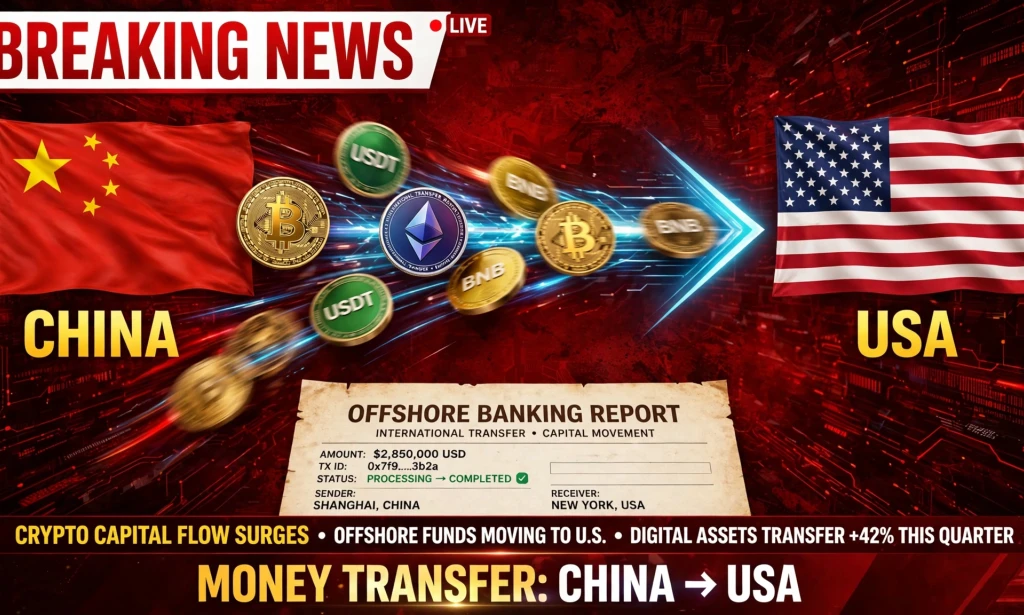
China Bans Crypto Again: Investors Move Money to USA as Crackdown Begins
On November 1, 2026, China's Communist Party called for tougher action against corruption involving virtual currencies, cross-border funds, and collusion between officials and businesses. The statement was released via Xinhua News Agency as part of a decision adopted on October 29.
This is not the first time China has banned crypto. But in 2026, the language is stronger. The government says digital assets remain illegal because of insufficient anti-money laundering safeguards.
While the USA and EU are approving Bitcoin ETFs and Ripple's national trust bank, China is going the opposite direction, pushing crypto capital out of the country.
How Much Does It Cost to Move $1 Million from China to USA?
As the ban tightens, many Chinese investors and businesses with dual operations are moving funds to the USA legally through Hong Kong's licensed crypto hub and offshore banking channels.
Here is the real cost breakdown in 2026 for a legal transfer:
- Bank Wire Fee (China to USA): $25 - $80 per wire, plus 0.1% of amount (about $1,000 for $1 million)
- Foreign Exchange Conversion (CNY to USD): 0.5% - 1.5% spread = $5,000 - $15,000 for $1 million
- Offshore Company & Legal Fees (Hong Kong to USA): $3,000 - $8,000 one time for compliance
- USA Receiving Bank Compliance Fee: $100 - $500 for anti-money laundering checks
- Crypto Route (USDT via licensed Hong Kong exchange to USA): 0.2% - 0.8% = $2,000 - $8,000 for $1 million
Total Cost: To move $1 million from China to USA legally in 2026 costs about $10,100 to $24,500 (1% to 2.45%).
Why Are Investors Moving to the USA?
Three reasons:
1. Hong Kong as a Gateway: Hong Kong now operates as a regulated crypto hub with licensing for virtual asset trading. It is the legal gateway for Chinese capital that did not exist before. Tokens like Conflux (CFX) are now listed on HashKey, Hong Kong's licensed exchange.
2. USA Regulatory Clarity: The USA OCC approved Ripple National Trust Bank, and DTCC launched tokenization services for traditional securities. This gives Chinese investors a safe, insured system.
3. Insurance: In the USA, bank deposits are insured up to $250,000 by FDIC, and crypto custody is insured up to $100 million by private insurers. In China, there is no such insurance for crypto.
What Is the Future?
Analysts say China's ban does not stop blockchain development. China has over 1,400 active blockchain companies and 52% of the global enterprise blockchain market. The country is building digital yuan that will start paying interest in January 2026.
But for private crypto investors, the message is clear: if you want to trade crypto, you must do it outside mainland China, and the USA remains the biggest destination for offshore finance.


You must be logged in to post a comment.