

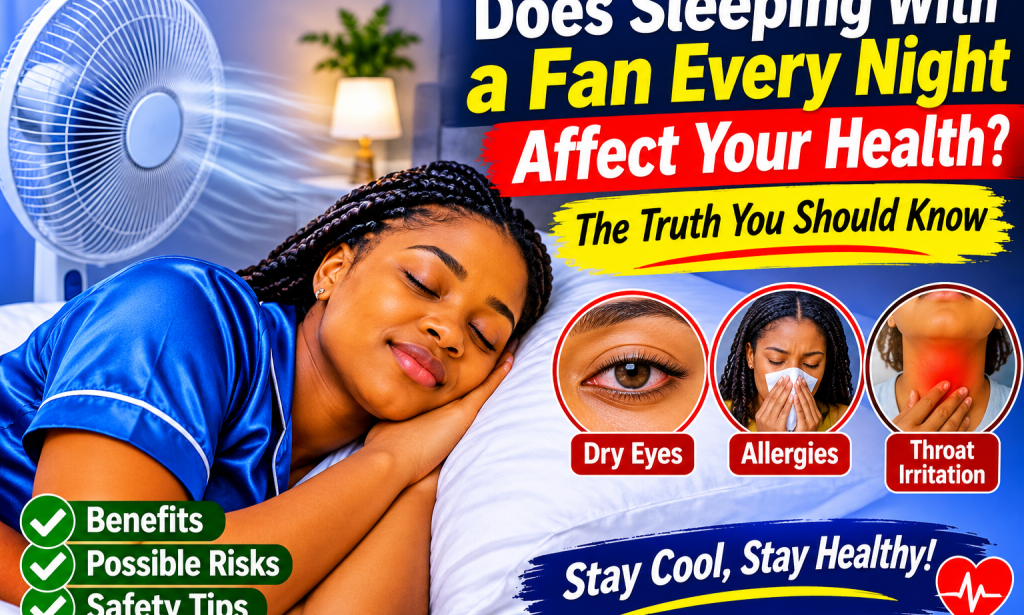
Does Sleeping With a Fan Every Night Affect Your Health? The Truth You Should Know
Have you ever gone to bed with your electric fan blowing directly towards your body throughout the night?
For many people, especially those living in hot environments, sleeping with a fan is part of their daily routine. Some people cannot sleep comfortably without it.
But have you ever stopped to think about how constant airflow might affect your body?
The truth is that sleeping with a fan is generally safe for most healthy people. However, it can cause certain discomforts, particularly when the air blows directly at you for several hours.
Let's look at some important things you should know.
1. A Fan Can Cause Dry Eyes
One possible effect of sleeping with a fan blowing towards your face is dry eyes.
Continuous airflow can cause moisture on the surface of your eyes to evaporate faster. You may wake up with itching, burning, or discomfort in your eyes.
People who already experience dry eyes may be more sensitive to this.
2. It Can Dry Your Nose and Throat
Have you ever woken up in the morning with a dry throat or uncomfortable nose?
Constant airflow may contribute to dryness in your nose, mouth, and throat.
This can sometimes cause irritation, coughing, or discomfort when you wake up.
Drinking enough water and avoiding direct airflow towards your face may help.
3. It Can Make Allergies Worse
Another important thing to consider is dust.
Fan blades can collect dust over time. When the fan is switched on, it can circulate dust and other particles around the room.
For people with allergies or asthma, this may trigger sneezing, coughing, a runny nose, or breathing discomfort.
This is why regularly cleaning your fan and bedroom is important.
4. It May Affect Your Skin
Continuous airflow can increase moisture loss from your skin.
People with naturally dry or sensitive skin may experience more dryness or irritation.
If you notice that your skin becomes uncomfortable after sleeping with a fan, try moving it farther away or directing the airflow elsewhere.
5. A Fan Does Not Cause the Common Cold
There is a common belief that sleeping with a fan causes cold and flu.
However, this is not medically correct.
Common colds and flu are caused by viruses, not by the air from an electric fan.
Although a fan may make you feel dry or uncomfortable, it does not create the viruses responsible for these infections.
6. A Fan Can Actually Help You Sleep
It is important to understand that fans also have benefits.
A fan can make a hot room more comfortable by helping your body lose heat through evaporation of sweat.
Some people also enjoy the gentle sound of a fan because it helps block distracting noises and makes sleeping easier.
Therefore, using a fan is not automatically bad for your health.
7. How to Use Your Fan More Safely
If you enjoy sleeping with a fan, here are some simple precautions:
- Clean your fan blades regularly to remove accumulated dust.
- Avoid directing strong airflow straight at your face throughout the night.
- Use the rotating setting to distribute air around the room.
- Keep your bedroom clean to reduce dust and allergens.
- Drink enough water throughout the day.
- Consider using a timer if continuous airflow makes you uncomfortable.
One more thing: during extreme heat, a fan may not provide enough protection, particularly when indoor temperatures become extremely high. Seek a cooler environment and follow heat-safety advice.
Conclusion
Sleeping with a fan is not something everyone needs to be afraid of. For most people, it is a comfortable and generally safe way to stay cool.
However, how you use your fan matters.
Pay attention to how your body responds. If you regularly wake up with dry eyes, a dry throat, sneezing, or breathing discomfort, consider changing the fan's position and cleaning your surroundings.
Your health is important, and even small daily habits deserve attention.
Remember: Staying cool is good, but taking care of your health should always come first.
Share Your Experience!
Do you sleep with your fan on throughout the night, or do you prefer switching it off before sleeping?
Share this article with your friends and family. Someone may learn something important that helps them make better choices about their health.


You must be logged in to post a comment.