

Hong Kong murder
-----
"A 38-year-old new immigrant married a 75-year-old man. Three months later, the old man died."
This was a private conversation among Hong Kong police officers who handled the case at the time. The tone was calm, but the underlying message was unsettling to everyone.
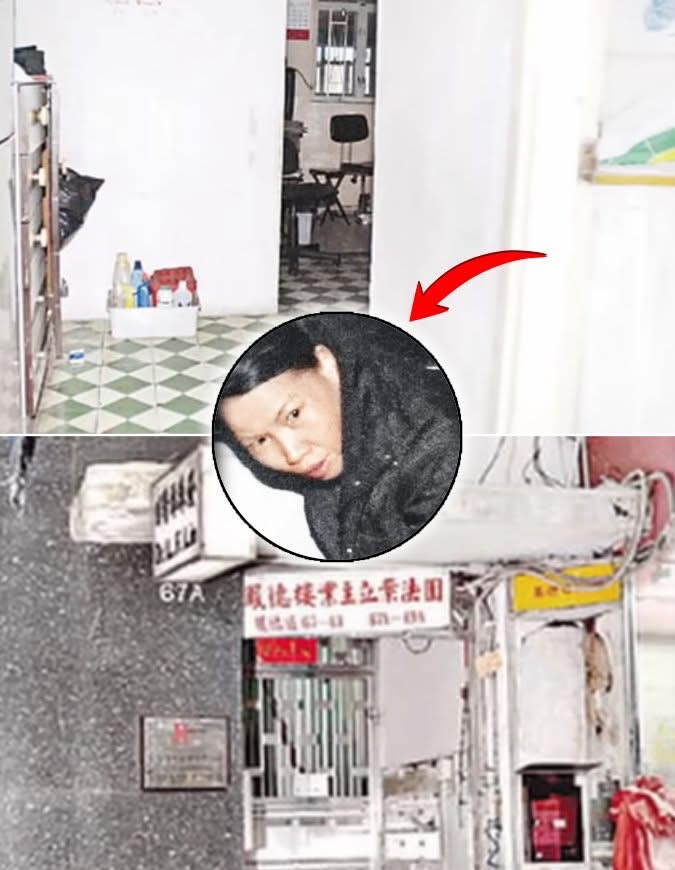
Let's rewind to 2006. In a unit on the third floor of Fung Tak House, Fung Tak Road, Wong Tai Sin, Hong Kong, lived an elderly couple with a significant age gap. The husband, Wong Hing-lam, 75, had been retired for many years and had previously run a makeshift paper factory, accumulating some savings. His wife, Lau Ai-kin, 40, came from Zengcheng, Guangzhou. They were 35 years apart in age.
While described as an elderly couple with a significant age gap, they weren't exactly newlyweds. They married in Zengcheng in 2000, and although they had been married for six years, the wife had only been living with them in Hong Kong for three months. In early 2006, Lau Ai-kin, along with her two sons from a previous marriage, obtained one-way permits and officially moved to Hong Kong to reunite with her husband.
Three months. From the day they officially began living together until her husband's accident, only three months had passed.
On July 31, 2006, in the early morning, the residents of Fengde Building heard nothing unusual. Later that day, Liu Aijin called the police, saying her husband was unconscious at home. When the ambulance arrived, paramedics entered and found 75-year-old Huang Qinglin lying on the bed, bloodstains around his mouth and nose, his body already stiff and showing signs of rigor mortis. He had been dead for approximately two or three hours.
The forensic examination later revealed bruises on the deceased's mouth, nose, and throat; his front teeth were recently knocked out; and his neck was fractured. The cause of death was clear: asphyxiation due to pressure on the mouth, nose, and throat.
It was not a natural death. It was homicide.
When the police began their investigation, they noticed the wife's strange behavior. She initially agreed to an autopsy, then changed her mind and tried to prevent it. Then, she took her two sons and went directly back to the mainland.
A person suddenly changes their mind, prevents an investigation into the cause of death, and then runs away. Who would believe there's no problem?
Police notified mainland police of their assistance. In March 2007, Liu Aijin was arrested in mainland China and transferred to Hong Kong police.
The case went to court, and the truth was gradually revealed.
Liu Aijin, a native of Zengcheng, Guangzhou, had been married before and had two sons. In 2000, she married Huang Qinglin, who was 35 years her senior. What she wanted was unclear to outsiders. After the marriage, she lived in her husband's ancestral home in Zengcheng, occasionally visiting him in Hong Kong; her life wasn't exactly comfortable.
In late 2005, while playing mahjong in mainland China, she met a man named Liu Jinwen. This Liu Jinwen was a debt collector. The two quickly developed a romantic relationship, and Liu Jinwen moved into Huang's ancestral home in Zengcheng, cohabiting with Liu Aijin.
Evidence presented in court showed that Liu Jinwen had repeatedly told her, "The men around you will all die." He was referring to her husband, Huang Qinglin.
In July 2006, Liu Jinwen told her that he would send a friend named Liu Shuiquan to Hong Kong to stay at her house for one night. He told Liu Aijin to open the door when the time came.
In the early morning of July 31, Liu Shuiquan arrived at Fengde Building. Liu Aijin opened the door. Liu Shuiquan entered the room and pressed his hand firmly against the mouth and nose of the sleeping Huang Qinglin until he died.
Throughout the entire process, Liu Aijin was outside. She did not participate in the act, but she did open the door.
Afterwards, she called the police, saying that her husband had suddenly fallen into a coma. Then she tried to prevent an autopsy. Then she took her son and fled back to the mainland.
After the incident, a key witness, Du Zhijian, testified in court that he met Liu Aijin on the night of the incident. She said her husband was dead and she didn't want to go home, so he kindly gave her HK$150 to stay in a hotel and bought her a phone card. Liu Aijin kept calling him, finally telling him, "My husband didn't die of illness; my boyfriend in mainland China hired someone to kill him."
Du Zhijian urged her to return to Hong Kong and turn herself in. She said she was afraid of dying in jail.
The police later conducted two video interviews with her. The first time, she said Liu Jinwen threatened her, "All the men around you will die," and she opened the door out of fear for her and her son's safety. The second time, she changed her story, saying that on the day of the incident, Liu Jinwen called her and told her that Liu Shuiquan was coming to her house to kill her, and she still opened the door. She said she thought about it all night, regretted it, and decided to tell the truth.
She cried in court. When the jury unanimously found her guilty of murder, she covered her face and wept in the dock. Judge Ma Yongxin said that there is only one sentence for murder—life imprisonment.
As for her lover Liu Jinwen and the killer Liu Shuiquan, they never came to justice. No one knows where they are. Only Liu Aijin's tears remained in the courtroom.
When this case was later brought up and discussed by Hong Kong media, many people were asking the same question: What step would a woman take to allow someone to enter her home and kill her husband? Was it for money? For love? Or for fear?
No one knows the real answer. But one thing is certain: she opened that door. And her husband never got out of that bed again.

You must be logged in to post a comment.