

On November 14, 2019, at 6:42 AM, Renata Bastos Cavalcante sent a photo to her mother via WhatsApp .
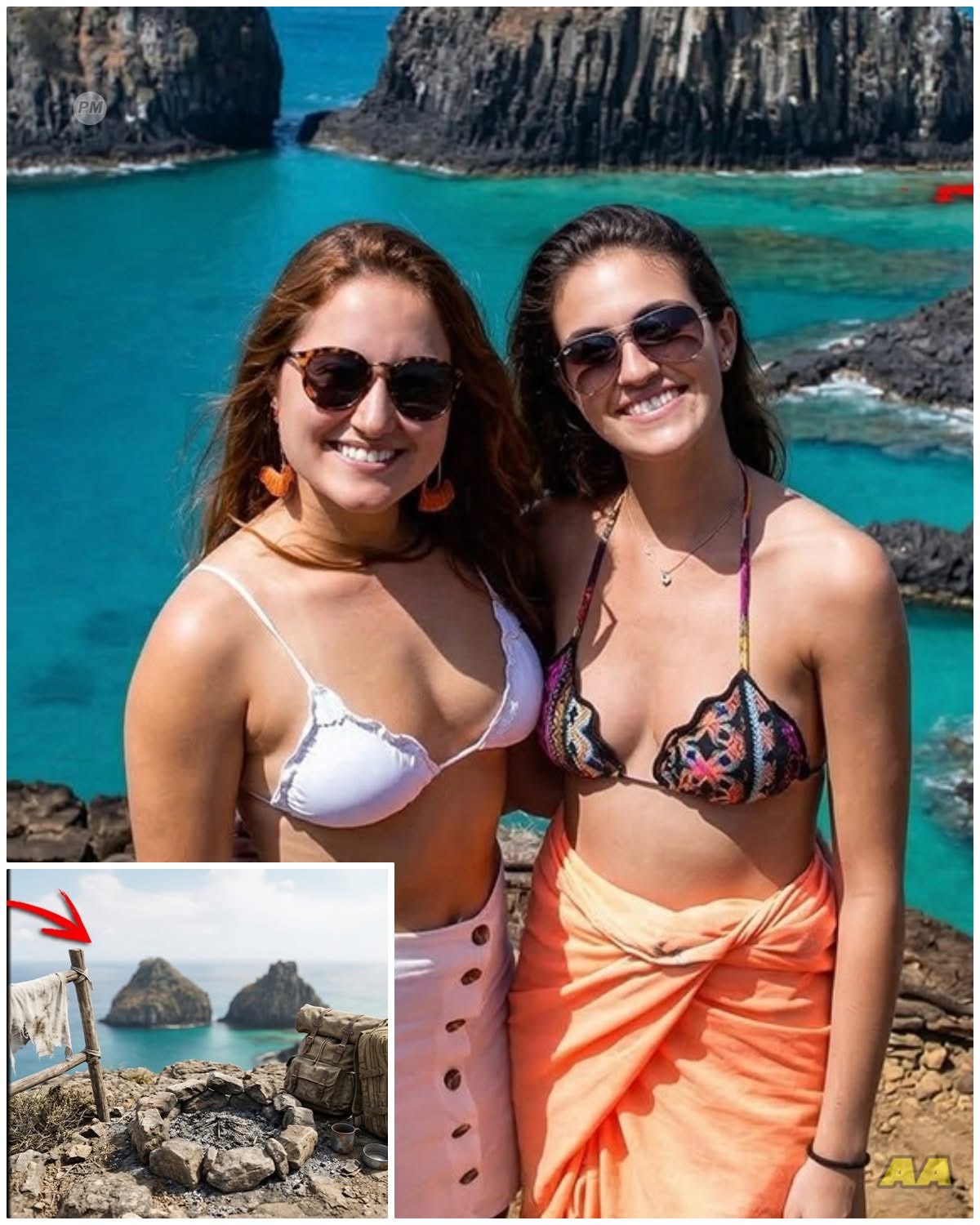
Renata sent photo was a selfie with Renata own younger sister , Débora, both of them with their backs to the sea, with the Dois Irmãos hill in the background.
The caption read:
"First swim of the day, Mom."
The mother responded with an 11-second audio message, wishing her a good outing and asking her to put on sunscreen.
Renata listened to the audio.
The two ticks turned blue at 6:44.
Neither of them responded to any further messages.
The boat that they had rented for the trip was found two days later, stranded on a strip of sand at Leão beach, with the life jackets folded on the back seat, a backpack containing two dead cell phones , sunscreen, a half-empty bottle of water, and the two women's documents inside a clear plastic bag.
The engine was off.
The tank still had fuel in it.
There was no sign of a malfunction, no sign of a struggle, no sign of anything.
This is the story of two sisters, one twenty nine years old, the other girl aged twenty three years old, who had disappeared on a Thursday in November in the Fernando de Noronha archipelago, 545 km off the coast of Recife, in a stretch of sea they had known since childhood.
They were not first-time tourists.
The girls father had owned a guesthouse in the village of Remédios for 15 years.
They grew up swimming in those waters.
They knew where the current pulled, where the rocky bottom cut, where the sea was calm, and where one should not go in, even on a calm day.
Nothing in their profiles suggested recklessness.
Nothing in their history pointed to escape.
Nothing in the conversations of the previous days indicated anything out of the ordinary.
The Civil Police of Pernambuco opened an investigation on the third day.
The Fire Department conducted searches by sea and land for eleven days.
The Navy mobilized a coastal patrol boat.
Divers searched the coves outside the main island.
Local fishermen voluntarily went out in their boats.
Nothing was found.
No bodies, no traces, no pieces of clothing, no sandals floating.
The sea off Noronha returned nothing.
The case was provisionally closed in February 2020.
The pandemic overshadowed the news.
The family was left alone with the questions.
Two years and four months later, in March 2022, an amateur cameraman operating a drone over the secondary islands of the archipelago—those outside the tourist circuit where access is prohibited without authorization from ICMBio—captured an image that reopened everything.
In a patch of low vegetation on Rata Island, just over 1 km from the main island, there was a lit campfire and next to it, what appeared to be an improvised structure made of branches and tarpaulin.
Fernando de Noronha is an archipelago of 21 islands and islets in the middle of the Atlantic Ocean.
The main island is just over 17 km².
The secondary islands are smaller, uninhabited, and mostly have restricted access due to environmental concerns.
There are no residents, no shelters, and no drinking water.
They are pieces of volcanic rock covered by coastal vegetation, surrounded by a sea that changes its mood without warning.
In November 2019, the rainy season was beginning.
The northeast wind was blowing steadily.
Visibility at sea was good in the morning and decreased by mid-afternoon.
Renata had a degree in marine biology from UFPE.
Débora was in her fifth semester of physiotherapy at the same university.
The two lived together in an apartment in the Madalena neighborhood of Recife.
They had gone to Noronha to spend 10 days with their father, as they did every November since their parents separated.
It was a tradition, a routine, the kind of trip that nobody cancels and nobody questions.
Father Sebastião Bastos Cavalcante was waiting for his daughters for lunch when he realized that neither of them was answering the phone.
He called seven times, sent messages, and called the guy who rented boats on the beach near the port.
The boy said that they had left early, before seven , and that they must be in Sancho Bay.
Sebastião waited until three pm, then went down to the port, and then to the police station.
If this kind of story makes you stop and think about what can happen in a place we think we know, please tell us publicly
From here on, the story unfolds slowly, every detail matters.
And what happened in those two years between the disappearance and the drone image needs to be recounted with the care it deserves.
What happens when two people disappear in one of the most heavily guarded and beautiful places in Brazil, and the sea offers no answers?
How far is a father willing to go when the system says there's nothing more that can be done?
And what does it mean to have a bonfire lit on an island where no one should be?
We are in Fernando de Noronha, in November 2019.
The water temperature is 28º.
The sky is clear, the wind is steady, and two sisters have just left the port in an aluminum boat with an outboard motor, heading for a trip they have taken since childhood.
Renata woke up before five .
It was a habit...
Then, What happened next

You must be logged in to post a comment.