
Savio Tsang
-----
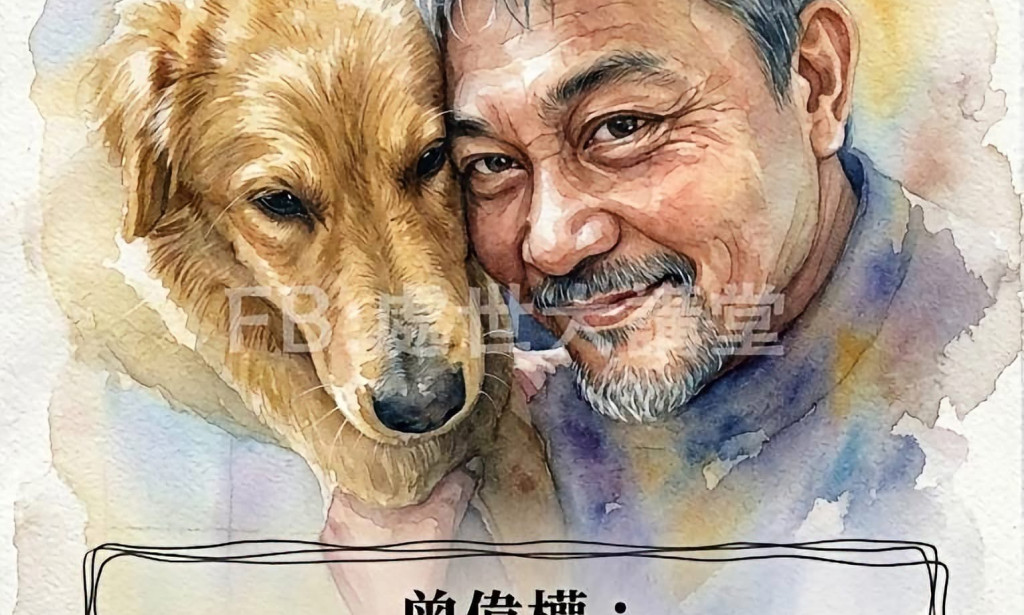
A remarkably insightful understanding of life: "The vast majority of people will die in their 70s; living to 80 is a rare occurrence. Those born in the 70s and 80s have only 20-30 years of life expectancy remaining. Subtracting their twilight years, the truly productive years are less than twenty. Even living to 83 only yields thirty thousand days. Because life is so limited, we should abandon procrastination and perfunctory behavior. Stay away from self-destructive circles, let go of endless desires, and take gains and losses lightly. Reserve your remaining golden years for passion and sincerity." There was a man in Hong Kong named Tsang Wai-Kuen. Born in 1961, he passed away from lung cancer in March 2025 at the age of 64. He never stayed in the spotlight, spending his life playing supporting roles, a true "golden supporting actor" at TVB.
He starred as Zhuo Yihang in *The Bride with White Hair*, acted in *The Legend of the Condor Heroes*, and *The Eight Immortals Crossing the Sea*. His roles ranged from period dramas to modern dramas, martial arts films, and fantasy films. He acted in dozens of films, never winning any major awards, but he poured his heart and soul into every role.
However, after his death, a piece of news caused a sensation. He donated his entire HK$2.3 billion estate, leaving nothing behind, to stray animal protection and charity, entrusting his friend Louis Koo to execute the donation. He had no marriage and no children. His will shocked the entire internet. He said, "I just want to continue these good deeds." Tsang Wai-Kuen came from a wealthy family. His grandfather was a sugar tycoon in Southeast Asia, his father ran a silk shop, and his mother was a piano teacher. His family was never short of money; he wore custom-made suits from a young age and was a gifted pianist. His parents paved the way for him early on: studying abroad, inheriting the family business, a smooth career, and a life of wealth.
But deep down, he harbored a passion for acting. He would hide in his room, practicing dialogue in front of the mirror, pondering the joys and sorrows of characters.
His family initially thought he was just killing time out of boredom, until one day his father saw him meticulously imitating a character from a period drama in the living room. Enraged, his father immediately berated him: "Our family is all about education and business, what are you learning that for? It's shameful!" While his father was furious, his mother quietly remarked, "He actually acts quite well." She secretly protected this unconventional child. Amidst the doubts of his elders, Zeng Weiquan made a decision that surprised everyone: he applied to ATV's acting training program.
This meant giving up his readily available family fortune and respectable life to pursue a dream that was considered "unstable" and "relying on his looks." It wasn't that he didn't love money; he had done the math: money could wait, but acting couldn't.
If he waited until he was old, he wouldn't be able to act anymore. He didn't want to wait; he wanted to act. He wasn't squandering his family's wealth; he treated his family as a starting point, not an end point. The starting point was there; he glanced back, then walked away without looking back.
In 1982, 21-year-old Zeng Weiquan graduated from the training program and officially signed with ATV. He didn't rely on looks or background; he relied on his understanding of the characters and his meticulous study of the lines. In 1986, the TV series *The Legend of the White-Haired Witch* premiered, and he played the male lead, Zhuo Yihang.
He portrayed a gentle, refined, yet internally conflicted swordsman who betrayed his master for love, delivering a truly authentic performance. His infatuation, patience, and helplessness were meticulously crafted, making every glance unforgettable.
That role made him ATV's top star overnight. For the next few years, he received numerous offers, and his salary skyrocketed. But in 1990, when everyone thought he would maintain his leading role, he made an unexpected choice: leaving ATV and joining rival TVB. Everyone was surprised; why would he voluntarily leave his leading role for a place where he had to "start all over again"?
He simply said, "I want to play more different kinds of people." He was 29 years old that year. Stepping down from the glittering stage of leading roles, he transformed into a cast of complex, marginal, and challenging yet richly nuanced supporting characters in TVB dramas. He wasn't picky about roles; he took any opportunity. Loyal ministers, treacherous officials, tycoons, beggars, mental patients—he accepted everything.
If he acted well, no one praised him. If he messed up, he was criticized. He didn't care. What he cared about was whether he had truly understood the character. He didn't go from being a lead to a supporting actor; he turned supporting roles into leads.
Tsang Wai-Kuen doesn't smoke, drink, or socialize. He doesn't buy property, doesn't invest in stocks, and doesn't save money. Most of his earnings are spent on one thing: stray dogs. He owns several, all rescued, sick, disabled, and unwanted.
Every morning, the first thing he does isn't drink coffee or read the newspaper, but walk his dogs. Even after a long day at work, no matter how late or tired he is, he feeds his dogs first.
Once, he saw a stray dog on the street, its leg broken, lying on the roadside howling in pain after being hit by a car. Without a word, he picked up the dog, put it in his car, and took it to the vet. The medical bills exceeded ten thousand yuan. His friend said to him, "Are you crazy? Over ten thousand yuan for a stray dog?"
He didn't explain, but wiped away the dog's tears. It wasn't that he had money to burn; he was spending it on things he felt were worthwhile. Dogs can't speak, they can't flatter, they can't betray. They can only wag their tails and look at you with wet eyes. Looking into those eyes, he felt at peace. It wasn't that the dog needed him; it was that he needed the dog.
In 2024, Zeng Weiquan was diagnosed with lung cancer. He turned down all acting offers and went home to recuperate. It wasn't that he wasn't afraid; he swallowed his fear. Swallowing it, he channeled it into his concern for the dog. He was afraid that after he was gone, the dog would be left without anyone to care for it. He began writing his will, going through several drafts.
He bequeathed all of his assets, totaling 2.3 billion Hong Kong dollars, to his close friend Louis Koo. Not to relatives, not to friends, but to Louis Koo. He had only one request: that the money be used for charity, for stray animals. He said, "I don't need these things. They should go where they need them." Louis Koo accepted this weighty inheritance, promising to pass on this kindness. During his lifetime, he never married, never had children, never bought a house, and never drove a luxury car. He lived like a cloud, coming and going quietly, leaving no trace, yet bringing a gentle rain. A light rain, enough for a few blades of grass to drink.
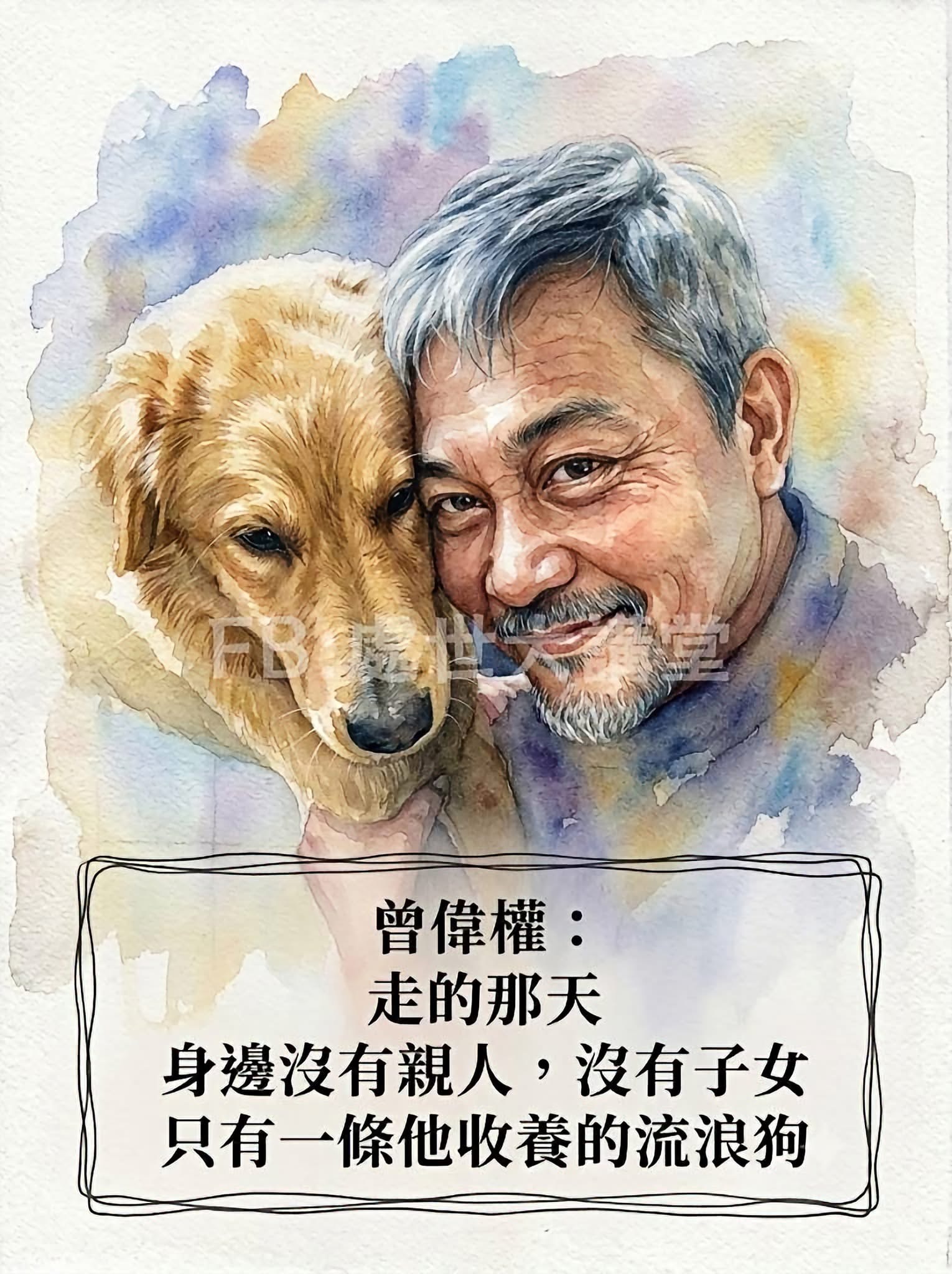
In March 2025, Tsang Wai-Kuen passed away. On the day he died, he had no relatives or children by his side. Only a stray dog he had adopted lay whimpering beside his bed.

You must be logged in to post a comment.