

She once ran on the Olympic track, and later, in a Las Vegas hotel room, she provided companionship to strangers for $600 an hour. Her husband knew all along.
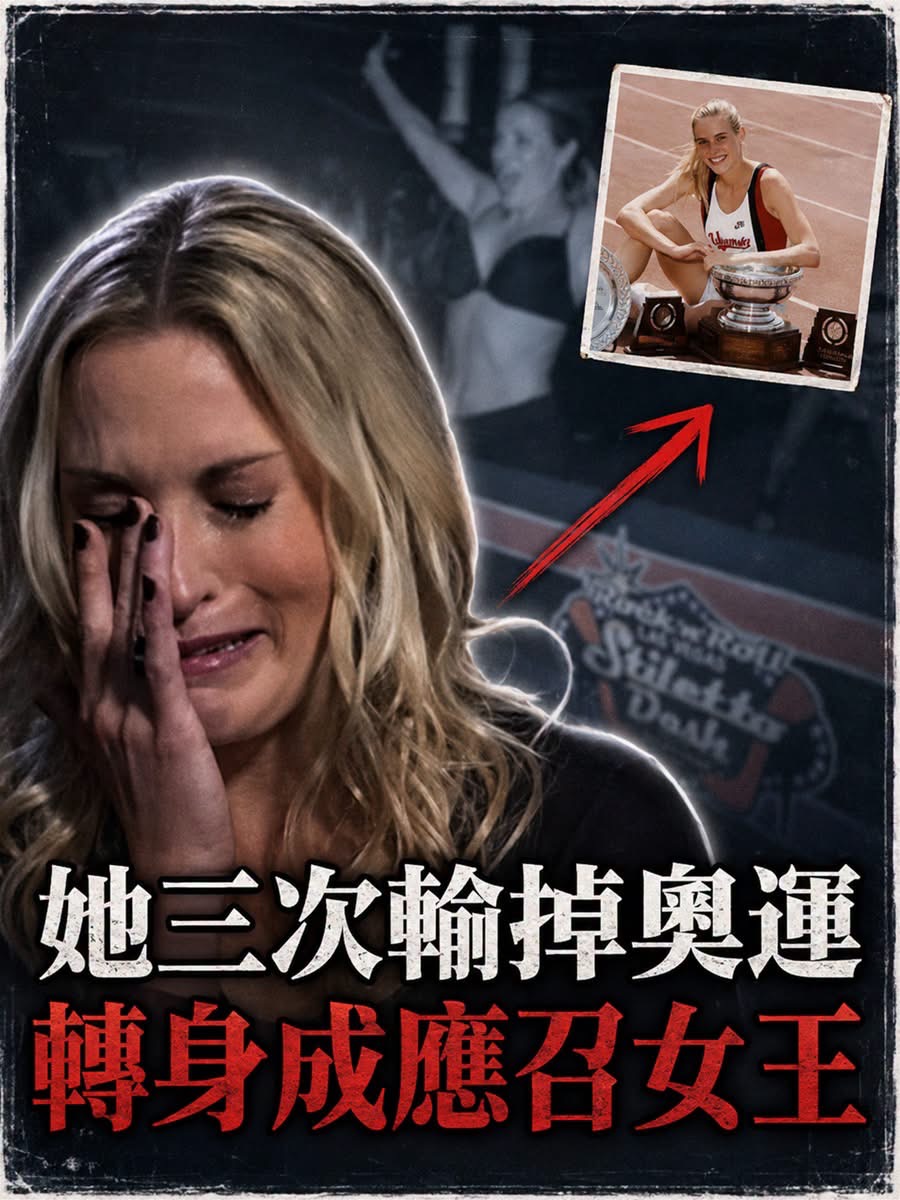
Her name was Susie Hamilton, a three-time Olympian, the US middle-distance running record holder, a nine-time national champion, and once named one of the top ten female athletes in the US. She disappeared halfway through filming Nike and Reebok commercials. Twelve years later, people learned where she had gone.
Susie was born in Wisconsin in 1968, the youngest of four children. At the age of nine, she discovered she enjoyed running and began running near her home. In fifth grade, she won a school competition, and at that moment, she felt this was the life she wanted.
She ran faster and faster. By the time she graduated high school, she had won eleven consecutive state championships, more medals than any other high school athlete, and was named one of the world's top 100 high school athletes by an American sports magazine. Over two hundred universities wanted to admit her, but she ultimately chose the University of Wisconsin-Madison because of the coach she admired. During her college years, she won nine national college championships, broke two US records, graced the covers of *People* and *Vogue* magazines, and became a household name in sports.
During her freshman year, she met baseball pitcher Mark Hamilton, and the two fell in love. They married a week after graduation, with Mark fully supporting her running career.
She competed in three Olympics. In 1992 in Barcelona, she finished 11th in the 1500-meter qualifying round. In 1996 in Atlanta, she finished fourth in the 800-meter. Despite not winning a medal in two consecutive Games, the American public still held high hopes for her.
In 2000 in Sydney, at 32, she knew this was her last chance. Even more devastating was the fact that her brother, who suffered from bipolar disorder, had committed suicide a year earlier. She wanted to win a medal for her brother, her family, and herself.
She started the race in the lead, even holding the top spot for the first 1,000 meters. But in the final lap, she slowed down, and runners passed her one after another. Seeing three people overtake her, she realized her medal hopes were dashed. About 150 meters from the finish line, she deliberately fell—a tired runner faking a fall sounds more respectable than saying "I can't run anymore." She walked to the finish line and was wheeled off in a wheelchair by staff.
She never returned to the racetrack after that.
After retiring, she returned to Wisconsin, started a real estate company with Mark, had a daughter, and outwardly lived a normal life. But something was wrong inside. She became irritable, withdrawn, unwilling to go out, feeling like a failure, and afraid of being judged. Mark took her to see a doctor, where she was diagnosed with depression and prescribed sertraline.
The medication did "improve" her, but in the wrong direction. She became abnormally manic, so energetic that her husband couldn't handle it, and her emotions soared as if she were eighteen again. She didn't actually have depression, but bipolar disorder (manic-depressive illness). The medication actually pushed her into an extreme manic phase.
The couple went on vacation to Las Vegas, and Susie suggested hiring escorts for a threesome. Mark couldn't resist her and agreed. After that, Susie seemed to have a switch flipped. She started flying to Las Vegas alone, hiring escorts herself. She thought: if you can spend money to have fun, why not make money in return?
She told Mark about this idea. Mark didn't get angry, but he was worried and insisted on accompanying her to the agency meeting, watching her walk into her first hotel room. Susie used the alias Kelly, earning $600 an hour.
She quickly made a name for herself in the industry. She discovered a "escort ranking list" and was determined to get number one. A few months later, she climbed to second place, but just before taking first place, she suddenly lost interest. She began to enjoy a double life—participating in charity marathons and giving speeches during the day, and flying to Las Vegas to work as a prostitute at night. Later, she even proactively revealed her true identity to her clients, enjoying their shocked expressions.
Then the scandal broke. In 2012, a gossip reporter, posing as a customer, met with her, gathered complete information, and exposed her secrets to the world. The entire nation was shocked.
But Mark always felt something was wrong. Susie's mood swings were too extreme; he suspected it was a medication issue. They consulted a renowned doctor for a re-diagnosis, finally confirming that Susie had bipolar disorder and had been taking the wrong medication. The antidepressant not only failed to cure her but also made her unable to control her impulses.
After the diagnosis, she began receiving proper treatment and published her autobiography, *Fast Girl*, in 2015, recounting her story from beginning to end.
Susie later lived in Wisconsin with her husband and daughter, teaching yoga and occasionally giving speeches. She said that period was full of mistakes and chaos, but it taught her to face her illness and herself.
When Susie fell at the Sydney Olympics, she probably thought it was the most embarrassing moment of her life. She didn't know that something else was waiting for her. She wasn't a bad person; she was just sick. A wrong diagnosis led her from the track to her hotel room.
Her husband never left her side—he accompanied her to prostitutes, to doctor's appointments, and even to her embarrassing television appearances. When Mark was later asked why he didn't divorce her, he said, "She's sick, not changed." When someone makes a mistake, and someone is willing to listen to their story and stay by their side, that's probably more precious than any medal.

You must be logged in to post a comment.