

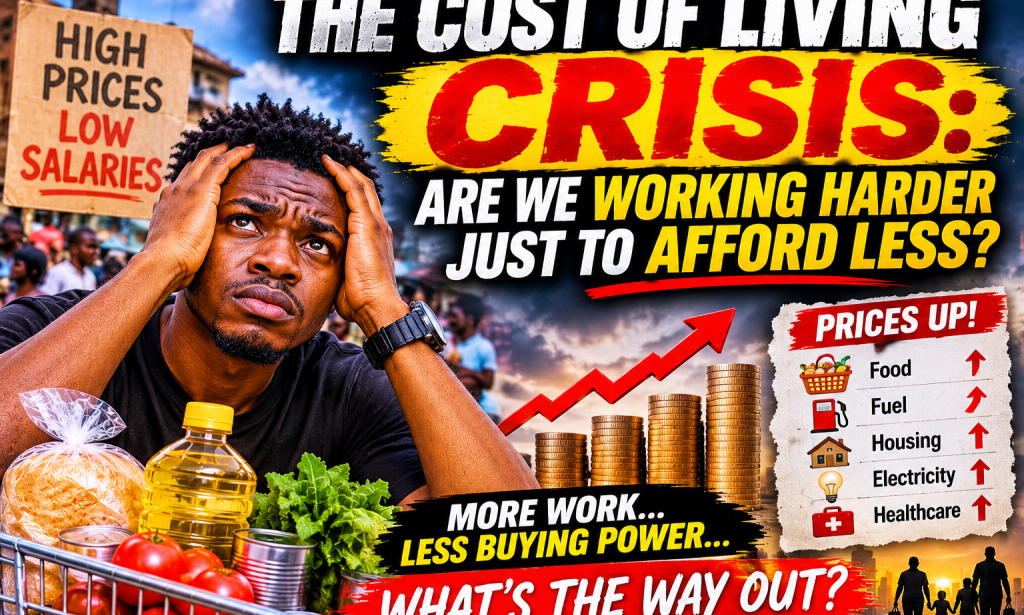
There was a time when having a steady job and earning a monthly salary meant you could gradually build a comfortable life. You could pay your bills, take care of your family, save some money and still have something left to enjoy yourself.
Today, that reality seems to be changing.
People are working longer hours, taking extra jobs, starting side businesses and constantly looking for additional sources of income. Yet, for many, it feels like they're moving backwards financially.
Think about it. Your salary might remain the same for months or even years, but the price of food, rent, transportation and almost everything else keeps increasing.
Even when your employer gives you a raise, that extra money might disappear almost immediately because the cost of everything has gone up again.
This raises an important question: What's the point of earning more money if that money keeps losing its purchasing power?
Should Salaries Automatically Increase When Inflation Rises?
Some people believe salaries should be adjusted whenever inflation increases. After all, workers shouldn't have to sacrifice their standard of living simply because the economy is becoming more expensive.
Others argue that automatically increasing salaries could put additional pressure on businesses, increase operating costs and potentially push prices even higher.
But where should the balance be?
Should employers be legally required to adjust salaries based on inflation, or should salary increases depend entirely on individual companies and economic conditions?
Are Ordinary People Getting Poorer Despite Working Harder?
One of the biggest frustrations in today's economy is that hard work doesn't always translate into financial security.
People are doing everything they're supposed to do: getting educated, finding jobs, working hard, saving money and trying to build something for themselves.
Yet, many still struggle to afford basic necessities.
For some, saving has become almost impossible. For others, the idea of owning a house, buying a car or retiring comfortably feels increasingly unrealistic.
Perhaps the problem isn't that people have stopped working hard. Perhaps the value of their hard work is simply not translating into the lifestyle it once could provide.
Who Actually Benefits When the Cost of Living Keeps Increasing?
Inflation doesn't affect everyone equally.
While ordinary workers struggle with rising expenses, some businesses can increase their prices, property owners can raise rents, and investors who own certain assets may benefit from rising asset values.
Of course, not every business or investor benefits from inflation. Higher operating costs can hurt them too.
But this creates an interesting economic question: Does inflation widen the gap between people who already own valuable assets and those who depend entirely on monthly salaries?
If Your Salary Doubled Tomorrow, Would Your Life Actually Improve?
Imagine waking up tomorrow to discover that your monthly salary has doubled.
At first, it sounds like a life-changing opportunity.
You could afford better housing, eat better, save more, travel and finally enjoy some financial freedom.
But what happens if prices continue rising?
Would that doubled salary still give you the lifestyle you imagined five years from now?
This is why earning more money and becoming financially better off are not necessarily the same thing. What matters is not just how much you earn, but what your money can actually buy.
Final Thoughts: Are We Living Better or Just Surviving Better?
Perhaps the most worrying part of the cost-of-living crisis isn't simply that things are becoming expensive.
It's that people are gradually adjusting their expectations.
Things that were once considered normal are becoming luxuries. Saving money feels like a privilege. Taking a vacation feels unnecessary. Even having enough money left at the end of the month can feel like an achievement.
And maybe that's the real question we should be asking ourselves.
Are we genuinely making financial progress, or have we simply become better at surviving difficult economic conditions?
Let's Talk
I'd love to hear honest experiences and different perspectives:
1. Do you think salaries should automatically increase when inflation rises?
2. Are ordinary people becoming poorer despite working harder?
3. Who benefits most when the cost of living keeps increasing?
4. If your salary doubled tomorrow, would it genuinely improve your lifestyle, or would rising prices eventually catch up?
Let's have a real conversation. No perfect economic theories needed, just honest opinions and real-life experiences.


































You must be logged in to post a comment.