

The Teaspoon That Contains More Life Than Earth’s Population
Introduction
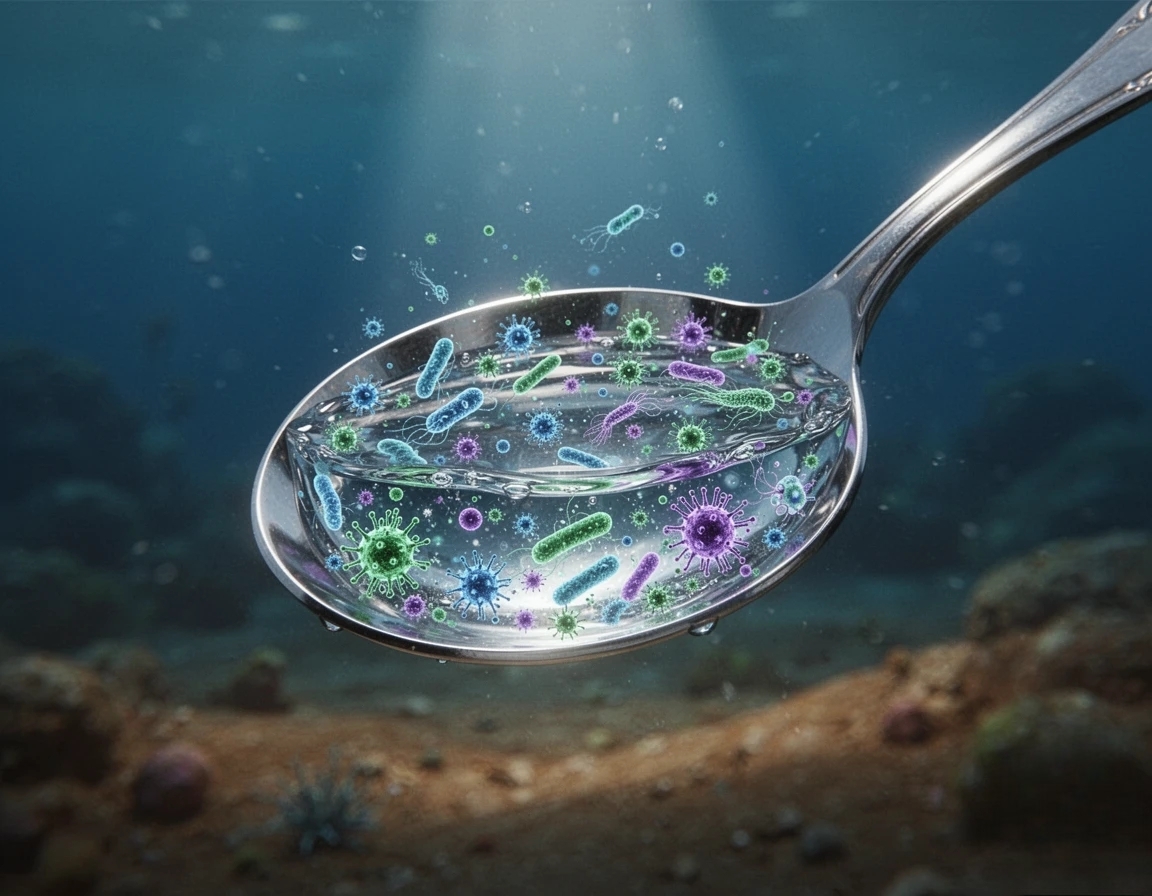
Imagine holding a single teaspoon of water. It seems insignificant—just a tiny amount of liquid. Yet hidden within that small spoonful could be more living organisms than there are people on Earth.
With the global human population now exceeding 8 billion, it may sound impossible that a teaspoon-sized sample could contain even more life. However, in certain environments, especially the oceans and soil beneath our feet, microscopic organisms exist in astonishing numbers.
Scientists have discovered that a single teaspoon of seawater or fertile soil can contain billions of bacteria, viruses, archaea, and other microorganisms. These invisible life forms create vast ecosystems that support nearly every living thing on the planet.
This remarkable fact reveals a hidden world teeming with life, complexity, and activity. While humans often focus on large animals and visible plants, the majority of Earth's biodiversity exists at a microscopic scale.
In this article, we'll explore the incredible world inside a teaspoon, discover why microorganisms are so abundant, and learn how these tiny creatures make life on Earth possible.
What Does “More Life Than Earth’s Population” Really Mean?
When scientists talk about a teaspoon containing more life than Earth's population, they are referring to microorganisms.
These include:
Bacteria
Archaea
Viruses
Fungi
Protists
Microscopic algae
Individually, these organisms are far too small to see with the naked eye. However, they exist in such enormous numbers that a tiny sample can contain billions of living entities.
For comparison:
Earth's human population: over 8 billion
One teaspoon of healthy soil: up to 10 billion microorganisms
One milliliter of seawater: millions of microbes
One gram of soil: thousands of species
This means a teaspoon of rich soil may contain more individual organisms than all humans alive today.
The Hidden Universe Beneath Our Feet

Soil: Earth’s Most Crowded Habitat
When people think about biodiversity, they often imagine rainforests, coral reefs, or jungles.
Surprisingly, one of the most biodiverse places on Earth is ordinary soil.
Beneath every step lies a bustling microscopic metropolis.
A teaspoon of fertile soil may contain:
Billions of bacteria
Millions of fungal cells
Thousands of protozoa
Hundreds of microscopic worms
Countless viruses
Scientists estimate that only a small fraction of soil microbes have even been identified.
Many remain completely unknown.
Why Soil Supports So Much Life
Soil provides ideal living conditions because it contains:
Water
Microorganisms require moisture for survival and reproduction.
Nutrients
Decaying plants and animals provide a constant food supply.
Air Pockets
Tiny spaces between soil particles allow oxygen to circulate.
Protection
Soil shelters microbes from sunlight, temperature extremes, and predators.
Together, these factors create one of the richest habitats on the planet.
The Ocean: A Sea of Invisible Life
The oceans cover more than 70% of Earth's surface.
Although they may appear empty, seawater is filled with microscopic life.
A single teaspoon of seawater can contain:
Millions of bacteria
Millions of viruses
Tiny algae
Planktonic organisms
Archaea
These organisms form the foundation of marine ecosystems.
Without them, ocean life would collapse.
Meet the Ocean’s Tiny Giants
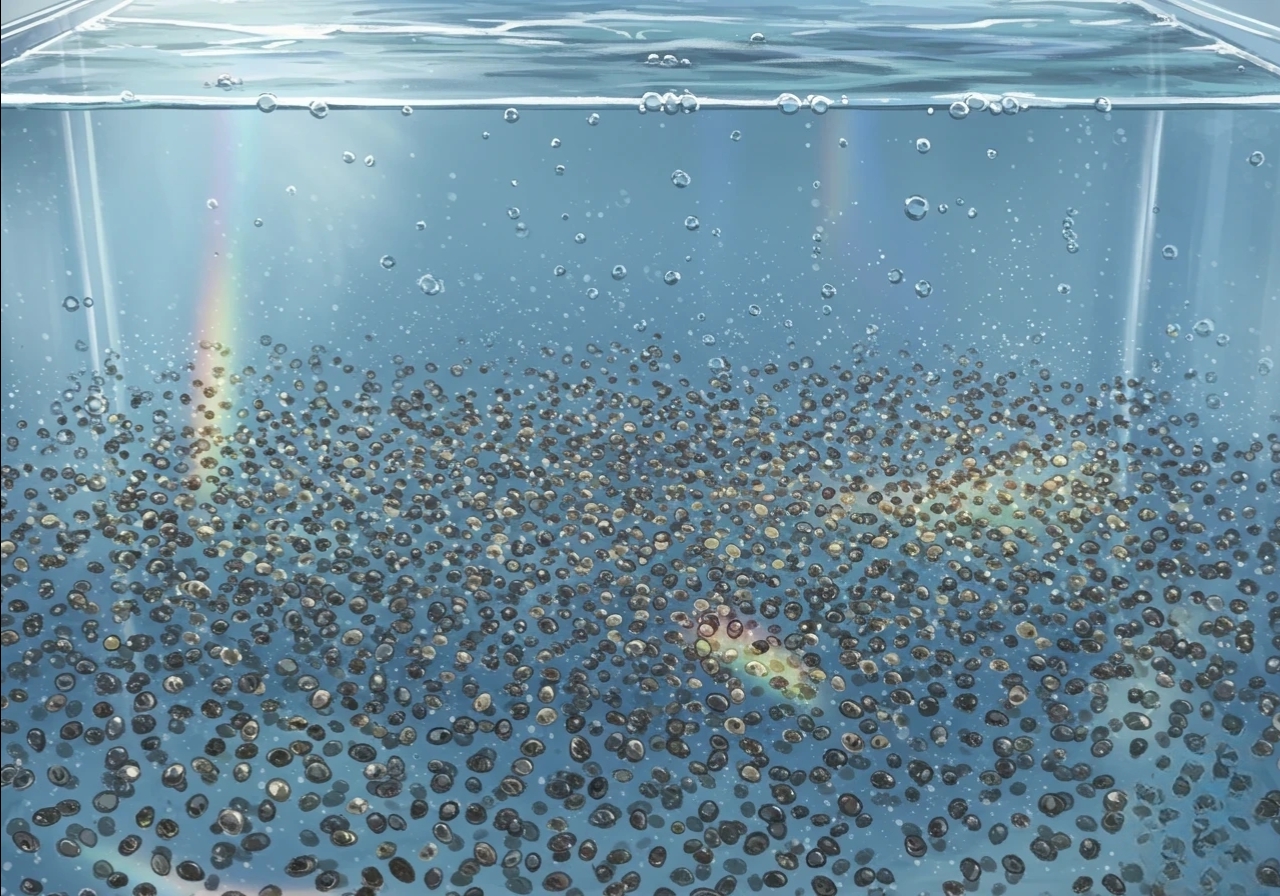
Phytoplankton
Phytoplankton are microscopic organisms that perform photosynthesis.
Despite their tiny size, they produce roughly half of the oxygen in Earth's atmosphere.
Every second breath you take may exist thanks to these invisible organisms.
Zooplankton
Zooplankton feed on phytoplankton and become food for larger creatures.
They support entire ocean food chains.
Marine Bacteria
Marine bacteria recycle nutrients and help maintain ecological balance.
Without them, oceans would quickly become overwhelmed with waste.
The Astonishing Numbers of the Microbial World
Humans struggle to imagine billions, let alone trillions.
Microbial populations exist on scales almost beyond comprehension.
Scientists estimate:
Around 1 trillion microbial species may exist on Earth.
The human body contains tens of trillions of microbes.
Oceans contain approximately 10³⁰ bacteria.
Soil ecosystems host enormous microbial diversity.
If every microbe were visible, the Earth would appear completely different.
The world would look packed with life at every surface and in every drop of water.
The Human Body: A Walking Ecosystem
Many people assume their bodies consist solely of human cells.
The reality is far more fascinating.
Each person hosts vast microbial communities.
These microbes live:
On the skin
In the mouth
Inside the digestive system
In the respiratory tract
Collectively, this community is known as the microbiome.
Why We Need Our Microbes
Beneficial microbes help:
Digest food
Produce vitamins
Protect against harmful bacteria
Train the immune system
Maintain overall health
Without these microscopic partners, human survival would be difficult.
In many ways, humans are ecosystems rather than individual organisms.
The Oldest Life Forms on Earth
Microorganisms were Earth's earliest inhabitants.
Scientists believe microbial life emerged approximately 3.5 to 4 billion years ago.
For billions of years:
There were no animals.
There were no plants.
There were no dinosaurs.
Only microbes ruled the planet.
These ancient organisms transformed Earth by producing oxygen and altering the atmosphere.
Without them, complex life might never have evolved.
How Scientists Discover Life in a Teaspoon

Traditional Methods
Historically, scientists grew microbes in laboratories.
However, this approach revealed only a small fraction of existing species.
Many microorganisms cannot be cultured using standard techniques.
DNA Sequencing Revolution
Modern DNA sequencing changed everything.
Scientists can now identify organisms by analyzing genetic material directly from environmental samples.
This technique has revealed:
Vast unknown ecosystems
Previously undiscovered species
Complex microbial interactions
Every year, researchers uncover thousands of new microorganisms.
The Viral World: Nature’s Most Numerous Entities
Viruses are often overlooked because they are not considered fully alive by all scientists.
Yet they are among the most abundant biological entities on Earth.
A teaspoon of seawater can contain:
Tens of millions of viruses
Globally, scientists estimate there are around 10³¹ viruses.
That's more than the number of stars in the observable universe.
Why Viruses Matter
Viruses play important ecological roles.
They:
Regulate microbial populations
Transfer genes between organisms
Influence nutrient cycles
Drive evolution
Far from being merely disease-causing agents, viruses help shape ecosystems worldwide.
The Underground Internet of Fungi
Beneath forests lies another hidden world.
Fungi form vast underground networks known as mycelium.
These networks connect plant roots across large distances.
Scientists sometimes call this system the "Wood Wide Web."
What Fungal Networks Do
Mycelium helps:
Transport nutrients
Share resources
Improve plant growth
Increase ecosystem resilience
A teaspoon of forest soil may contain miles of fungal threads.
These structures create one of the most extensive living networks on Earth.
Extreme Microbes: Life in Impossible Places
Some microorganisms survive in environments that would kill most life forms.
These organisms are called extremophiles.
They thrive in:
Boiling hot springs
Deep-sea hydrothermal vents
Antarctic ice
Acidic lakes
Highly radioactive environments
Their existence has expanded our understanding of life's limits.
Could Similar Life Exist Elsewhere?
The discovery of extremophiles suggests life might survive beyond Earth.
Scientists now search for microbial life on:
Mars
Europa
Enceladus
Other potentially habitable worlds
If microbes can survive Earth's harshest environments, they may survive elsewhere in the universe.
Why Tiny Organisms Control the Planet
Although invisible, microorganisms perform essential planetary functions.
They regulate:
Oxygen Production
Photosynthetic microbes generate vast amounts of oxygen.
Nutrient Cycling
Microbes recycle carbon, nitrogen, and phosphorus.
Decomposition
They break down dead organisms and organic matter.
Climate Regulation
Microbial activity influences atmospheric gases.
Without microbes, ecosystems would rapidly collapse.
What Would Happen If Microbes Disappeared?
The consequences would be catastrophic.
Without microbes:
Plants would struggle to obtain nutrients.
Dead matter would accumulate.
Oxygen production would decrease.
Food chains would collapse.
Ecosystems would fail.
Human civilization depends on microbial processes every day.
Even though we rarely notice them, these tiny organisms are the foundation of life.
Surprising Facts About the Teaspoon of Life
Here are some mind-blowing facts:
A teaspoon of soil can contain more organisms than there are humans on Earth.
Microbes have existed for billions of years longer than humans.
Most microbial species remain undiscovered.
Your body hosts trillions of microorganisms.
Ocean microbes generate much of the planet's oxygen.
Viruses outnumber stars in the observable universe.
Microbial ecosystems drive Earth's nutrient cycles.
These facts reveal just how little of the living world is visible to us.
The Future of Microbial Research

Scientists are only beginning to understand microbial life.
Future discoveries may lead to:
New medicines
Better agriculture
Climate solutions
Advanced biotechnology
Insights into extraterrestrial life
The next major scientific breakthrough could come from a microbe hiding inside a teaspoon of soil.
Conclusion
The idea that a teaspoon can contain more life than Earth's entire human population sounds unbelievable, yet it is scientifically accurate. Beneath our feet, within ocean waters, and even inside our own bodies exists an immense hidden universe of microorganisms.
These tiny life forms recycle nutrients, produce oxygen, support ecosystems, and make complex life possible. While humans often view themselves as the dominant species on Earth, the planet truly belongs to microbes in terms of numbers, diversity, and ecological importance.
The next time you pick up a teaspoon of soil or a drop of seawater, remember that you may be holding billions of living organisms—a thriving microscopic civilization that has existed for billions of years and continues to shape the future of life on Earth.
Frequently Asked Questions (FAQs)
1. Can a teaspoon really contain more life than Earth’s population?
Yes. A single teaspoon of healthy soil can contain billions of bacteria, fungi, protozoa, and other microorganisms. In some cases, the total number of microscopic organisms can exceed the Earth's human population of more than 8 billion people.
2. What types of organisms live in a teaspoon of soil?
A teaspoon of soil may contain a wide variety of life forms, including:
Bacteria
Archaea
Fungi
Protozoa
Algae
Microscopic worms
Viruses
Together, these organisms form a complex ecosystem that supports plant and animal life.
3. Why are microorganisms important to life on Earth?
Microorganisms perform essential functions such as:
Recycling nutrients
Breaking down dead organic matter
Producing oxygen
Supporting plant growth
Maintaining healthy ecosystems
Without microbes, life as we know it would not exist.
4. Are there more microbes than humans on Earth?
Absolutely. Scientists estimate that microbial cells outnumber humans by an unimaginable margin. There are trillions upon trillions of microorganisms living in soil, oceans, the atmosphere, and even inside our bodies.
5. How do scientists study microorganisms that are too small to see?
Researchers use advanced tools such as microscopes, DNA sequencing, and genetic analysis to identify and study microorganisms. Modern technologies have revealed countless species that were previously unknown.
6. Could similar microscopic life exist on other planets?
Many scientists believe it is possible. The discovery of extremophiles—microbes that survive in extreme conditions on Earth—suggests that simple microbial life could potentially exist on places like Mars or the icy moons of Jupiter and Saturn if suitable conditions are present.

You must be logged in to post a comment.