

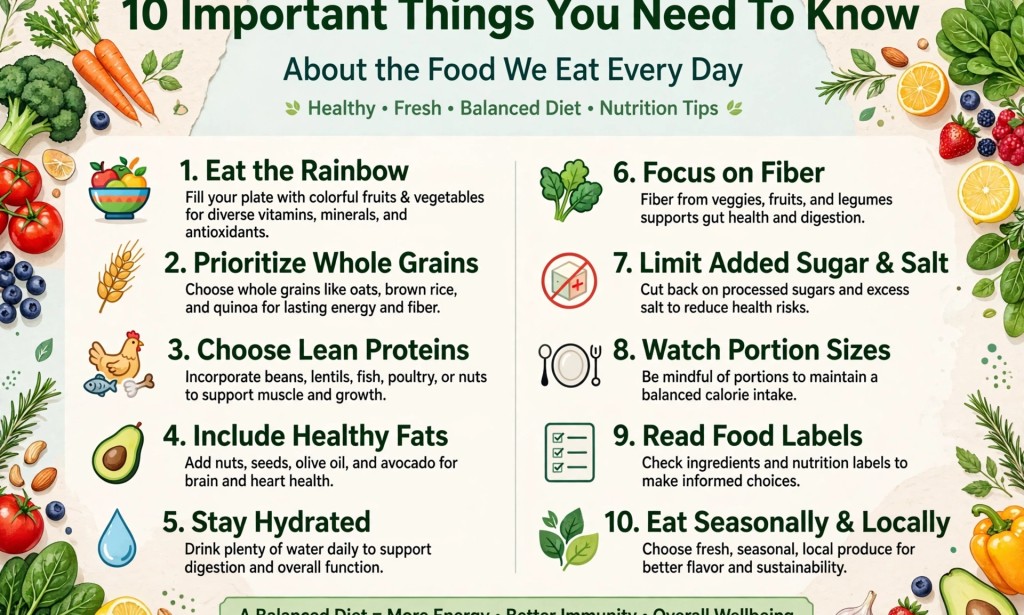
10 Important Things You Need to Know About the Food We Eat Every Day
Most of us eat simply to satisfy hunger. We eat what is available, what tastes good, or what is convenient. But have you ever stopped to think about what the food you eat every day does inside your body?
Food provides the energy and nutrients your body needs to function, grow, repair itself, and stay healthy. However, not all foods offer the same nutritional benefits, and the way you prepare and combine them also matters.
Here are 10 important things everyone should know about the food we eat every day.
1. Food Is More Than Just Taste
Food does more than satisfy hunger. Every meal provides nutrients that help your body perform important functions. Protein helps build and repair body tissues, carbohydrates provide energy, healthy fats support brain function, and vitamins and minerals help regulate different processes in the body.
This is why it is important to think about the nutritional value of what you eat rather than choosing food based on taste alone.
2. Fresh Food Can Be a Healthy Choice, but Packaged Food Is Not Always Bad
Fresh fruits, vegetables, fish, and other minimally processed foods can provide important nutrients. However, packaged food is not automatically unhealthy, and a long shelf life does not necessarily mean a product contains harmful chemicals.
Some packaged foods, such as canned beans, sardines, and frozen vegetables, can be nutritious and convenient. The important thing is to read food labels, check ingredients, and pay attention to added sugar, sodium, and saturated fat.
3. Sugar Is Hiding in More Foods Than You Think
Sugar is not found only in tea, coffee, and soft drinks. It can also be added to biscuits, breakfast cereals, sweetened yoghurt, sauces, packaged juices, and other processed foods.
Consuming too much added sugar over time can contribute to weight gain, tooth decay, and an increased risk of health problems such as type 2 diabetes and heart disease.
Make it a habit to check food labels and choose products with less added sugar. Also remember that whole fruits contain natural sugars alongside fibre, vitamins, and minerals.
4. Your Body Needs Water Every Day
Water is essential for digestion, temperature regulation, circulation, and many other functions in the body. Not drinking enough water can contribute to dehydration, which may cause symptoms such as thirst, headaches, dizziness, and tiredness.
Drink water regularly throughout the day, especially when the weather is hot or when you are physically active. Your water needs may vary depending on your body, activities, health, and environment.
5. The Way You Cook Food Can Affect Its Nutritional Value
Cooking makes many foods easier to digest and can improve food safety. However, some cooking methods can reduce certain nutrients, particularly when vegetables are exposed to high heat or large amounts of water for long periods.
Steaming, lightly stir-frying, or cooking vegetables for an appropriate amount of time can help preserve some of their nutrients. You do not need to eat every vegetable raw to benefit from it.
6. Eating Habits Before Bed Can Affect Your Sleep
Eating a very large or heavy meal shortly before going to bed may cause discomfort, indigestion, or acid reflux in some people. This can make it harder to sleep comfortably.
If you notice that late-night meals affect your sleep, try eating dinner a few hours before bedtime. However, eating late does not automatically cause weight gain. Your overall eating habits, food choices, and physical activity matter more.
7. A Balanced Diet Does Not Have to Be Expensive
You do not need imported or expensive foods to eat healthily. Many affordable Nigerian foods can provide the nutrients your body needs.
For example, you can build nutritious meals using foods such as:
- Rice and beans: Provide carbohydrates, plant protein, and fibre.
- Eggs: Provide protein and several important vitamins and minerals.
- Fish: Provides protein and, depending on the type, beneficial omega-3 fats.
- Ugu and other green vegetables: Provide vitamins, minerals, and fibre.
- Okra: Contains fibre and other beneficial nutrients.
- Seasonal fruits: Provide vitamins, minerals, and fibre.
The goal is to combine different food groups, including vegetables, fruits, protein sources, and energy-giving foods, instead of depending on only one type of food.
8. What You Eat Can Influence Your Mood and Energy
Have you ever noticed that you feel tired or sluggish after eating certain meals? Your food choices can influence your energy levels, concentration, and general well-being.
A balanced diet that includes vegetables, fruits, whole grains, protein, and healthy fats supports normal brain and body functions. Your gut and brain also communicate through several biological pathways, which is why gut health is an important area of nutrition research.
However, food alone does not determine your mood. Sleep, stress, physical activity, and other health factors also play important roles.
9. Be Careful With Too Much Oil, Salt, and Seasoning
Oil, salt, and seasoning can improve the taste of food, but using too much of certain ingredients may affect your health over time.
Excessive salt consumption can increase blood pressure and raise the risk of cardiovascular disease. Consuming too much saturated fat can also increase the risk of heart-related problems.
Ordinary food seasonings are not automatically harmful to your kidneys. However, some seasoning products contain significant amounts of sodium, so it is important to check their labels and avoid using excessive quantities.
Try using moderate amounts of oil and salt, and add natural flavour with ingredients such as onions, garlic, ginger, peppers, and local herbs.
10. Your Nutritional Needs May Be Different From Someone Else's
What works well for one person may not be suitable for another. People have different nutritional needs depending on their age, activity level, health conditions, allergies, and other individual factors.
For example, someone who performs physically demanding work may need more energy than someone who spends most of the day sitting. People with certain medical conditions may also need specific dietary adjustments.
Pay attention to how your body responds to different foods, but do not use personal experiences as a substitute for medical advice. If you have persistent symptoms or special dietary needs, speak with a qualified healthcare professional.
Conclusion: Your Health Starts With Your Everyday Food Choices
Eating is something we do every day, but the choices we make can have a lasting effect on our health. You do not have to completely change your diet overnight or spend a fortune buying expensive foods.
Start with simple habits: drink enough water, eat a variety of foods, include fruits and vegetables in your meals, reduce excessive salt and added sugar, and pay attention to how you prepare your food.
Remember, healthy eating is not about eating perfectly every day. It is about making better food choices consistently.
Your health starts with the choices you make on your plate. Make every meal count!
Disclaimer: This article is for general educational purposes only. It is not a substitute for professional medical advice, diagnosis, or treatment.


You must be logged in to post a comment.