

Introduction
Anaemia is a common health condition that occurs when the body does not have enough healthy red blood cells or haemoglobin to carry adequate oxygen to the body's tissues.
Haemoglobin is a protein found in red blood cells that helps transport oxygen from the lungs to other parts of the body.
When haemoglobin levels become too low, the body may not receive enough oxygen, leading to tiredness, weakness and other health problems.
Anaemia can affect children, adults, pregnant women and older people.
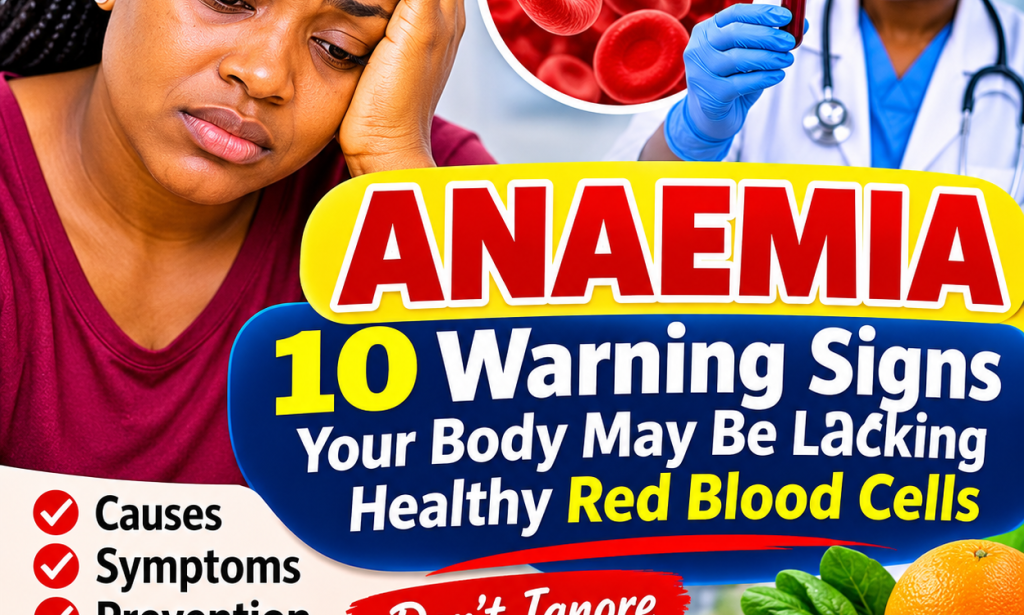
10 Warning Signs of Anaemia
1. Constant tiredness: Feeling unusually tired even after getting enough rest.
2. Dizziness: Frequent dizziness or feeling faint, especially when standing up.
3. Pale skin: The skin, gums or inner eyelids may appear paler than usual.
4. Shortness of breath: Difficulty breathing during activities that were previously easy.
5. Fast heartbeat: The heart may beat faster as it tries to deliver enough oxygen around the body.
6. Frequent headaches: Some people experience repeated headaches.
7. Cold hands and feet: Poor oxygen delivery can contribute to feeling unusually cold.
8. Difficulty concentrating: Anaemia may cause poor concentration and difficulty remembering things.
9. Brittle nails: Nails may become weak or break easily.
10. Unusual cravings: Some people develop cravings for non-food substances such as ice, soil or chalk. This condition is called pica.
Common Causes of Anaemia
- Iron deficiency.
- Vitamin B12 deficiency.
- Folate deficiency.
- Excessive blood loss.
- Pregnancy.
- Certain chronic diseases.
- Inherited blood disorders such as sickle cell disease.
Foods That Can Help Prevent Nutritional Anaemia
1. Liver and lean meat.
2. Fish and poultry.
3. Eggs.
4. Beans and lentils.
5. Dark green leafy vegetables.
6. Fortified cereals.
7. Oranges and other vitamin C-rich fruits.
Vitamin C helps the body absorb iron from plant-based foods.
Diagnosis and Treatment
Anaemia can be diagnosed through a blood test, particularly a Full Blood Count (FBC).
Treatment depends on the underlying cause. Some people may need iron supplements, vitamin B12, folic acid or treatment for an underlying medical condition.
Avoid taking iron supplements without proper assessment because not all anaemia is caused by iron deficiency.
Conclusion
Anaemia should not be ignored. Persistent tiredness, dizziness, weakness and unusual paleness deserve medical attention.
Early diagnosis and appropriate treatment can help prevent complications and improve quality of life.
Your health matters. Listen to your body and seek medical advice when something does not feel right.


You must be logged in to post a comment.