

Introduction
Have you ever imagined losing your eyesight gradually without even knowing it?
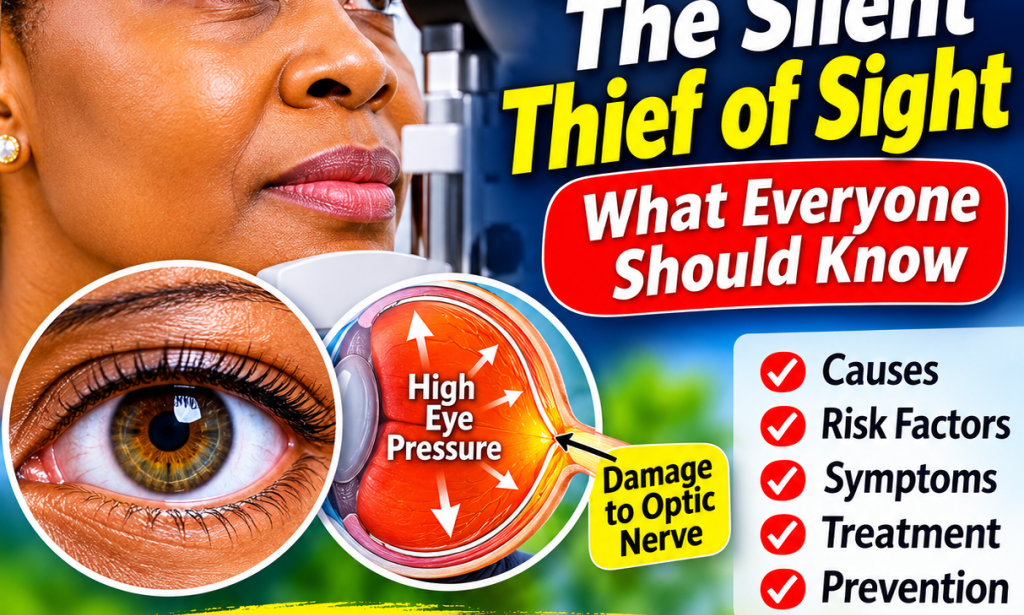
This is what makes glaucoma a dangerous eye condition. Glaucoma is commonly known as the silent thief of sight because it can damage the optic nerve slowly without noticeable warning signs in its early stages.
Millions of people around the world are living with glaucoma, and some do not even know they have it until significant vision loss has occurred.
Understanding this condition, recognising its risk factors and going for regular eye examinations can help protect your eyesight.
What Is Glaucoma?
Glaucoma is a group of eye diseases that damage the optic nerve, which carries visual information from the eye to the brain.
It is often associated with increased pressure inside the eye due to problems with the drainage of fluid called aqueous humour.
However, glaucoma can also develop in people whose eye pressure is within the normal range.
If left untreated, glaucoma can cause permanent vision loss and blindness.
Types of Glaucoma
There are several types of glaucoma, but the most common include:
1. Open-Angle Glaucoma
This is the most common type. It develops gradually when fluid does not drain properly from the eye. It usually causes no pain or noticeable symptoms at the beginning.
2. Angle-Closure Glaucoma
This occurs when the drainage angle of the eye becomes blocked. It can develop suddenly and cause severe eye pain, headache, blurred vision, redness, nausea and vomiting. This is a medical emergency.
3. Normal-Tension Glaucoma
This type damages the optic nerve even though the pressure inside the eye is within the normal range.
4. Congenital Glaucoma
This is a rare type that occurs in babies and young children due to abnormal development of the eye's drainage system.
Risk Factors for Glaucoma
Some factors that increase the risk include:
1. Increasing age.
2. Family history of glaucoma.
3. Diabetes.
4. Previous eye injuries.
5. Long-term use of steroid medications.
6. High eye pressure.
7. Certain ethnic backgrounds, including African ancestry.
Symptoms of Glaucoma
In the early stages, glaucoma may have no symptoms.
As the condition progresses, a person may experience:
- Gradual loss of peripheral (side) vision.
- Difficulty seeing objects at the sides.
- Tunnel vision in advanced stages.
- Blurred vision.
Sudden severe eye pain, red eyes, headache, blurred vision, nausea or vomiting may indicate acute angle-closure glaucoma and require immediate emergency treatment.
How Is Glaucoma Diagnosed?
An eye specialist can diagnose glaucoma through a comprehensive eye examination, which may include:
- Measuring eye pressure.
- Examining the optic nerve.
- Checking the visual field.
- Measuring corneal thickness.
- Examining the drainage angle of the eye.
Early diagnosis is extremely important.
Can Glaucoma Be Treated?
Yes. Although glaucoma damage cannot usually be reversed, treatment can slow or prevent further damage.
Treatment options include:
1. Prescription eye drops to reduce eye pressure.
2. Laser treatment to improve fluid drainage.
3. Surgery when other treatments are insufficient.
Patients should use prescribed eye drops consistently and attend follow-up appointments.
Five Ways to Protect Your Eyes
1. Go for regular comprehensive eye examinations.
2. Know your family history of glaucoma.
3. Avoid using steroid eye drops without medical prescription.
4. Manage conditions such as diabetes.
5. Seek immediate medical attention if you experience sudden severe eye pain or vision changes.
Conclusion
Glaucoma is a serious eye condition that can lead to permanent blindness if not detected and managed early.
The frightening thing is that you may not notice any problem until considerable damage has already occurred.
Do not wait until your eyesight begins to fail before visiting an eye specialist.
Protect your eyesight today. Early detection can save your vision tomorrow!
Medical Disclaimer
This article is for educational purposes only and does not replace professional medical diagnosis or treatment.❤️


Nice work
Early detection and treatment is the best
Godwin Ekpo ✓ Verified Premium Subscriber This member currently has an active Lodpost Premium membership. Premium members enjoy author analytics, a higher daily article limit, and 0% Lodpost commission on eligible donations.Thank you mma
You must be logged in to post a comment.