

Introduction
Diabetes is a chronic health condition that affects how the body regulates blood sugar (glucose). Glucose is an important source of energy for the body, but when blood sugar becomes too high, it can damage important organs if left untreated.
Many people live with diabetes without knowing they have it because the early symptoms may be mild or go unnoticed.
Understanding the warning signs can help you seek medical attention early and prevent serious complications.
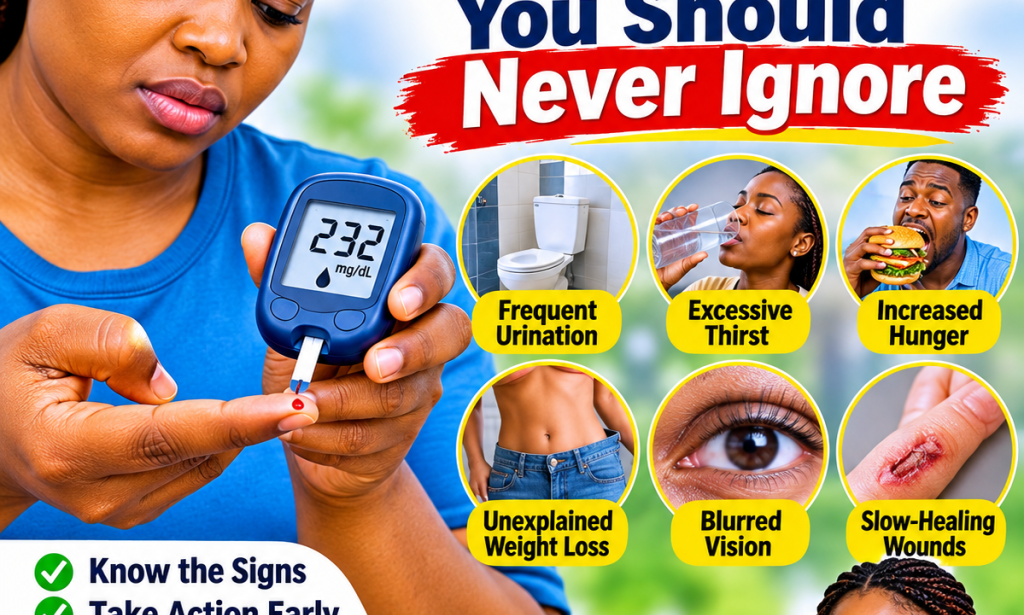
1. Frequent Urination
One of the common warning signs of diabetes is frequent urination. When blood sugar levels become too high, the kidneys work harder to remove excess glucose through urine.
This can make someone visit the toilet more frequently, especially at night.
2. Excessive Thirst
Do you constantly feel thirsty even after drinking water?
High blood sugar can cause the body to lose more water through urination, leading to dehydration and excessive thirst.
3. Increased Hunger
People with diabetes may feel hungry more often than usual. This happens because the body cannot properly use glucose for energy.
4. Unexplained Weight Loss
Sudden weight loss without trying can be another warning sign. When the body cannot use glucose effectively, it may begin breaking down fat and muscle for energy.
5. Blurred Vision
High blood sugar can affect the eyes by causing changes in the lens, resulting in blurred vision.
Persistent vision changes should be checked by an eye-care professional.
6. Slow-Healing Wounds
Cuts, sores and injuries may take longer to heal in people with poorly controlled diabetes.
High blood sugar can affect blood circulation and the body's ability to fight infections.
7. Constant Tiredness
Feeling unusually tired or weak can also be associated with diabetes because the body's cells may not be receiving or using glucose effectively.
How Can You Reduce Your Risk?
1. Eat a balanced diet rich in vegetables and fibre.
2. Reduce sugary drinks and excessive added sugar.
3. Exercise regularly.
4. Maintain a healthy body weight.
5. Avoid smoking.
6. Attend regular medical check-ups.
7. Check your blood sugar when advised, especially if you have risk factors.
When Should You See a Doctor?
If you notice these symptoms, visit a healthcare professional for proper assessment and blood glucose testing.
Diabetes can be managed with appropriate medical care, healthy eating, physical activity and prescribed medication when necessary.
Conclusion
Diabetes is a serious condition, but early detection and proper management can help prevent complications. Never ignore unusual changes in your body. Your health deserves attention.
Remember: Early detection can make a life-saving difference.


Godwin Ekpo ✓ Verified Premium Subscriber This member currently has an active Lodpost Premium membership. Premium members enjoy author analytics, a higher daily article limit, and 0% Lodpost commission on eligible donations."Have you ever experienced excessive thirst or frequent urination? Did you know these could be warning signs of diabetes?"
Keep it up sir
You must be logged in to post a comment.