
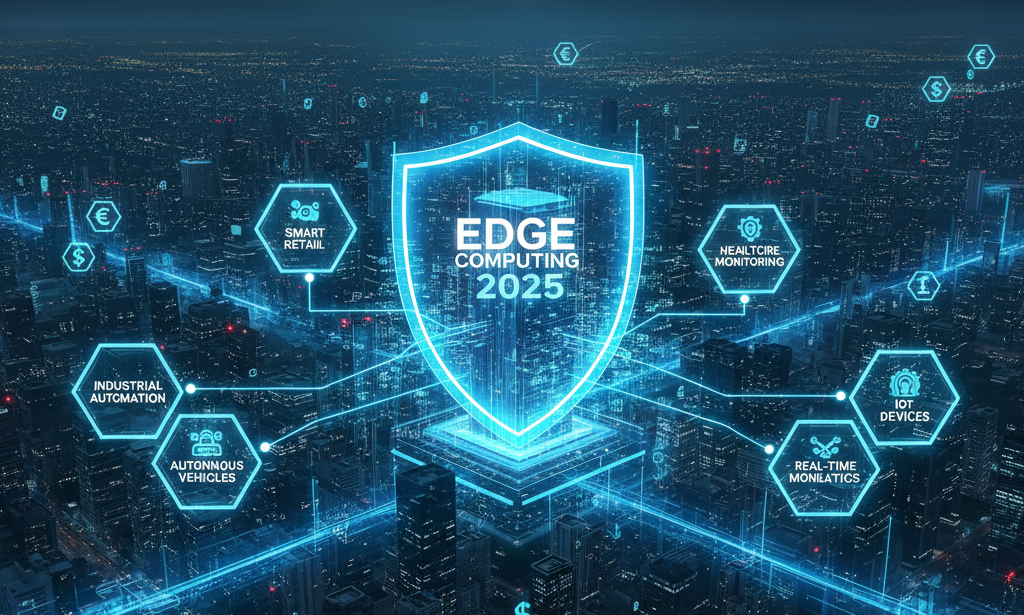
In 2025, edge computing has moved from niche adoption to mainstream business strategy. By processing data closer to where it’s generated, edge computing reduces latency, enhances security, and supports real-time decision-making.
Key Business Applications
-
Telecom: Networks process traffic locally to reduce congestion.
-
Manufacturing: Real-time monitoring improves quality control.
-
Retail: Personalized promotions are delivered instantly in-store.
-
Energy: Smart grids balance demand with renewable energy input.
Gartner predicts that by 2025, 75% of enterprise-generated data will be created and processed outside traditional data centers or clouds (source).
Benefits
-
Reduced Latency for critical applications like autonomous vehicles.
-
Improved Security with localized data handling.
-
Lower Costs by minimizing bandwidth usage.
Challenges
-
High Initial Investment in hardware and infrastructure.
-
Complex Management of distributed edge systems.
-
Lack of Standardization across platforms.
The Future
Edge computing combined with AI and IoT will create a foundation for autonomous business systems, hyper-personalized services, and real-time analytics in the next decade.


You must be logged in to post a comment.