
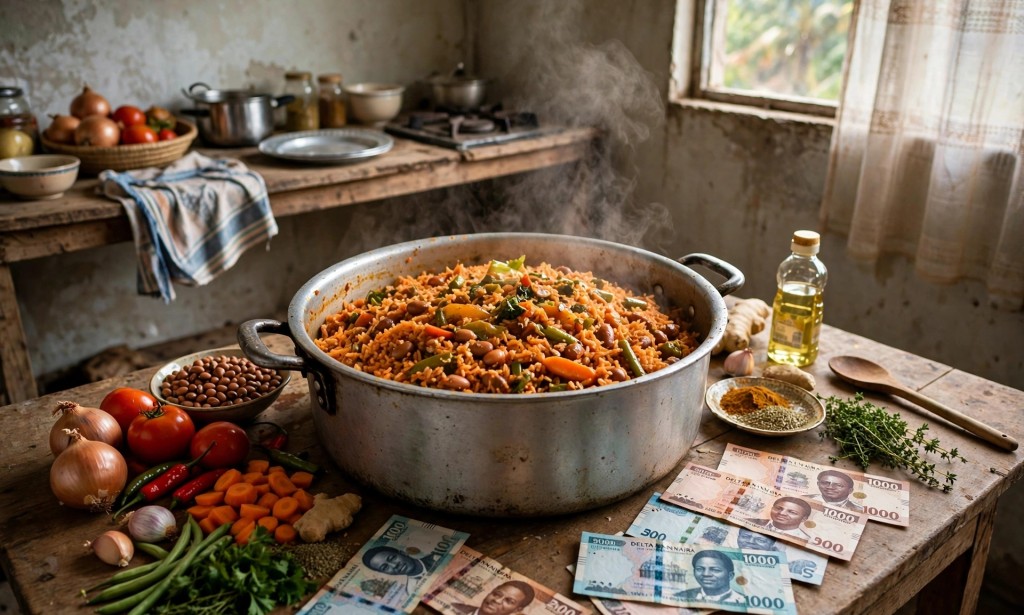
How I Ate for 7 Days with Just ₦5,000 in Nigeria: My Simple One-Pot Food Budget
Many people believe you need plenty of money to eat well. But sometimes, what matters most is how you manage the little you have.
Last month in Asaba, Delta State, I challenged myself to manage a food budget of just ₦5,000 for seven days. Instead of buying expensive meals every day, I bought a few basic ingredients and planned my cooking to reduce waste.
If you live alone in Asaba, Warri, Port Harcourt, or another Nigerian city and want to reduce your food expenses, this simple approach may give you some ideas.
What I Bought with My ₦5,000 Food Budget
Here is the shopping list from my experience:
| Food Item | Quantity | Cost |
|---|---|---|
| Rice | 2 cups | ₦1,000 |
| Beans | 2 cups | ₦800 |
| Palm oil | Small bottle | ₦500 |
| Tomatoes and pepper | Small quantity | ₦700 |
| Dry fish | Small quantity | ₦500 |
| Seasoning and salt | Small quantities | ₦300 |
| Ugu vegetables | Small bunch | ₦500 |
| Cooking fuel | Estimated allocation | ₦700 |
| Total | ₦5,000 |
Note: These are the prices reported from the original experience, not guaranteed current market prices. Food prices vary by location, market, quantity, and season. The budget also assumes access to basic cooking equipment and may not cover drinking water or other household expenses.
How I Managed My Meals for Seven Days
The secret was to prepare food in batches, use the ingredients in different combinations, and avoid cooking more than I could store safely.
Monday and Tuesday: Jollof Rice and Beans
I started by preparing rice with tomatoes, pepper, palm oil, seasoning, and a little dry fish. I also cooked beans to provide another meal option.
Preparing food in advance saved time and reduced the need to cook from scratch every day. However, cooked rice and other leftovers must be cooled promptly, refrigerated, and reheated thoroughly. Without refrigeration, do not leave cooked rice at room temperature for long periods.
Wednesday: Vegetable Soup
On Wednesday, I prepared a small pot of vegetable soup using ugu, palm oil, seasoning, and the remaining dry fish. I planned the quantity carefully so that I could use some immediately and keep the rest for another meal.
Vegetables add variety to meals, while fish can contribute protein. If you have access to affordable additional ingredients, you can include them to improve the nutritional balance of your food.
Thursday and Friday: Combine the Remaining Food
Instead of allowing leftover food to go to waste, I combined the remaining rice and soup to make different meals. This helped me stretch the ingredients I had already purchased.
Meal planning is useful because it encourages you to use what is available before buying more food. Still, make sure leftovers are stored safely and discarded if you are unsure whether they are safe to eat.
Saturday: Keep the Meal Simple
On Saturday, I kept my meals light and made use of the food remaining in the pot. Eating smaller portions can help your supplies last longer, but do not deliberately go hungry just to stay within a budget.
Sunday: Prepare Another Fresh Meal
On Sunday, I cooked another meal with the ingredients left. Planning ahead made it easier to know what I had available and how much I could use.
The exact meals you can prepare will depend on your appetite, portion sizes, ingredients, and cooking facilities.
Five Ways to Make a Small Food Budget Go Further
1. Plan Your Meals Before Shopping
Decide what you intend to eat during the week before visiting the market. A shopping list can help you avoid impulse purchases and unnecessary spending.
2. Buy Ingredients You Can Use in Different Meals
Rice, beans, tomatoes, pepper, and vegetables can be combined in different ways. Choosing versatile ingredients makes it easier to plan several meals from a small shopping basket.
3. Cook Appropriate Portions
Cooking large quantities can save fuel and time, but only prepare what you can store safely. Food waste can cancel out the savings you make by buying in bulk.
4. Compare Prices at the Market
Prices can differ between traders. Ask a few sellers about their prices and compare quantities before buying. If possible, shop for seasonal vegetables and other locally available ingredients.
5. Balance Your Meals When Possible
Rice and beans provide energy and protein, while vegetables contribute important nutrients. When your budget allows, add other affordable sources of protein and a variety of vegetables to make your meals more balanced.
Can ₦5,000 Really Feed Someone for Seven Days?
It may be possible for one person to stretch a very limited food budget over a week under particular circumstances, especially when food is bought at favourable prices and basic cooking supplies are already available.
However, ₦5,000 will not necessarily be enough to feed everyone adequately for seven days. Your location, appetite, health needs, portion sizes, current food prices, and access to storage all make a difference.
The figures in this story describe one reported experience in Asaba. They should not be taken as a guarantee that everyone can follow the same plan at the same cost.
Final Thoughts: Learn to Manage What You Have
Managing a small food budget requires planning, patience, and creativity. Preparing meals at home, comparing market prices, using ingredients in different dishes, and reducing waste can help you make better use of your money.
If you live alone in Asaba, Warri, Port Harcourt, or elsewhere in Nigeria, start by writing down your food budget and planning meals around affordable ingredients available in your area.
Remember, saving money on food should not mean sacrificing your health. Eat enough, store your food safely, and increase your budget when you can.
What is the smallest amount you have used to manage your food for one week? Share your experience and your favourite budget-friendly Nigerian meals in the comments.


You must be logged in to post a comment.