

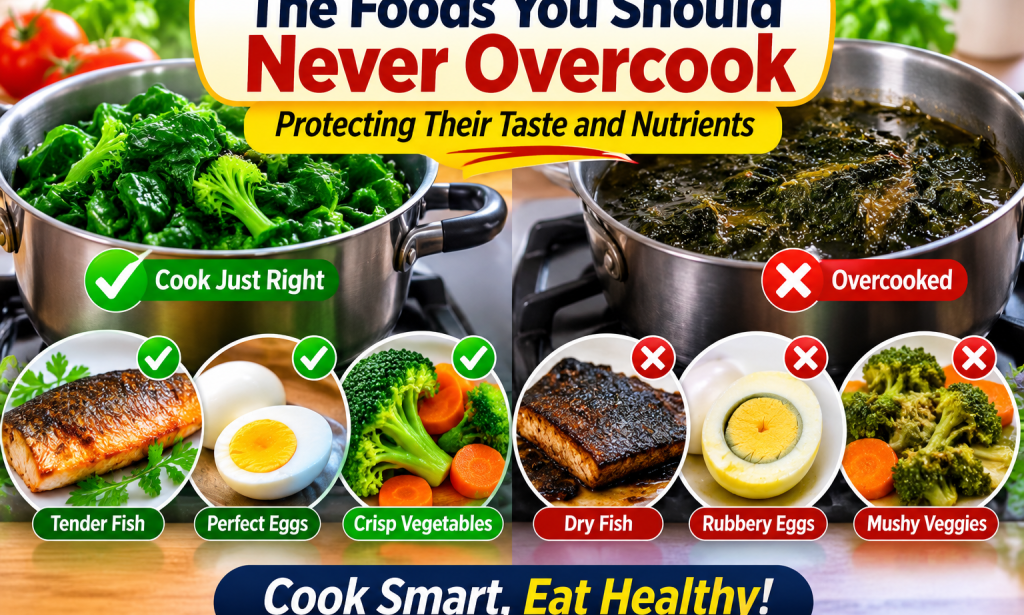
The Foods You Should Never Overcook: Protecting Their Taste and Nutrients
Cooking is an important part of preparing healthy and delicious meals. However, did you know that cooking some foods for too long can affect their taste, texture, colour, and nutritional value?
Many people believe that the longer food stays on the fire, the better it becomes. But this is not always true. Some foods need only a short cooking time to remain delicious and retain more of their natural nutrients.
Here are some foods you should be careful not to overcook.
1. Green Vegetables
Vegetables such as spinach, ugu, waterleaf, and other green leafy vegetables are rich in vitamins and minerals. Cooking them for too long can cause them to lose their fresh colour, become too soft, and reduce some heat-sensitive vitamins.
Instead of leaving them on the fire for a long time, add them towards the end of cooking when preparing vegetable soups and other meals.
2. Fish
Fish is a nutritious source of protein and healthy fats. Overcooking fish can make it dry, hard, and less enjoyable to eat.
Fish generally cooks faster than many types of meat. Pay attention while cooking so that it remains moist and tender.
3. Eggs
Eggs are rich in protein and other important nutrients. Cooking them for too long can make them rubbery and unpleasant to eat.
Whether you are boiling, frying, or scrambling eggs, use the right cooking time to achieve the texture you enjoy.
4. Broccoli and Carrots
Broccoli and carrots contain vitamins, minerals, and fibre. Cooking them for too long can make them lose their firmness and become mushy.
Steaming or lightly cooking these vegetables can help preserve their texture and some nutrients.
5. Fruits
Some fruits are also used in cooking, especially in sauces, desserts, and fruit-based meals. Excessive heating can affect their texture and reduce certain heat-sensitive vitamins.
Whenever possible, enjoy fresh fruits or add them to recipes that do not require long cooking.
Why Is It Important Not to Overcook Food?
Preparing food properly helps preserve its natural flavour, colour, and texture. It can also help retain some nutrients that are sensitive to heat.
However, it is important to remember that not all foods require the same cooking time. Some foods, especially meat, fish, and eggs, must be cooked thoroughly to reduce the risk of food poisoning.
Simple Cooking Tips Everyone Should Know
- Avoid leaving vegetables on the fire longer than necessary.
- Use moderate heat when preparing delicate foods.
- Follow appropriate cooking times for different ingredients.
- Do not assume that harder or longer cooking always means healthier food.
- Make sure meat, fish, and eggs are safely cooked before eating.
Conclusion
Healthy eating is not only about the foods we choose but also about how we prepare them. A little attention to cooking time can make a big difference in the taste, appearance, and nutritional quality of our meals.
The next time you enter your kitchen, remember that good cooking is not always about cooking for longer. Sometimes, knowing when to stop is the secret to preparing a delicious meal.


You must be logged in to post a comment.