

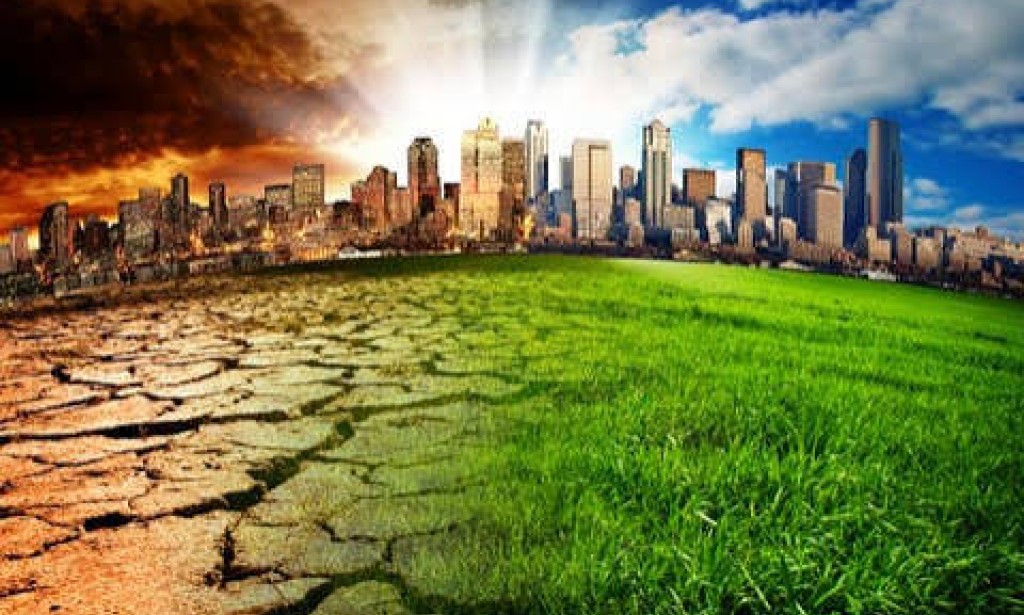
Climate change is one of the most important geographical and environmental issues facing our world today. It refers to long-term changes in the Earth's temperature, rainfall patterns, wind systems, and other climatic conditions. Although climate change can occur naturally, human activities have greatly accelerated it in recent decades.
One major cause of climate change is the burning of fossil fuels such as coal, petroleum, and natural gas. These activities release greenhouse gases, particularly carbon dioxide, into the atmosphere. Deforestation, industrial activities, urbanisation, and agricultural practices also contribute significantly to global warming.
The effects of climate change can be observed in different parts of the world. Rising global temperatures have contributed to the melting of glaciers and polar ice caps, resulting in rising sea levels. Coastal communities are increasingly exposed to flooding, erosion, and the possible loss of land. In addition, changes in rainfall patterns have led to droughts in some regions and excessive rainfall in others.
In Africa, climate change presents serious challenges to agriculture, water resources, and human livelihoods. Farmers may experience reduced crop yields due to irregular rainfall and prolonged dry seasons. In countries such as Nigeria, rising temperatures, desertification in the northern region, and flooding in the southern and coastal regions demonstrate how climate conditions influence human activities and settlement patterns.
Climate change also affects biodiversity. Many plant and animal species struggle to adapt to rapidly changing environmental conditions. Some species are forced to migrate, while others face the risk of extinction.
However, there are several ways to reduce the impact of climate change. Governments and individuals must promote tree planting, protect forests, encourage renewable energy, reduce pollution, and adopt environmentally friendly practices. Public awareness and environmental education are equally important in encouraging sustainable development.
As geography teaches us, the Earth is an interconnected system where changes in one component can affect others. Protecting our environment is therefore a shared responsibility.
The future of our planet depends on the decisions we make today. Let us act responsibly to preserve the Earth for present and future generations.
#Geography #ClimateChange #GlobalWarming #EnvironmentalProtection #SustainableDevelopment #PhysicalGeography #EarthScience #ClimateAction #SaveOurPlanet #EnvironmentalAwareness


You must be logged in to post a comment.