

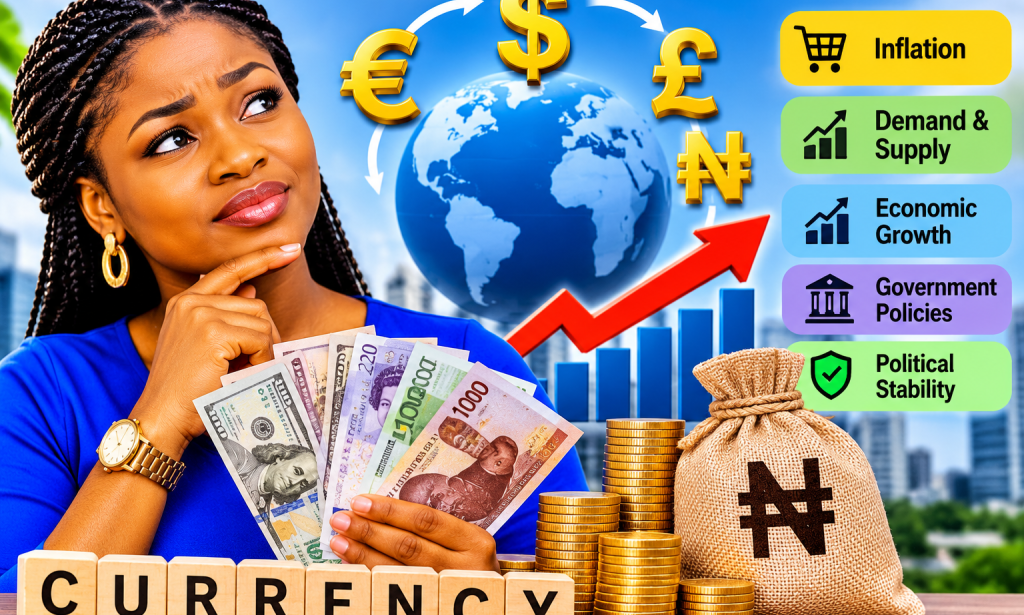
Why Does the Value of Money Keep Changing? What Everyone Needs to Know
Money is an important part of our everyday lives. We use it to buy food, pay school fees, run businesses, pay bills and take care of our families.
However, have you ever wondered why the value of money keeps changing? Why can the same amount of money buy many things today but fewer things tomorrow?
The truth is that the value of money is not always fixed. It can rise or fall depending on several economic factors. Understanding these changes can help people make better financial decisions.
1. What Is Currency?
Currency is the money a country uses to buy and sell goods and services.
For example, Nigeria uses the Naira, the United States uses the Dollar, the United Kingdom uses the Pound, and countries in the Eurozone use the Euro.
Every country has its own currency, and these currencies can have different values when compared with one another.
Currency is also used to measure the prices of products and services within an economy. Its purchasing power determines how much people can buy with a particular amount of money.
2. Why Does the Value of Money Change?
Several factors can affect the value of a country's currency. Some of the most important ones include:
Inflation
Inflation happens when the general prices of goods and services increase over time. When this happens, money loses some of its purchasing power.
For example, if ₦5,000 could buy a particular basket of food last year but can only buy a smaller quantity today, it means the purchasing power of that money has reduced.
Demand and Supply
Like many other things in the economy, currencies are affected by demand and supply.
When more people and businesses want a particular currency, its value may increase. When demand falls or more of that currency becomes available relative to demand, its value may decrease.
Economic Growth
Countries with strong and stable economies may attract businesses and investors. This can increase demand for their currencies and influence their exchange rates.
Economic growth can also improve employment, production and business opportunities within a country.
Government Policies
Government and central bank decisions can influence currency values. Policies involving interest rates, money supply, taxation and foreign exchange management can affect the economy and investor confidence.
Political Stability
Political uncertainty can make investors less confident about doing business in a country. This may reduce investment and put pressure on the country's currency.
On the other hand, stable institutions and predictable economic policies can help create confidence among businesses and investors.
3. How Does Currency Affect Ordinary People?
Currency changes affect almost everyone, even people who do not trade foreign exchange.
When a country's currency becomes weaker against other currencies, imported goods such as phones, cars, electronics, medicines and some food products may become more expensive.
Businesses that depend on imported materials may also spend more money to operate. These additional costs can eventually affect customers through higher prices.
For ordinary families, this can mean spending more money on everyday needs, reducing unnecessary expenses or adjusting their budgets.
That is why currency movements are not just something that concerns banks, investors or people who trade dollars. They can affect the cost of living for everyone.
4. Why Is the Dollar Important in International Trade?
The United States Dollar is widely used in international business and trade. Many countries and companies use it to pay for goods, services and other international transactions.
Some important commodities and international transactions are also priced in dollars. This is one reason changes in the dollar's value can affect businesses and economies around the world.
However, the dollar is not the only important currency. The Euro, British Pound, Japanese Yen and other currencies also play important roles in international trade and finance.
5. How Can You Protect Your Money When Currency Values Change?
Although nobody can completely control currency movements or inflation, there are practical steps you can take to manage your finances.
- Learn to budget: Understand your income and expenses so you can plan how to use your money.
- Avoid unnecessary spending: Focus on essential needs and reduce expenses that are not important.
- Save regularly: Try to save money consistently, even if the amount is small.
- Learn useful skills: Developing valuable skills can create opportunities to increase your income.
- Avoid financial rumours: Do not make important money decisions based on unverified information.
- Understand investment risks: Before investing or exchanging currencies, learn how the activity works and understand the possibility of losing money.
Good financial habits cannot prevent economic changes, but they can help you become better prepared for unexpected expenses and changing prices.
6. Is a Strong Currency the Same as a Rich Country?
Not necessarily. A currency having a higher exchange value does not automatically mean that the country is wealthier or that its citizens enjoy a better standard of living.
A country's economic strength depends on several factors, including:
- Employment opportunities.
- Industrial and agricultural production.
- Income levels and purchasing power.
- Infrastructure and public services.
- Education and access to opportunities.
- Economic stability and productivity.
Therefore, it is important to look beyond the exchange rate when comparing the economies of different countries.
Conclusion
Currency is more than just the money we carry in our pockets. Its value affects the prices we pay, the businesses we operate and the financial decisions we make every day.
Understanding why currency values change can help you become more financially aware and prepared for economic changes.
Remember, you may not be able to control the value of money, but you can learn how to manage the money you have wisely.
What do you think affects the value of money the most? Share your thoughts in the comments. Your opinion may help someone understand the economy better.


You must be logged in to post a comment.