

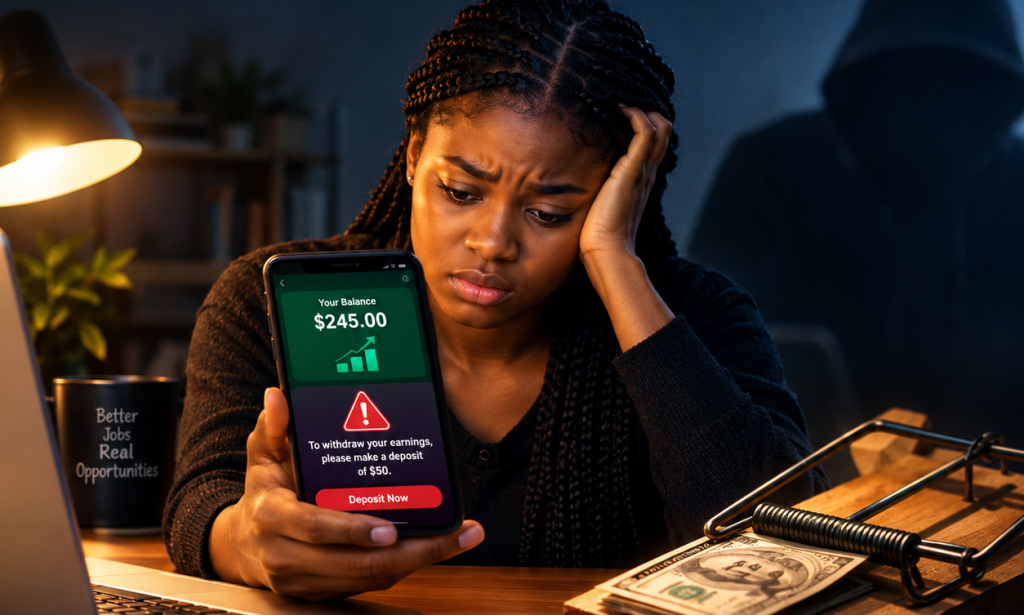
Why Intelligent people Still Fall for scam?
1. Intelligence Does Not Make You Scam-Proof
Many people believe that only careless or uneducated people fall for scams. But the truth is that even intelligent, educated, and experienced people can become victims.
Scammers do not always attack a person's intelligence. They target emotions, trust, fear, hope, and the desire for a better life.
A smart person can make a wrong decision when an offer looks convincing or a message creates a sense of urgency.
2. Scammers Know How to Manipulate Emotions
Scammers understand that people do not always make decisions with a calm mind. They may promise a life-changing opportunity, threaten to block an account, or create fear that someone will lose money if they do not act quickly.
For example, a person searching for an online job may see an advertisement promising huge earnings for simple tasks. Because they need money, they may believe the offer without checking whether the company is genuine.
Sometimes, the desire to escape financial difficulties makes a fake opportunity look real.
3. Trust Can Become a Dangerous Trap
Some scams begin with friendship, romance, or business relationships. The scammer may spend time building trust before asking for money or recommending an investment.
When people trust someone, they may stop asking important questions. They might believe a story simply because it comes from a familiar person.
However, trust should never replace verification. Before sending money or sharing private information, take time to confirm the person's identity and the truth behind their claims.
4. The Promise of Easy Money Can Blind Anyone
Many people dream of financial freedom. They want to support their families, pay their bills, and build a better future.
Scammers use these dreams to advertise fake investment schemes, earning apps, and online jobs. They may promise huge profits with little work or no risk.
Some platforms even display fake earnings to convince users that they are making money. Later, victims may be asked to pay registration fees, upgrade fees, or withdrawal charges.
Remember, seeing a balance on a screen does not prove that the money is real or withdrawable. Always investigate an opportunity before investing your time or money.
5. Shame Can Make the Situation Worse
After losing money, some victims remain silent because they fear embarrassment. They may worry that friends and family will call them foolish.
But being deceived does not mean someone is unintelligent. Scammers deliberately create convincing stories to manipulate people.
Victims should keep evidence, report the incident, and contact their bank or payment provider as soon as possible.
Be careful of people who promise to recover stolen money but demand another payment upfront. They may be trying to scam the victim again.
6. How to Protect Yourself
You do not need to distrust everyone. You need to develop habits that help you identify suspicious offers.
- Pause before acting: Do not allow fear, excitement, or pressure to control your decisions.
- Verify the source: Contact companies through official channels you find independently.
- Question unrealistic promises: Guaranteed profits and unusually high earnings deserve careful investigation.
- Protect your information: Never share your passwords, PINs, or one-time verification codes.
- Research online platforms: Check their terms, withdrawal requirements, company details, and independent complaints.
- Ask questions: Seek a second opinion before making an important financial decision.
A few minutes of checking can prevent serious financial loss.
Final Thoughts
Intelligence is valuable, but it does not make anyone completely immune to deception. Scammers succeed by exploiting ordinary human emotions and creating situations that pressure people into making quick decisions.
The solution is not to stop trusting people. It is to combine trust with careful thinking and verification.
Before sending money, sharing personal information, or accepting an unbelievable opportunity, stop and check the facts. Your next careful decision could protect your money and your future.
What do you think? Why do you believe intelligent people still fall for scams? Share your thoughts in the comments to help others learn.


You must be logged in to post a comment.