
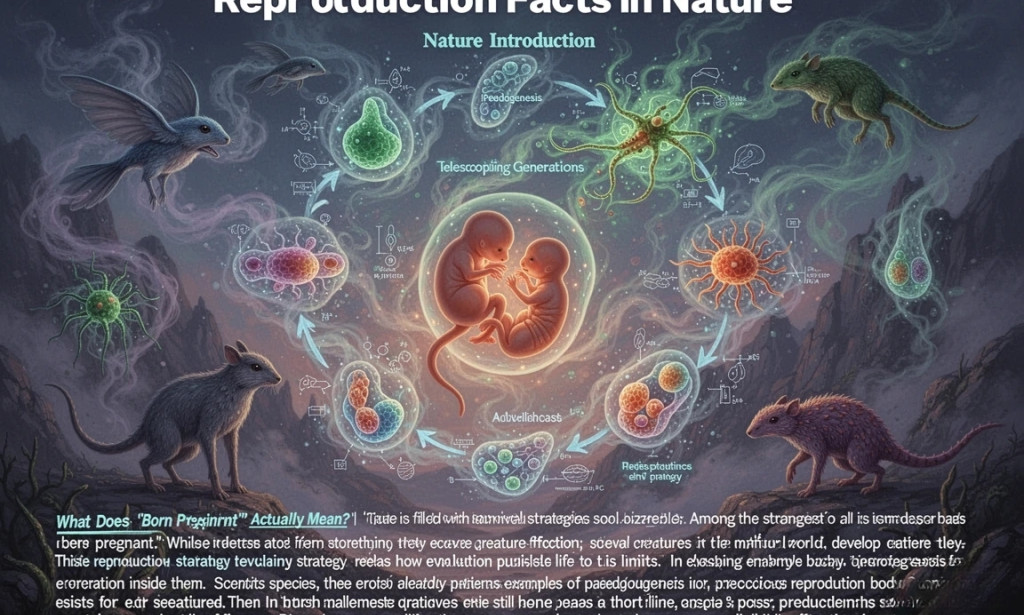
Animals Born Pregnant — The Most Shocking Reproduction Facts in Nature
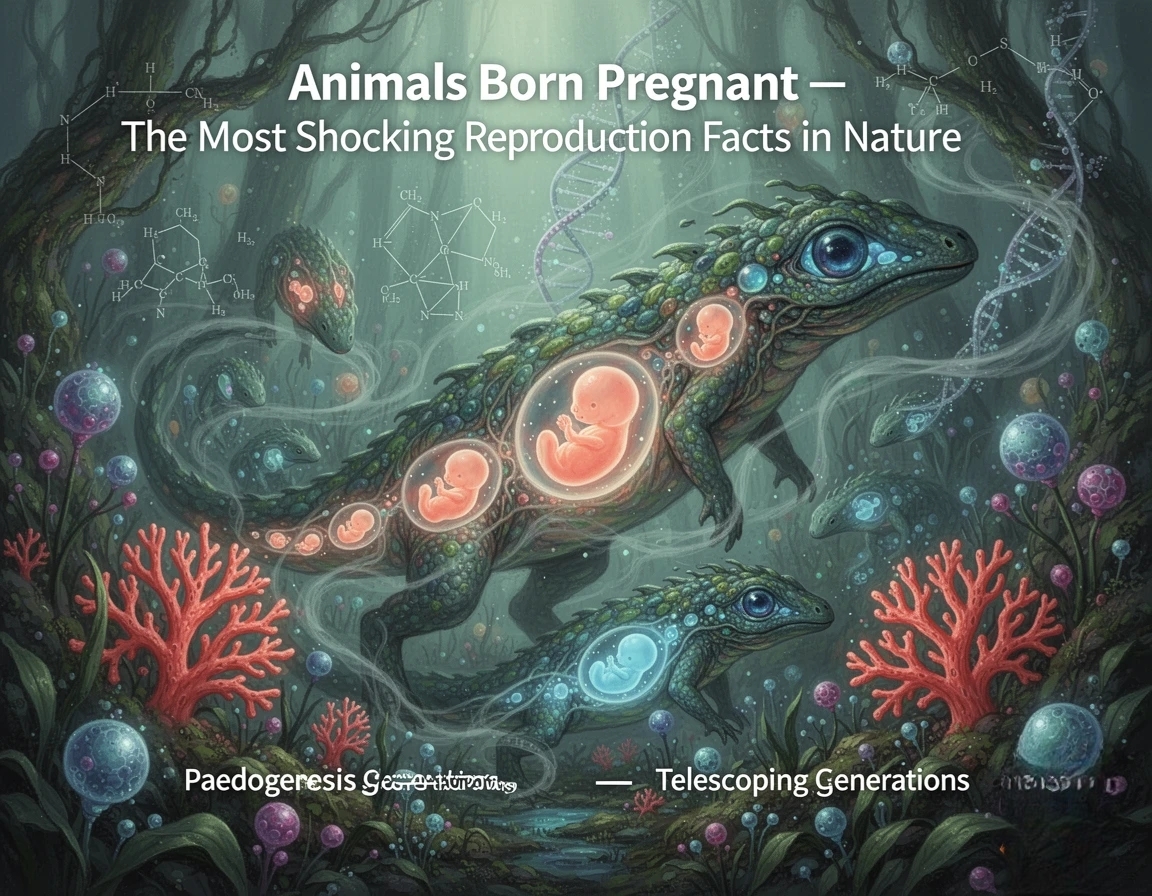
Introduction
Nature is filled with survival strategies so bizarre that they seem impossible. Among the strangest of all is a phenomenon often described as “animals born pregnant.” While it sounds like something from science fiction, several creatures in the natural world develop embryos before they are even fully mature themselves.
This shocking reproductive strategy reveals how evolution pushes life to its limits. In some species, unborn babies already carry the next generation inside them. In others, embryos begin reproducing while still inside their mother’s body. Scientists call these reproductive patterns examples of paedogenesis, telescoping generations, or precocious reproduction.
These unusual adaptations exist for one reason: survival.
In harsh environments where predators, disease, or short lifespans threaten a species, reproduction must happen quickly and efficiently. As disturbing or unbelievable as these processes may seem to humans, they are highly effective in nature.
This article explores the most shocking examples of animals seemingly “born pregnant,” explains the science behind them, and reveals why these bizarre reproductive systems evolved.
What Does “Born Pregnant” Actually Mean?
The phrase “born pregnant” is not always literal. In biology, it usually refers to animals that:
Carry developing embryos before adulthood
Contain immature eggs while still embryos themselves
Reproduce during larval stages
Pass developing offspring through multiple generations simultaneously
In simple terms, one body may contain:
A mother
Her unborn baby
And the unborn baby’s future offspring
This creates a biological “nesting doll” effect that shocks many scientists and nature lovers alike.
The Russian Doll Effect in Nature
Three Generations Inside One Body
One of the most famous examples occurs in certain insects and mammals where multiple generations exist simultaneously.
Imagine:
A grandmother carrying a daughter
While the daughter already contains immature eggs for future grandchildren
This means three generations are alive at once inside a single body.
Humans actually experience a mild version of this phenomenon. When a woman is pregnant with a female fetus, that fetus already contains the eggs she may use later in life.
But in some animals, this process becomes far more extreme.
Aphids — The Tiny Insects That Clone Themselves
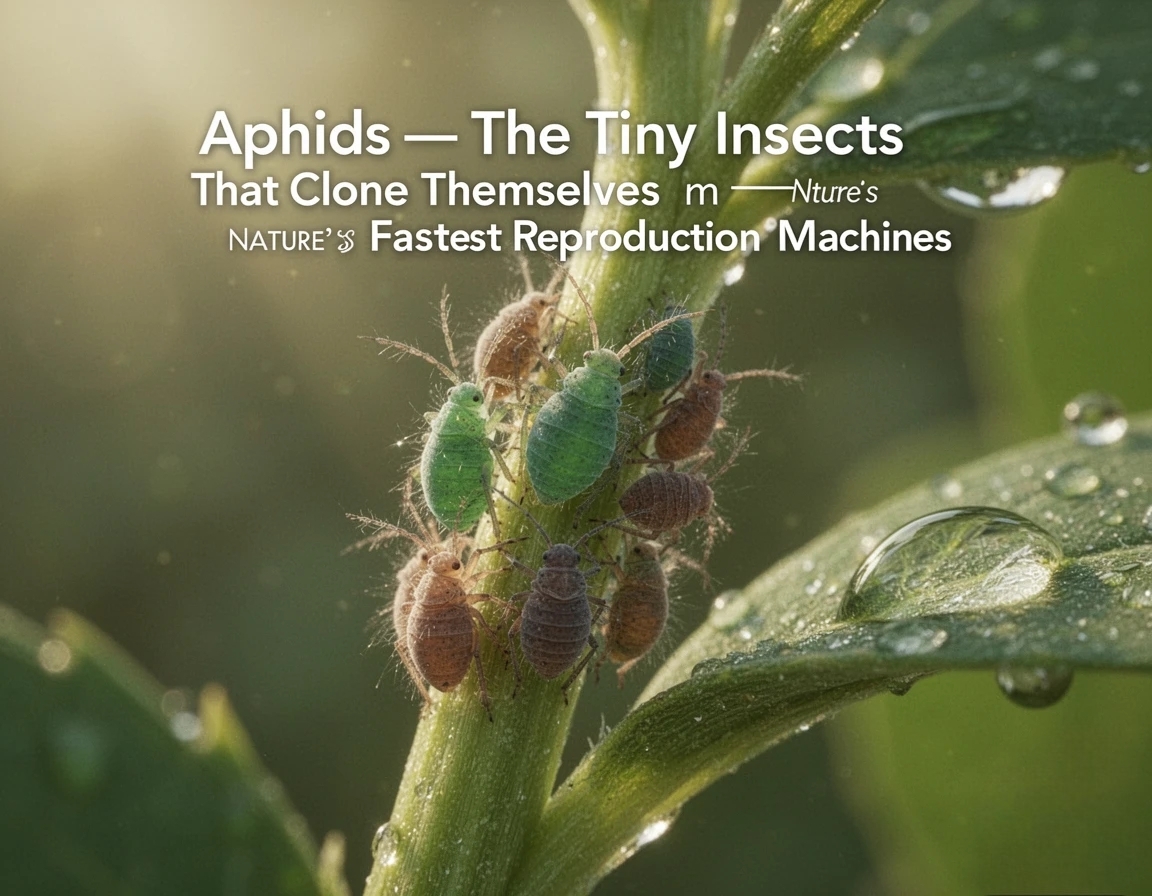
Nature’s Fastest Reproduction Machines
Aphids are among the most shocking examples of animals effectively born pregnant.
These tiny plant-feeding insects reproduce through a process called parthenogenesis, where females produce offspring without mating.
Even more astonishing:
Female aphids are born already carrying developing embryos
Those embryos may already contain the next generation
This creates a chain of overlapping life cycles.
How It Works
During favorable seasons:
Female aphids clone themselves
Babies develop rapidly inside the mother
Daughters are born pregnant with identical clones
This reproductive system allows aphid populations to explode almost overnight.
A single aphid can produce:
Dozens of offspring
In just a few days
Without ever encountering a male
Why This Strategy Works
Aphids face enormous threats:
Predators
Harsh weather
Short lifespans
Rapid reproduction ensures survival.
Advantages of Being “Born Pregnant”
Faster population growth
No need to find mates
Efficient colonization of plants
Quick recovery after predator attacks
However, cloning also has disadvantages:
Low genetic diversity
Increased vulnerability to disease
Difficulty adapting to sudden environmental changes
Gall Midges — Larvae That Give Birth
Reproduction Before Adulthood
Gall midges are small flies with one of the strangest reproductive systems ever discovered.
Some species reproduce during the larval stage, meaning they can give birth before becoming adults.
This phenomenon is called paedogenesis.
The Shocking Process
Inside a larva:
New embryos begin developing
Daughter larvae consume the mother from within
Eventually they burst out alive
In many cases:
The larva never even becomes an adult fly
Its entire purpose is reproduction.
Scientists were stunned when this behavior was first observed because it challenged traditional ideas about animal development.
The Salamander With Embryos Inside Embryos
Live Birth in Amphibians
Most amphibians lay eggs, but some salamanders give live birth.
In certain species:
Embryos develop inside the mother
Stronger embryos sometimes consume weaker siblings
Developing young may feed on unfertilized eggs
This survival tactic is called adelphophagy or embryonic cannibalism.
Why It Happens
Only the strongest embryos survive in nutrient-limited environments.
The result:
Fewer offspring
But much larger and healthier babies
Nature prioritizes quality over quantity.
Sharks That Eat Their Siblings Before Birth
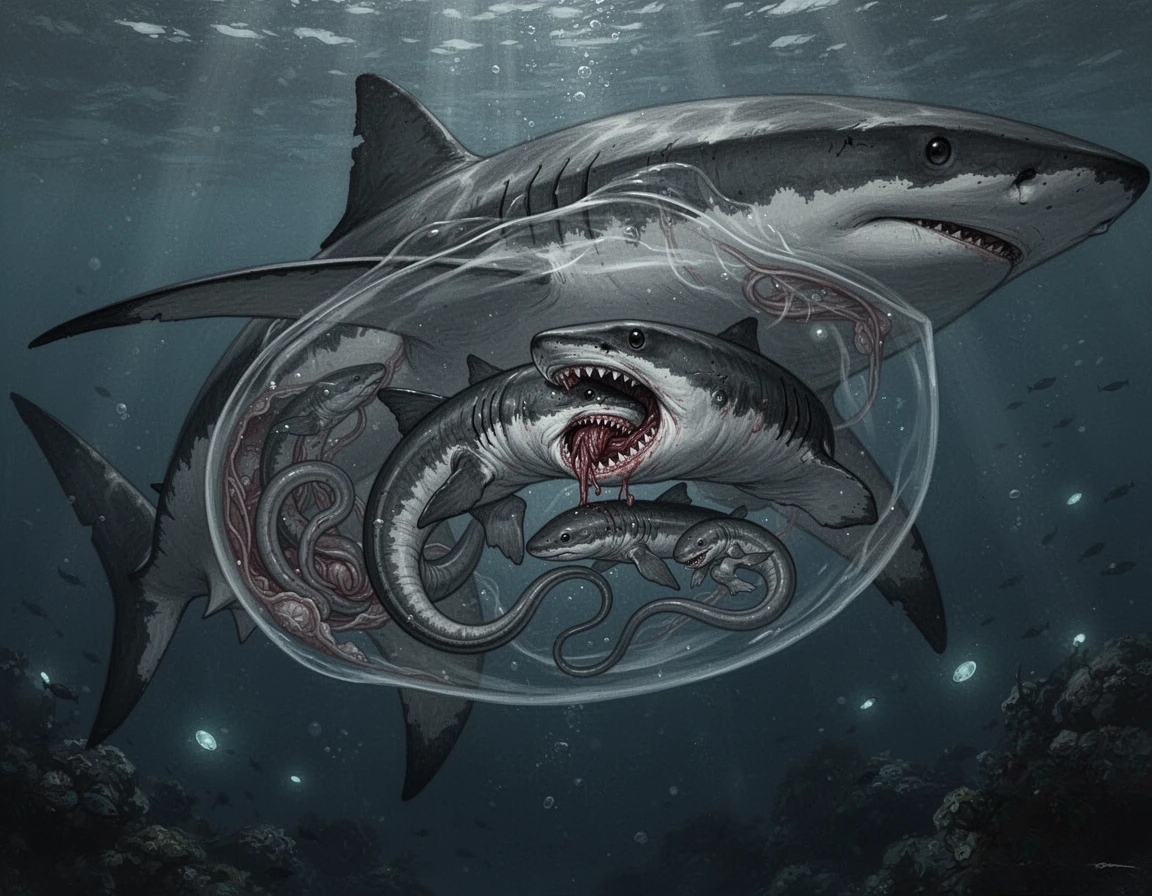
The Darkest Womb in the Ocean
Some sharks take prenatal survival to horrifying extremes.
The most famous example is the sand tiger shark.
Inside the womb:
Multiple embryos develop at once
The strongest embryo eats its siblings
Sometimes it even consumes unfertilized eggs
This process is called intrauterine cannibalism.
Survival of the Strongest
By the time birth occurs:
Only one or two powerful babies remain
They are already large predators
Their survival chances are much higher
It is brutal, but evolution favors effectiveness over compassion.
Tsetse Flies — Insects That Produce “Milk”
Mammal-Like Parenting in an Insect
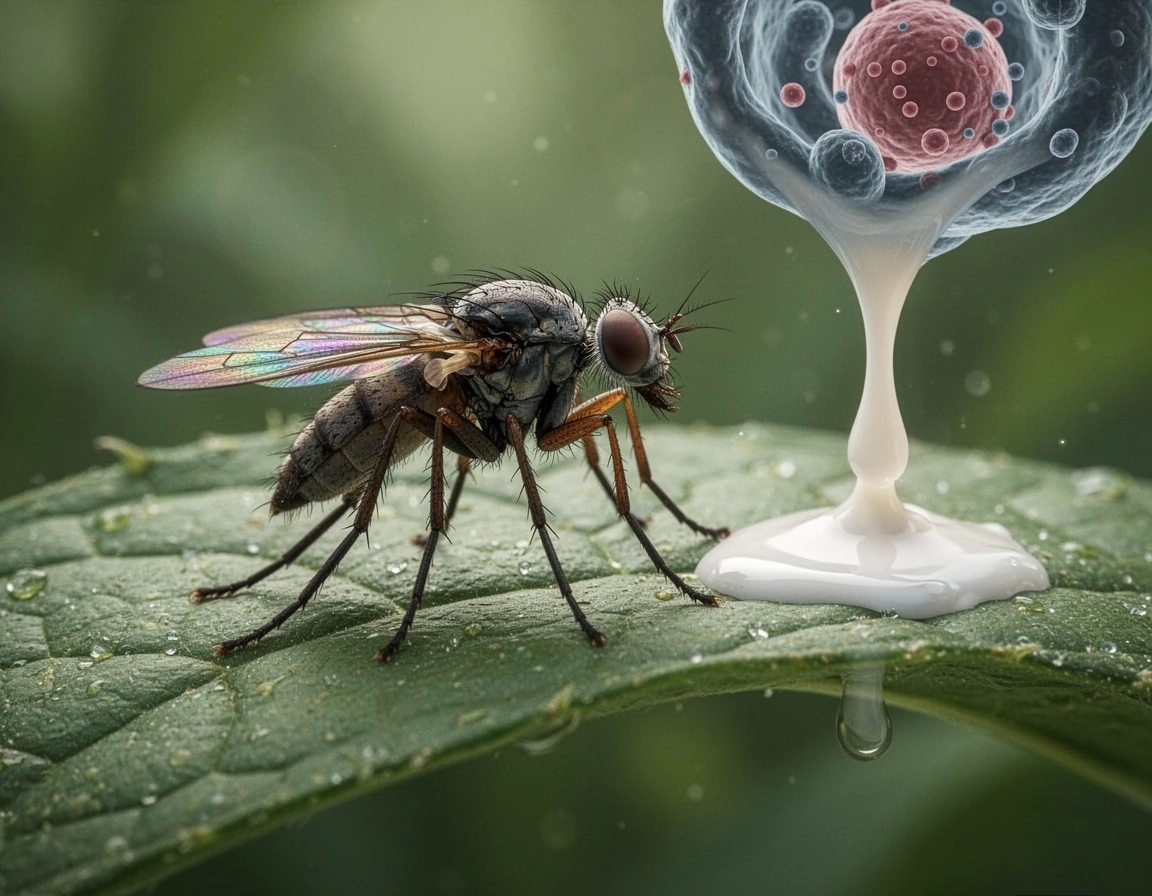
Tsetse flies have one of the most advanced reproductive systems among insects.
Unlike most flies:
They do not lay eggs immediately
Babies develop inside the mother
The mother nourishes them with a milk-like substance
Only one larva develops at a time.
Why This Is Extraordinary
The larva:
Receives nutrients directly from the mother
Grows large before birth
Is born ready to pupate almost immediately
This gives offspring a much higher survival rate compared to ordinary insects.
The Strange Case of Matryoshka Generations
Embryos Carrying Future Generations
Some animals display a biological effect similar to Russian nesting dolls.
Examples include:
Aphids
Certain parasitic worms
Some fish species
In these cases:
Developing embryos already contain reproductive cells
Future generations exist before birth occurs
This creates overlapping reproductive timelines that maximize efficiency.
Why Evolution Created These Shocking Systems
Survival Is Ruthless
Nature does not prioritize fairness, comfort, or morality.
Evolution rewards:
Efficiency
Speed
Survival
Animals that reproduce faster often dominate ecosystems.
Common Reasons These Adaptations Evolved
1. Short Lifespans
Many insects live only days or weeks.
Fast reproduction is essential.
2. High Predator Pressure
If many offspring die, species must reproduce rapidly.
3. Harsh Environments
Extreme climates may provide only brief opportunities to breed.
4. Limited Mating Opportunities
Some animals rarely encounter mates.
Self-reproduction becomes advantageous.
The Science Behind Precocious Reproduction
Hormones and Development
Animals born seemingly pregnant often possess:
Accelerated hormone systems
Rapid cell division
Specialized reproductive organs
These adaptations allow embryos to mature unusually early.
Key Biological Mechanisms
Parthenogenesis
Viviparity
Paedogenesis
Embryonic development overlap
Clonal reproduction
Each system evolved independently in different species.
This means nature repeatedly discovered similar solutions to survival problems.
Is Any Mammal Truly Born Pregnant?
The Human Misconception
Humans are sometimes included in discussions about “born pregnant.”
Why?
Because:
Female fetuses develop all the eggs they will ever produce before birth
When a pregnant woman carries a daughter:
She is also carrying the daughter’s future egg cells
This technically means three generations are biologically connected at once.
However:
Human babies are not truly pregnant
The eggs are undeveloped reproductive cells, not embryos
Still, it demonstrates how deeply layered reproduction can become in mammals.
The Creepiest Reproductive Strategies in Nature
Beyond Being Born Pregnant
Some animals evolved even stranger systems.
Parasitoid Wasps
Lay eggs inside living hosts
Larvae consume hosts from the inside
Seahorses
Males become pregnant
Fathers carry babies in brood pouches
Flatworms
Some species fence with reproductive organs
The loser becomes the egg carrier
Clownfish
Can change sex during their lifetime
Nature constantly breaks human expectations.
How Scientists Discovered These Behaviors
Early Biological Shock
Many reproductive systems were discovered accidentally.
Scientists examining insects under microscopes found:
Embryos inside larvae
Developing offspring inside unborn young
Internal cannibalism among embryos
At first, some researchers believed their observations were mistakes.
But repeated studies confirmed these astonishing realities.
The Evolutionary Trade-Offs
Every Advantage Has a Cost
Extreme reproduction strategies are powerful but risky.
Potential Benefits
Rapid population growth
Increased survival
Faster adaptation to temporary environments
Reduced dependency on mates
Potential Costs
Lower genetic diversity
Greater disease vulnerability
High energy demands
Increased mutation risks
Nature balances these factors constantly.
Animals With the Fastest Reproduction Rates
Species That Multiply at Incredible Speed
Some “born pregnant” animals reproduce at astonishing rates.
Examples
Aphids
Multiple generations per season
Entire colonies in days
Fruit Flies
Rapid egg laying
Extremely short life cycles
Bacteria
Though not animals, they reproduce explosively through division
Rabbits
Famous for rapid breeding among mammals
Fast reproduction often determines survival success.
Can Climate Change Affect These Species?
Environmental Pressure and Reproduction
Changing climates may dramatically impact unusual reproductive systems.
Possible Effects
Temperature disruptions
Altered breeding cycles
Habitat destruction
Increased disease spread
Some rapidly reproducing species may adapt well.
Others could collapse quickly if ecosystems shift too fast.
Ethical Questions Humans Ask About Nature
Why These Behaviors Shock Us
Humans instinctively react emotionally to:
Cannibalism
Embryonic competition
Extreme reproduction
But animals do not operate according to human morality.
In nature:
Survival is the ultimate goal
Efficiency matters more than compassion
This is one reason the natural world often feels both beautiful and terrifying.
The Most Shocking Facts About Animals Born Pregnant
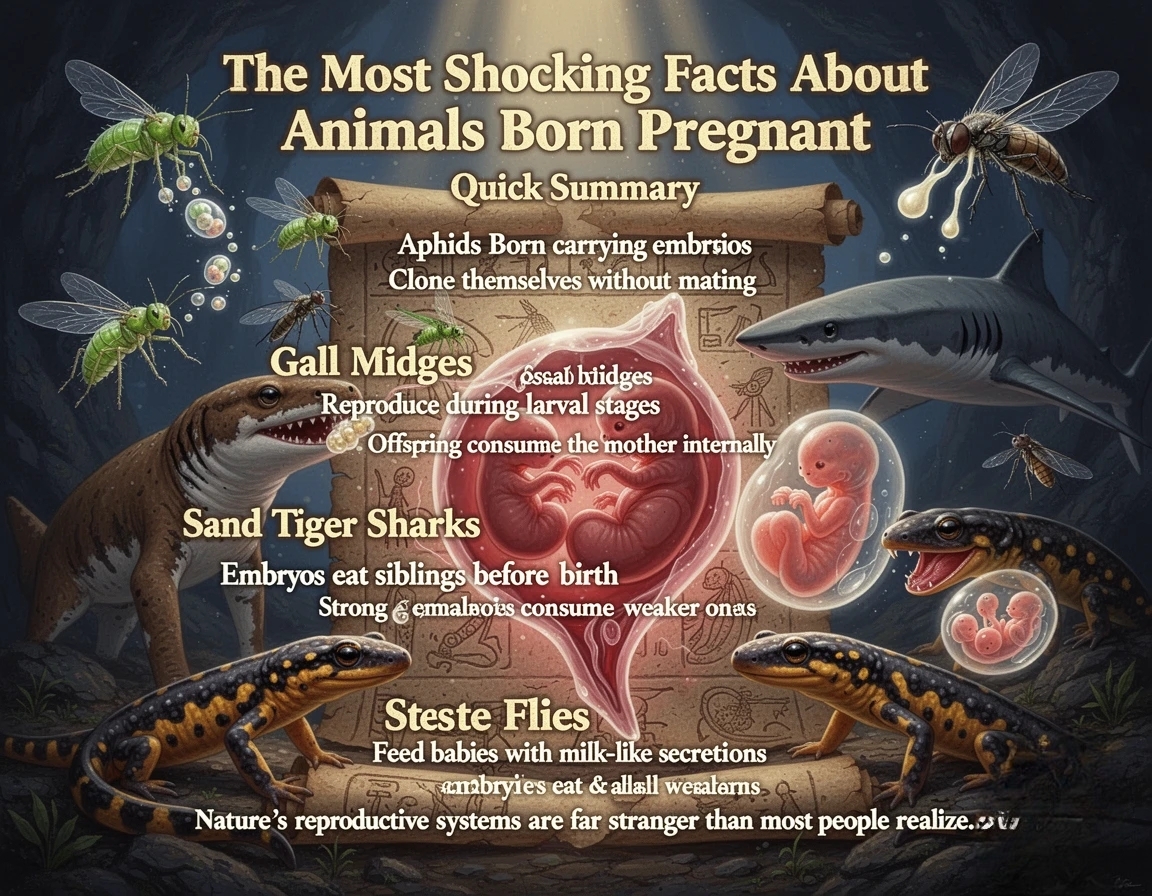
Quick Summary
Aphids
Born carrying embryos
Clone themselves without mating
Gall Midges
Reproduce during larval stages
Offspring consume the mother internally
Sand Tiger Sharks
Embryos eat siblings before birth
Salamanders
Strong embryos consume weaker ones
Tsetse Flies
Feed babies with milk-like secretions
Nature’s reproductive systems are far stranger than most people realize.
Conclusion
The idea of animals being “born pregnant” sounds horrifying, but it reveals one of evolution’s most fascinating truths: life will do almost anything to survive.
From aphids carrying unborn generations to shark embryos devouring their siblings, nature constantly pushes biological limits in ways humans struggle to imagine.
These reproductive systems may appear disturbing, yet they are masterpieces of evolutionary efficiency. Every bizarre adaptation exists because, somewhere in history, it improved survival.
The deeper scientists explore the natural world, the clearer one fact becomes:
Nature is far stranger than fiction.
Frequently Asked Questions (FAQs)
Are any animals literally born pregnant?
Yes, some animals such as aphids are effectively born carrying developing embryos inside them. This creates overlapping generations.
What is paedogenesis?
Paedogenesis is reproduction by larval or immature organisms before adulthood.
Why do shark embryos eat each other?
This increases survival chances for the strongest offspring by reducing competition inside the womb.
Do humans have anything similar?
Human female fetuses contain immature egg cells before birth, but humans are not truly born pregnant.
Which animal reproduces the fastest?
Aphids are among the fastest-reproducing animals due to cloning and overlapping generations.
Is embryonic cannibalism common?
It is rare but occurs in several species including sharks, salamanders, and some fish.

You must be logged in to post a comment.