
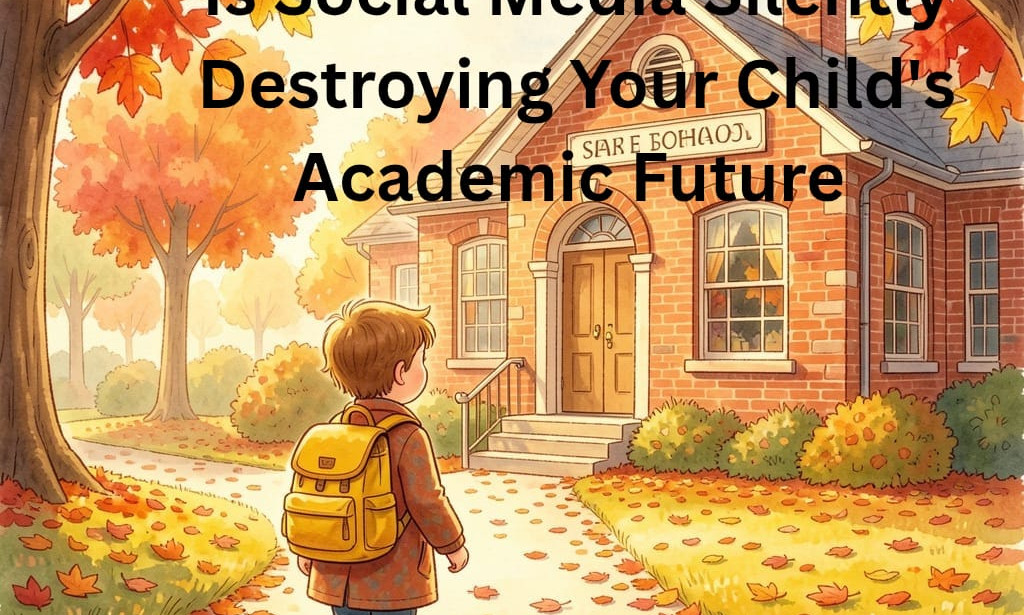
Is Social Media Silently Destroying Your Child's Academic Future?
Every morning, millions of students wake up and reach for their phones before they even get out of bed. Before breakfast, before brushing their teeth, before thinking about the school day ahead, they are already scrolling. Facebook, Instagram, TikTok, WhatsApp, Snapchat. The notifications are endless and the content never stops.
And while parents are busy working hard to pay school fees, buy textbooks, and secure a better future for their children, something is quietly happening on those small glowing screens that is undoing all of that effort.
Social media is affecting students' academic performance in ways that most families are only beginning to understand and the consequences are more serious than many people realise.
The Distraction Nobody Talks About
Ask any secondary school student today how many hours they spend on social media daily and the honest answer will shock you. Many students spend between four and seven hours every day scrolling, posting, watching videos, and chatting time that should be spent reading, revising, and resting.
The human brain cannot effectively multitask. When a student sits down to study but keeps one eye on their phone, their brain is constantly switching between two things at once. The result is that nothing is properly absorbed. The student reads the same paragraph three times and still cannot remember what it said not because they are unintelligent, but because their attention is divided.
This is not laziness. This is what social media is designed to do. Every notification, every like, every new video is engineered by some of the smartest technology companies in the world to keep users hooked. Children and teenagers whose brains are still developing are the most vulnerable to this design.
Sleep Deprivation and the Academic Consequences
One of the most damaging effects of social media on students is its impact on sleep. Many students stay up late into the night sometimes until 1am, 2am, or even later scrolling through their phones long after they should be sleeping.
A student who sleeps at 2am and wakes at 5am or 6am for school is running on dangerously low energy. Their ability to concentrate in class drops significantly. Their memory retention weakens. Their mood becomes irritable. Their motivation to learn disappears.
Teachers often blame poor performance on lack of effort. Parents blame lack of discipline. But underneath many of these cases is a simple, devastating truth the student is exhausted because social media stole their sleep.
Comparison Culture and Damaged Self-Confidence
Social media does not only steal time and sleep it also attacks a student's mind from the inside.
Platforms like Instagram and TikTok are filled with highlight reels of other people's lives. Students see peers wearing expensive clothes, going on holidays, driving fine cars, and living what appears to be a perfect life. They begin to compare themselves and feel inadequate. They lose focus on their studies because their mind is consumed with feelings of not being good enough.
This comparison culture breeds anxiety, low self-esteem, and depression in young people all of which are directly linked to poor academic performance. A student who is battling inner emotional turmoil cannot concentrate on mathematics or literature. Their mental energy is being consumed by something far more pressing the need to feel worthy.
Is Social Media Entirely Bad for Students?
In fairness, social media is not completely without benefit. Used wisely and in moderation, it can expose students to educational content, connect them with study groups, and broaden their understanding of the world. YouTube alone contains more educational material than most school libraries.
The problem is not social media itself the problem is the absence of boundaries. When there is no structure around how and when a student uses social media, it will always win the battle for attention against textbooks and revision notes.
What Parents and Schools Must Do
The solution is not to ban social media entirely that approach rarely works and often drives usage underground. The solution is education, boundaries, and open conversation.
Parents must talk to their children honestly about the effects of excessive screen time. Schools must incorporate digital literacy into their curriculum. Students themselves must be empowered to take control of their own habits before social media takes control of their future.
Because at the end of the day, no amount of likes, followers, or viral videos will sit for your child's exams. No algorithm will write their future for them.
Only they can do that but only if they are given the environment, the rest, and the focus they deserve.


You must be logged in to post a comment.