

OTTO VON BISMARCK AND ADOLF HITLER : From Unification To Imperial Expansion
"The great question of the day will not be settled by speeches and by majority decisions..... but by blood and iron."
Otto von Bismarck
EARLY ORIGINS
The Germanic states in the western part of Europe, comprised of independent city-states with similar ethnicity. Originating from the Northern Europe, the Germans were highly skilled people in the use of iron tools. After the fall of the Roman empire around the 5th century, the Germans migrated to other European states like Britain, and other Western European nations.¹ The Germans were advanced in military might and strategy making them to dominate much of Europe in the early stage of their development.
The Germans loved battles and wars, and a major driver of this was the love for their religion. The Germans had strategic rulers who's influence significantly shaped the course of their history. Rulers like Odoacer and Theoderic the Great made great achievements and their contributions changed the course of their history and paved way for kings and conquerors.² However, fast-forward to the 19th and 20th century, we would discover how this war-loving western European state would evolve, and how their actions would significantly shape the course of world history.
After the Napoleonic wars (1799- 1815), at the Vienna congress of 1815, the map of Europe was redrawn and the numbers of the Germanic states came down to 39. Additionally, France was given some form of influence in the German states. Now let's understand this. During the Napoleonic period, emperor Napoleon Bonaparte established himself as the emperor of France, and had many territories under it's control. Thus, many Germanic states who were now in Western Europe found themselves under the control of France and they didn't like it, as dissent grew among the citizens.³
THE EMERGENCE OF BISMARCK
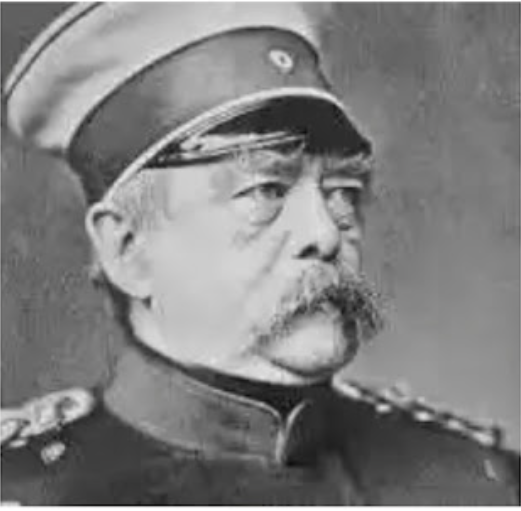
In 1862, the German chancellor Otto von Bismarck was appointed prime minister of Germany by Kaiser Wilhelm I. Bismarck, seeing the Germans under French rule, had the intention of liberating the Germans and unifying them into one political entity.⁴ Perhaps he was frustrated but the French policies in Germany . As a result, the German chancellor decided to unify the rest of the Germanic states under Prussia (the only independent German state). Bismarck reevaluated the foreign policy of Prussia and made it war oriented in a quest for unification. Furthermore, in 1864, the German chancellor formed alliance with Austria-Hungary and defeated Denmark in the Danish war, and took hold of the territories of Schlewigs and Holstein. Bismarck also secured strategic alliances and engaged in some wars, such as the. Austro-Prussia war of 1866, and Franco-Prussian war of 1870-71, which were instrumental in the process of the unification of Germany.¹
BISMARCK'S FOREIGN POLICY
Finally unified, Bismarck maintained a foreign policy of peace and alliances, while isolating France, as it had knowledge of the threat that France may pose if left unchecked. In 1879, Bismarck allied Germany with Austria-Hungary, forming the dual alliance with was meant to even the odds against France, this alliance came to incorporate Italy in 1882, making it a triple alliance. Bismarck foreign policy, one might note, was characterized by strategic military alliance, isolation of France, and maintenance of peaceful relations with other nations of Europe. One might also ask, why Germany was a very powerful war nation. Well, this was as a result of the long experience of warfare in the country's history, it's industrialized nature, as well as the rapid technological advancement of the country, Germany was at the forefront of war, because as at from 1864 down to 1866 and 1871 as well as 1914 and 1945 Germany contributed significantly to warfare in Europe. Unfortunately, in the years leading to the first world war, the German chancellor was sacked and his successor wasn't very much enthusiastic in maintaining the foreign policy of Bismarck, and as a result, France remembered that it was hungry for revenge after the cession of Alsace-Lorraine in 1871 and sought revenge it did.⁵
QUEST FOR EXPANSION
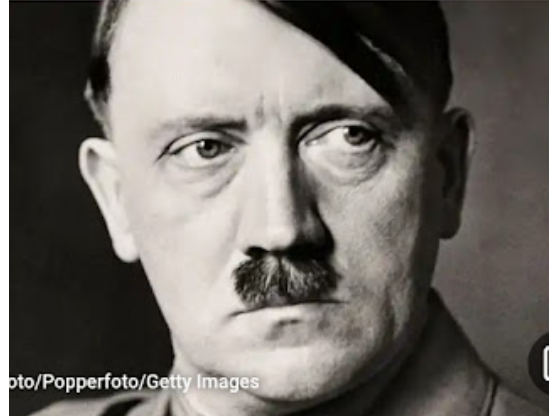
After the first world war, the population of Europe and the whole world at large dropped exponentially. About over 16-18 million people died in the war, and Germany was blamed for the war, and was also made to pay war reparations. The Treaty of Versailles set Germany on the path of economic backwardness. The great economic depression of 1929-39 also took another significant toll on the country's economy and this brought about resentment in Germany was it left the country in ruins.⁶ Thus, after the abdication of Kaiser Wilhelm II and the rise of the Nazi party, the stage was set for WWII. It somewhat seemed that the allied powers felt bad for all the harsh policies imposed on Germany and as a result adopted the inefficient "appeasement policy" which was to help contain Germany's expansionism. But to no one's surprise, the policy didn't work, as leader of the Nazi party– Adolf Hitler was not taking it easy in annexing lands and re-occupation of the Rhineland. It occuped the Czechoslovakia in, and invaded Poland in 1939, prompting Britain and France declare war with them. Similarly, owing to the rapid military build up and alliances with some other authoritarian regimes in Europe, Hitler felt like he was ready for war.⁷ The war however ended with Adolf Hitler's suicidal death, the defeat of Germany, the bombing of Hiroshima on 6th of August, and Nagasaki on 9th of August 1945. After the war, Germany was occupied by four major world powers; the allied powers of the west(United States, United Kingdom, and France), and the Union of Soviet Socialist Republic (USSR).
Germany's foreign policy in the 21st century has however changed to the pursuit of global cooperation, with Germany's membership to of international organizations like the European union, NATO, as well as other international organizations that promotes world peace. German leaders like Frank Walter Steinmeier, Angel Merkel have been recognized diplomatic relations and peaceful conflict resolution.
Written by Okiemute Raphael
SOURCES
1. "History of Germany", Wikipedia, 2025. https://en.m.wikipedia.org/wiki/History_of_Germany
2."World History Textbook", Readium, 2025. https://readium.org
3. "German Unification", World civilization. https://courses.lumenlearning.com/suny-fmcc-boundless-worldhistory/
4. "Otto von Bismarck", Wikipedia, 2025. https://en.m.wikipedia.org/wiki/Otto_von_Bismarck
5. James J. Sheeshan and Theodore S. Hamerow," Germany's Foreign policy, 1870–90", Britannica, July 28,2025.https://www.britannica.com/place/Germany/Foreign-policy-1870-90
6. "World War I", Wikipedia, July 2025.https://en.m.wikipedia.org/wiki/World_War_I
7. Vajiram Editor, "World War 2 (1939-1945), Causes, Consequences, Timeline, Phases", Jan 19,2025.https://vajiramandravi.com/upsc-exam/world-war-2/

You must be logged in to post a comment.