
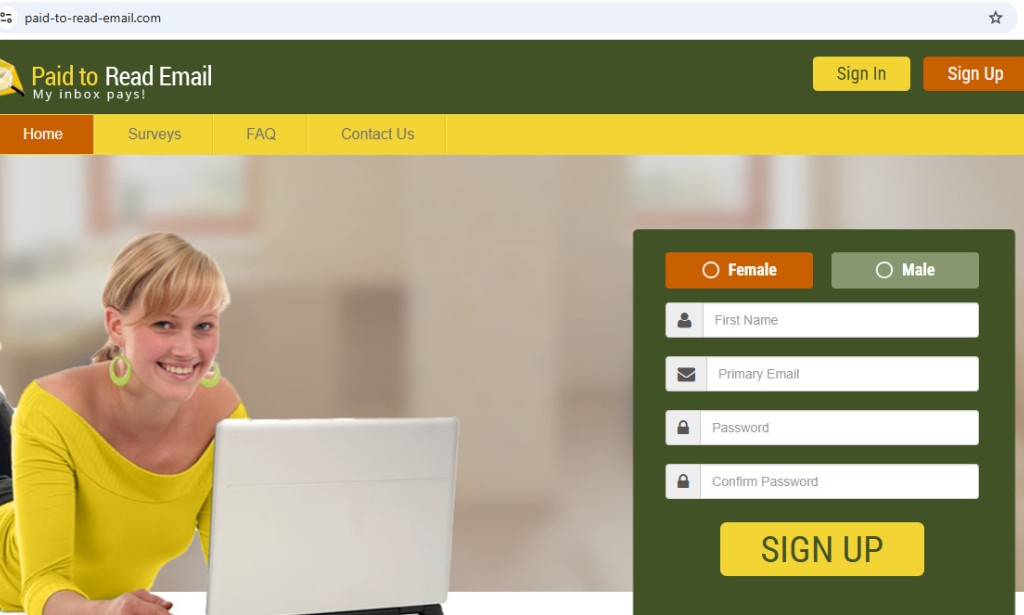
Here’s a full 1,000+ word “Paid to Read Emails” Scam or Legit Review, structured for LodPost, with human-like tone, detailed sections, and SEO-ready content.
Paid to Read Emails Review – Scam or Legit? Full Breakdown
1. Introduction
If you’ve ever searched for ways to make money online, you’ve probably come across platforms that claim you can earn cash just by reading emails. One of these is Paid to Read Emails — a site that promises easy money for simply opening messages or completing small tasks.
On paper, it sounds like a dream: “Get paid $15 or more just for reading emails.” But after exploring the platform and reading hundreds of user experiences online, it becomes clear that this site may not be what it claims to be. In this review, we’ll explore how the site works, its withdrawal system, user complaints, and whether you can actually earn anything.
2. What Paid to Read Emails Is About
Paid to Read Emails is marketed as a Get-Paid-To (GPT) platform, offering users cash rewards for:
-
Reading promotional emails
-
Opening lucky offers
-
Completing surveys
-
Participating in occasional bonus tasks
The site claims that users can accumulate real money — often in USD — and withdraw it via PayPal, Cash App, or other payment methods. However, the reality is very different. Users report severe limitations and barriers that make earning nearly impossible.
3. How the Site Supposedly Works
According to the site:
-
Register for an account
-
Check your email task dashboard
-
Open and read emails to earn small cash amounts
-
Complete surveys or offers to reach the withdrawal threshold
-
Withdraw money once the minimum payout is reached (usually $15 USD)
Reality:
-
Most users receive very few emails per day — often 20 or less.
-
Emails are assigned based on your location/IP address, meaning users in some countries rarely get tasks.
-
Survey tasks often kick users out mid-completion with zero compensation.
-
Once you reach around $5, new emails and tasks stop appearing, leaving you far from the payout threshold.
4. CEO / Developer Information
Paid to Read Emails provides no clear information about its ownership. Unlike legitimate earning platforms, there is:
-
No verifiable company or CEO information
-
No professional support email
-
No registered business address
This lack of transparency is a major red flag, as it makes accountability nearly impossible. Legit platforms usually have clear ownership and contact information.
5. Source of Income – How the Site Makes Money
Paid to Read Emails earns revenue primarily through:
-
Affiliate marketing links in emails
-
Ad views from tasks or surveys
-
Paid offers submitted through partner networks
The problem is that while the platform makes money from users performing tasks, it does not reliably pay users their share. Many tasks are impossible to complete fully, especially surveys, so revenue benefits the site alone.
6. Referral Program Details
Some versions of the platform encourage users to invite friends with promises of earning small bonuses. However, reports indicate:
-
Referral rewards often do not unlock
-
Bonuses may be conditional on tasks you cannot complete
-
Incentives are minor compared to the time spent
The referral system appears designed more to grow the platform’s user base than to reward participants.
7. Withdrawal System & Payment Methods
The minimum payout is typically $15 USD, but reaching that amount is nearly impossible. Users report the following issues:
-
Emails stop once you earn $5
-
Surveys required to reach $15 are inaccessible or disqualify users
-
Withdrawal requests are ignored or rejected
-
Customer support often blames users for “not following rules”
Even when attempting to withdraw, users frequently encounter blocked or expired payouts, with no recourse.
8. Red Flags (Major Scam Indicators)
🚩 1. Extremely Limited Tasks
Emails per day are few, and once you reach a low balance, tasks vanish.
🚩 2. Surveys Do Not Pay
Survey tasks frequently disqualify users or kick them out mid-survey.
🚩 3. High Minimum Withdrawal
The $15 threshold is unreachable if tasks stop appearing at $5.
🚩 4. Staff Blaming Users
Customer support reportedly insults users’ English and claims they did not follow rules — even when tasks are impossible.
🚩 5. Fake Reviews & Defense Tactics
Staff allegedly create fake “honest user” accounts to defend the site on Trustpilot or other review platforms, attacking users who leave one-star feedback.
🚩 6. No Payment Proofs
No verified payouts have been reported by credible users. Lack of proof is a clear warning sign.
9. What Real Users Are Saying
Across platforms like Trustpilot, Reddit, and social media, complaints are consistent:
-
❝ I never received a payout even after weeks of reading emails. ❞
-
❝ Surveys keep kicking me out without payment. ❞
-
❝ Staff insult reviewers and blame users for impossible rules. ❞
-
❝ Emails dry up after $5, so reaching $15 is impossible. ❞
Overall, users agree that the platform wastes time and does not pay real cash.
10. Alternatives (Legit Ways to Earn Money)
If your goal is to earn cash online without falling into scams, consider legitimate platforms like LodPost.com:
-
Get paid for writing articles
-
Earnings based on article views (CPM)
-
Minimum withdrawal: $10
-
Payment via PayPal, crypto, or bank transfer
-
Earn up to $900 per month
-
Transparent revenue-sharing system
-
Free to start — no investment required
Sign up today:
🔗 https://lodpost.com/register
Community: https://t.me/lodpostnew
Unlike Paid to Read Emails, LodPost ensures real payouts and honest support.
11. Final Verdict – Is Paid to Read Emails Legit or a Scam?
❌ Paid to Read Emails is a scam.
Reasons:
-
Extremely limited tasks and emails
-
Surveys that never pay
-
High, unreachable withdrawal threshold
-
Staff blaming users instead of fixing problems
-
No payment proofs or transparent ownership
This platform exists to make money for the site through ads and affiliate offers, not to pay users.
Verdict: Avoid Paid to Read Emails and similar sites. Focus on platforms like LodPost.com that actually deliver on their promises.


You must be logged in to post a comment.