

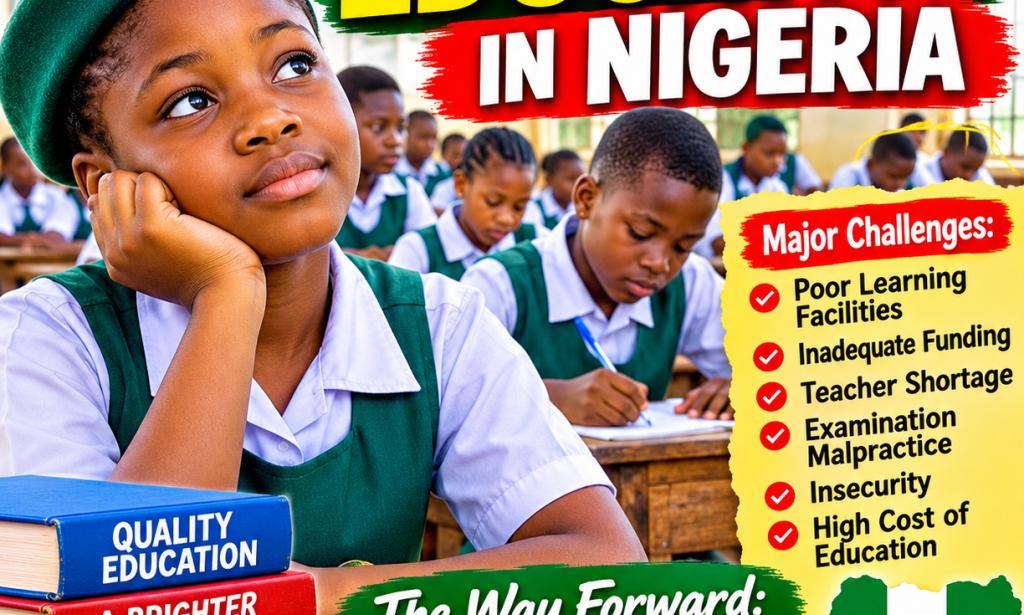
Introduction
Education is one of the most important tools for national development. It helps individuals acquire knowledge, develop skills and become responsible members of society. In Nigeria, education plays a vital role in shaping the future of children, young people and the nation as a whole.
However, despite its importance, the Nigerian education system faces several challenges that affect the quality of learning and the future of millions of students.
Structure of Education in Nigeria
The Nigerian education system is divided into three major levels:
1. Primary Education: This is the foundation of learning. Children acquire basic knowledge in reading, writing, mathematics and other important subjects.
2. Secondary Education: Students build on their primary education and prepare for higher education or other career opportunities.
3. Tertiary Education: This includes universities, polytechnics and colleges of education, where students receive advanced academic and professional training.
Major Challenges Facing Education in Nigeria
Despite the importance of education, several problems affect its development.
1. Inadequate Funding: Many schools lack sufficient financial support to provide quality education.
2. Poor Learning Facilities: Some schools lack classrooms, libraries, laboratories, electricity and other essential facilities.
3. Shortage of Qualified Teachers: Some schools do not have enough trained and experienced teachers.
4. Examination Malpractice: Cheating during examinations affects the credibility and standard of education.
5. Insecurity: Kidnapping, violence and attacks on schools prevent many children from accessing education safely.
6. High Cost of Education: School fees, textbooks, transportation and other expenses make education difficult for many families.
7. Outdated Learning Methods: Some schools still rely heavily on traditional teaching methods without adequate modern technology.
Importance of Education to National Development
Education helps to reduce poverty, create employment opportunities, promote innovation and improve healthcare awareness.
It also helps citizens understand their rights and responsibilities. A well-educated population contributes to economic growth, peace and national development.
Solutions to the Problems
To improve education in Nigeria, the government should increase funding for schools, provide modern learning facilities, employ qualified teachers and improve teachers' welfare.
School security should also be strengthened, and quality education should be made affordable and accessible to every Nigerian child, regardless of their background.
Parents, teachers, communities and private organisations also have important roles to play in supporting education.
Conclusion
The future of Nigeria depends greatly on the quality of education available to its citizens. Although the education system faces many challenges, these problems can be addressed through proper planning, adequate funding and collective responsibility.
Every Nigerian child deserves the opportunity to receive quality education.
Remember: Education is the foundation of a better Nigeria and a brighter future. 🇳🇬❤️












































Godwin Ekpo ✓ Verified Premium Subscriber This member currently has an active Lodpost Premium membership. Premium members enjoy author analytics, a higher daily article limit, and 0% Lodpost commission on eligible donations.Let's Hear Your Opinion! ❤️
If you were the Minister of Education in Nigeria, what is the first thing you would change about the education system?
Share your thoughts in the comment section. Don't forget to like, share and follow for more informative articles!
You must be logged in to post a comment.