
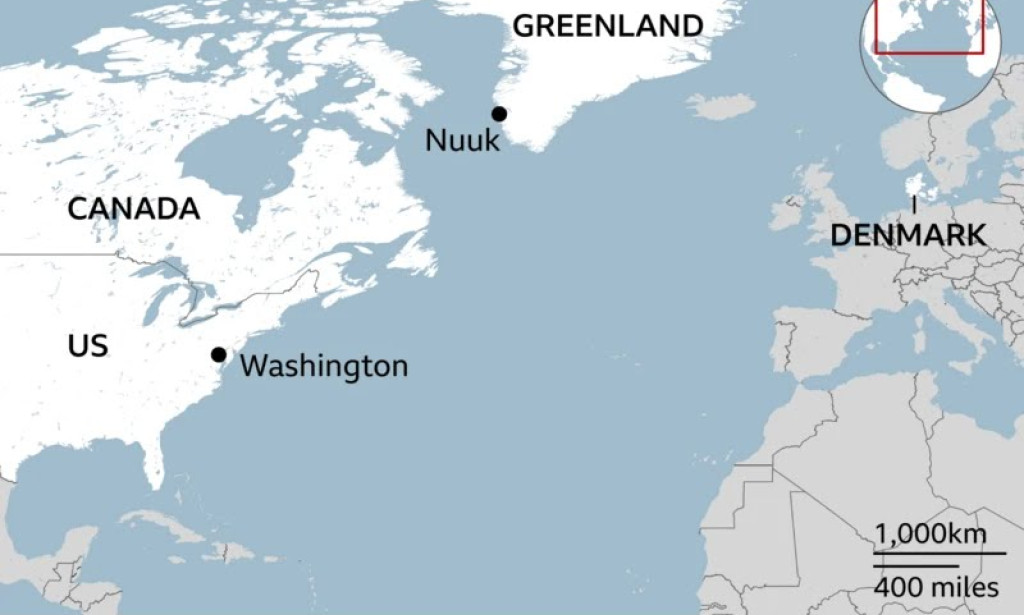
European leaders have voiced strong support for Denmark following renewed controversy sparked by former U.S. President Donald Trump’s remarks about annexing Greenland. The comments, which resurfaced during recent political discussions, have reignited diplomatic tension and raised concerns about sovereignty and international law.
Denmark, which governs Greenland as an autonomous territory, firmly rejected any suggestion of a sale or takeover. European allies quickly rallied behind Copenhagen, emphasizing that Greenland is not a bargaining chip but a self-governing region whose future must be decided by its people alone.
Officials from Germany, France, and the European Union collectively underscored the importance of respecting national borders and democratic principles. EU representatives stated that threats of annexation—whether symbolic or serious—undermine global stability and weaken long-standing alliances built on mutual respect.
Greenland’s strategic importance has grown in recent years due to Arctic shipping routes, rare earth minerals, and geopolitical competition. However, European leaders stressed that strategic interest does not justify territorial claims or pressure tactics.
Denmark’s Prime Minister reaffirmed that Greenland’s status is non-negotiable, adding that cooperation in the Arctic should be based on diplomacy, environmental responsibility, and respect for indigenous communities.
The incident highlights broader concerns about geopolitical rhetoric and its impact on transatlantic relations. While NATO allies continue to cooperate on defense and security, European nations are increasingly vocal about setting clear boundaries when it comes to sovereignty.
As global attention on the Arctic intensifies, the unified European response sends a clear message: territorial integrity and self-determination remain fundamental principles that cannot be challenged by political ambition.

You must be logged in to post a comment.