
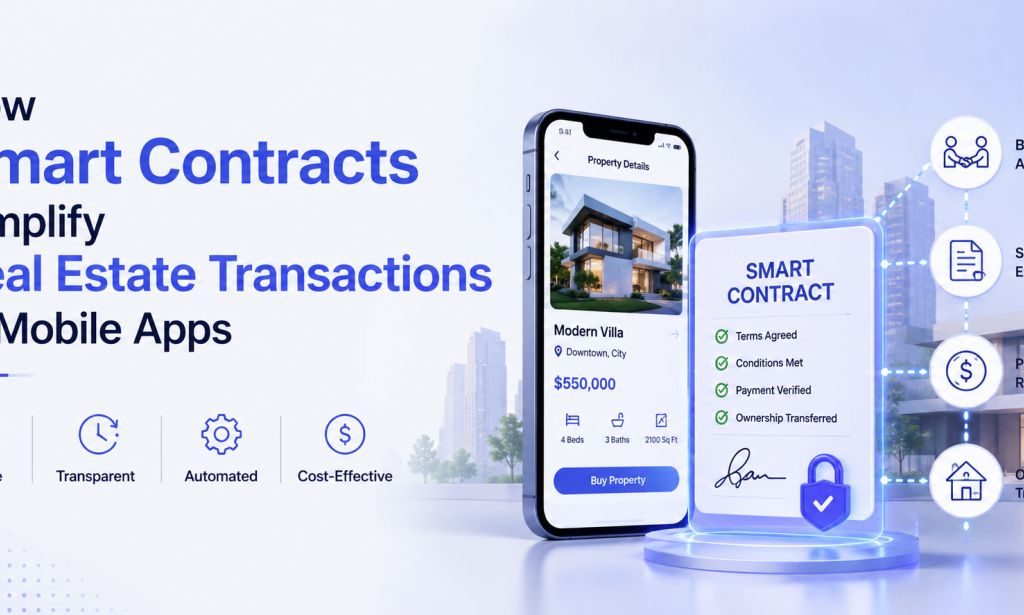
Real estate transactions have traditionally been complex, time-consuming, and heavily dependent on intermediaries such as brokers, lawyers, banks, and government registries. These layers often introduce delays, additional costs, and opportunities for human error or even fraud. However, with the rise of blockchain technology and smart contracts, the real estate industry is undergoing a major transformation—especially within mobile applications.
Smart contracts are self-executing digital agreements stored on a blockchain. They automatically execute predefined actions when specific conditions are met, eliminating the need for intermediaries. When integrated into real estate mobile apps, smart contracts streamline transactions, improve transparency, and significantly enhance user trust.
In this article, we explore how smart contracts are revolutionizing real estate transactions in mobile apps and why partnering with a professional Smart contract development company is essential for building secure and scalable solutions.
How Smart Contracts Simplify Real Estate Transactions in Mobile Apps?
1. What Are Smart Contracts in Real Estate?
Smart contracts are programmable scripts stored on blockchain networks that automatically execute transactions when conditions are fulfilled. In real estate, these conditions could include:
- Verification of buyer funds
- Confirmation of property ownership
- Completion of legal documentation
- Approval from regulatory authorities
Once all conditions are met, the smart contract automatically transfers ownership, releases funds, and updates the property records without manual intervention.
For mobile real estate apps, this means users can complete property transactions directly from their smartphones with minimal friction.
2. Eliminating Middlemen and Reducing Costs
One of the biggest advantages of smart contracts in real estate apps is the reduction or complete elimination of intermediaries. Traditionally, buyers and sellers rely on brokers, escrow agents, and legal advisors, all of whom charge service fees.
Smart contracts automate these processes:
- Escrow services are replaced with blockchain-based conditional payments
- Ownership verification is automated through distributed ledgers
- Legal validation is embedded into the contract logic
As a result, transaction costs decrease significantly, making property deals more affordable for users.
Businesses offering Real estate app development services are increasingly integrating smart contracts to help clients reduce operational overhead and offer more competitive pricing models.
3. Faster Property Transactions
Traditional real estate deals can take weeks or even months due to paperwork, verification delays, and banking procedures. Smart contracts drastically reduce this timeline.
In a mobile app powered by smart contracts:
- Identity verification is completed digitally
- Property records are validated instantly via blockchain
- Payments are executed automatically once conditions are met
This automation allows transactions to be completed in hours instead of weeks, making the entire process more efficient and user-friendly.
4. Enhanced Transparency and Trust
Trust is a major concern in real estate transactions. Buyers often worry about fraudulent listings, hidden charges, or ownership disputes. Smart contracts address these concerns by making every transaction transparent and immutable.
Every action recorded in the smart contract is stored on the blockchain, meaning:
- Data cannot be altered or deleted
- All parties can verify transaction history
- Ownership records are publicly verifiable (based on blockchain type)
This transparency builds confidence among users and reduces disputes significantly.
A reliable Smart contract development company ensures that these contracts are coded securely and comply with legal frameworks to maintain trust and integrity.
5. Secure Digital Payments and Escrow Automation
Payment security is a critical aspect of real estate transactions. Smart contracts act as automated escrow systems within mobile apps.
Here’s how it works:
- Buyer deposits funds into a smart contract
- Funds are locked securely on the blockchain
- Once property ownership is verified, the contract releases payment to the seller
- If conditions are not met, funds are automatically refunded
This eliminates the need for third-party escrow services and reduces the risk of payment fraud or disputes.
6. Streamlined Documentation and Ownership Transfer
Paperwork is one of the most time-consuming aspects of real estate transactions. Smart contracts digitize and automate documentation processes.
Within mobile apps, smart contracts can:
- Store digital property deeds
- Automatically verify legal documents
- Transfer ownership records on blockchain networks
- Ensure compliance with regulatory requirements
This reduces dependency on manual paperwork and government office visits, making property transfers seamless.
Companies offering Real estate app development services often combine blockchain integration with digital document management systems to create end-to-end solutions.
7. Improved Data Security and Fraud Prevention
Real estate fraud, including fake listings and duplicate ownership claims, is a major issue in many markets. Smart contracts enhance security through decentralized storage and cryptographic validation.
Benefits include:
- Immutable transaction records
- Encrypted user identities
- Tamper-proof property listings
- Real-time verification of ownership
Because blockchain data cannot be altered retroactively, fraudulent activities become significantly harder to execute.
8. Integration with Mobile Apps for Better User Experience
Modern users expect convenience and accessibility. Integrating smart contracts into mobile apps allows users to:
- Browse verified property listings
- Initiate transactions directly from their phones
- Track contract status in real time
- Receive automated notifications for each step
This seamless experience improves user engagement and increases platform adoption rates.
A professional Smart contract development company ensures that backend blockchain logic integrates smoothly with intuitive mobile app interfaces, delivering a user-friendly experience.
9. Future of Real Estate with Smart Contracts
The future of real estate lies in decentralization, automation, and digital ownership. As blockchain adoption grows, smart contracts will become a standard feature in real estate mobile apps.
We can expect:
- Tokenized property ownership
- Fractional real estate investments
- AI-powered contract automation
- Cross-border property transactions without intermediaries
With continued innovation, smart contracts will redefine how real estate is bought, sold, and managed globally.
Conclusion
Smart contracts are revolutionizing the real estate industry by making transactions faster, safer, and more transparent. When integrated into mobile applications, they eliminate intermediaries, reduce costs, and simplify complex processes such as payments, documentation, and ownership transfer.
To fully leverage these benefits, businesses should collaborate with an experienced Smart contract development company that understands blockchain architecture and security. Additionally, partnering with experts in Real estate app development services ensures the creation of powerful, scalable, and user-friendly platforms.
As technology continues to evolve, smart contracts will play a central role in shaping the future of digital real estate transactions.


You must be logged in to post a comment.