

Not long ago, artificial intelligence (AI) sounded like science fiction. Today it writes emails, answers customer questions, creates images and helps people code. Naturally, many people are asking the same question: Will AI take my job? The honest answer is more complicated than yes or no.
What the IMF says⬇️
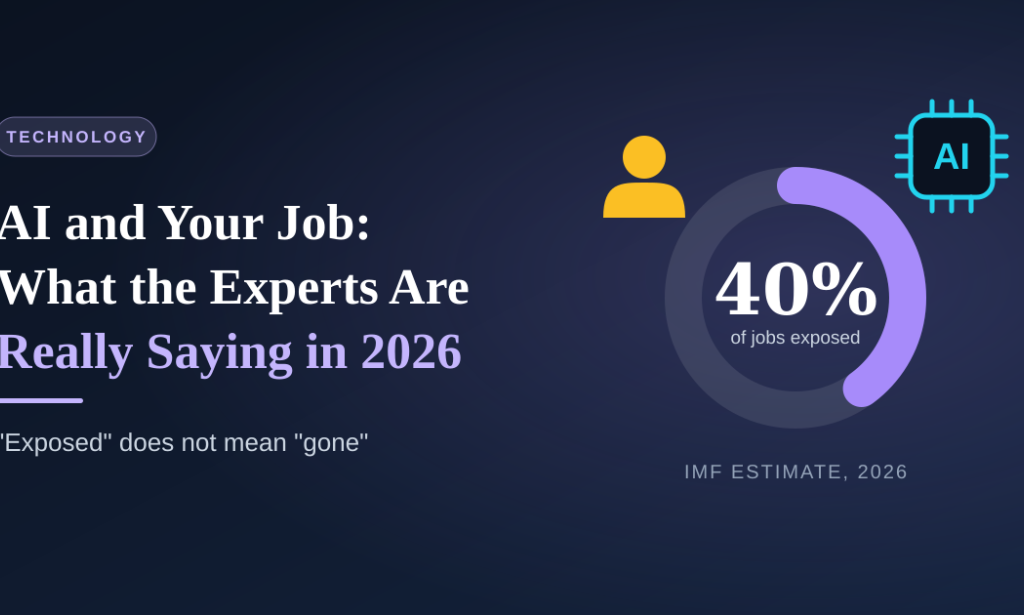
In October 2026, the head of the International Monetary Fund (IMF), Kristalina Georgieva, spoke about AI at the IMF and World Bank meetings. The IMF estimates that about 40% of jobs worldwide could be exposed to AI, and about 60% in advanced economies. She described AI as a "slow-moving tsunami."
"Exposed" does not mean "gone"⚠️
This word matters. Exposed means AI will change the job in some way. For some workers, AI becomes a tool that makes them faster and more productive. For others, parts of their tasks may be replaced, and some roles may shrink. It does not mean 40% of people will be unemployed.
Who feels it first?😓
The IMF's concern is greatest for entry-level workers and recent graduates. Many simple tasks that beginners once did to gain experience, like basic writing, research or data entry, are the same tasks AI handles well. If companies hire fewer juniors, young people find it harder to get that first job and build skills.
What about developing countries?🌎
The picture is mixed. Countries that build chips and AI equipment are expected to benefit most. Countries outside that supply chain could miss out on the gains while still facing higher energy costs. At the same time, the World Bank's president argued that smaller, cheaper AI systems could help developing economies improve farming, healthcare and education. So the outcome is not fixed. It depends on how AI is used.
How ordinary people can prepare
1. Learn to use AI tools. The people most at risk are often not those who lose to AI, but those who refuse to learn it while others use it to work faster.
2. Build skills AI struggles with. Communication, trust, creativity, leadership and hands-on skills are harder to replace.
3. Stack more than one skill. Writing plus design, or sales plus basic data skills, makes you harder to replace than a single narrow skill.
4. Keep learning. Free courses and tutorials let you update your skills without spending much money.
5. Don't panic, and don't ignore it. Past technology changes destroyed some jobs and created others. Preparing early gives you an advantage.
Final thoughts
AI is a powerful tool, and tools change who gets rewarded. The people who adapt, learn and stay curious will be in the best position. The goal is not to compete with AI, but to learn how to work with it.








































You must be logged in to post a comment.