

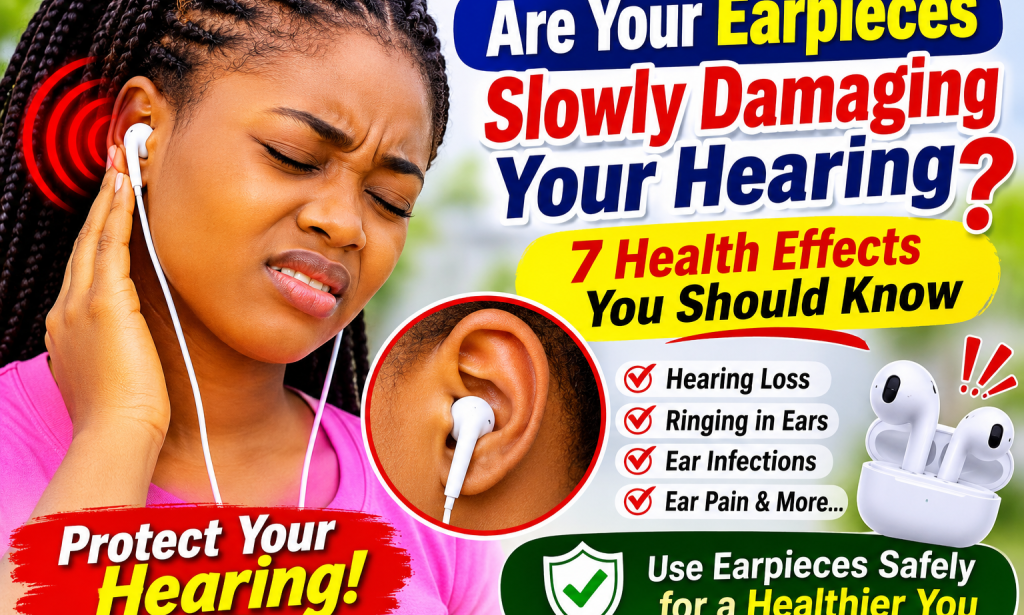
Earpieces, earbuds and headphones have become part of our everyday lives. Many people use them to listen to music, watch movies, make phone calls, attend online classes and enjoy entertainment.
Whether you are travelling, working, studying or relaxing at home, earpieces make listening convenient.
However, have you ever wondered what happens inside your ears when you use earpieces for several hours every day?
Although earpieces are not dangerous when used properly, excessive use, particularly at high volume, can gradually damage your hearing.
Your ears are delicate organs, and protecting them should be a priority.
Let's explore seven possible health effects of excessive earpiece use.
1. Permanent Hearing Loss
One of the most serious dangers of excessive earpiece use is noise-induced hearing loss.
Inside the inner ear are tiny sensory structures called hair cells. These cells help convert sound vibrations into electrical signals that travel to the brain.
Listening to loud music for prolonged periods can damage these delicate cells.
Unfortunately, damaged hair cells in humans do not normally regenerate. This means that hearing loss caused by excessive noise exposure may be permanent.
2. Ringing in the Ears (Tinnitus)
Have you ever removed your earpieces and continued hearing ringing, buzzing or humming sounds in your ears?
This condition is called tinnitus.
It can occur after exposure to loud sounds and may affect one or both ears.
Some people experience occasional ringing, while others experience persistent sounds that interfere with sleep, concentration and daily activities.
Repeated exposure to loud music can increase the risk of developing tinnitus.
3. Ear Infections
Earpieces, especially those inserted directly into the ear canal, can contribute to ear problems when they are not cleaned properly.
Dirt, sweat and moisture can accumulate on earpieces.
Using dirty earpieces may introduce bacteria into the ear canal, increasing the risk of irritation and infection.
Sharing earpieces with other people may also spread microorganisms.
Always clean your earpieces according to the manufacturer's instructions.
4. Ear Pain and Irritation
Wearing earpieces for several hours without taking breaks can cause discomfort.
Some people experience:
- Ear soreness.
- Itching inside the ear.
- Pressure or discomfort.
- Skin irritation.
- Pain around the ear canal.
Earpieces that do not fit properly may worsen these problems.
Choose comfortable earpieces and avoid forcing them into your ears.
5. Headaches
Some people experience headaches after listening to music through earpieces for extended periods.
Loud sounds, prolonged listening and uncomfortable headphones may contribute to headaches in susceptible individuals.
If you regularly develop headaches while using earpieces, reduce your listening time and volume.
6. Earwax Buildup
Earwax is naturally produced by the body to protect the ear canal from dust, dirt and microorganisms.
However, inserting earpieces into the ear canal frequently may interfere with the natural movement of earwax.
This can sometimes push wax deeper into the ear, contributing to blockage.
Symptoms may include:
- A feeling of fullness in the ear.
- Reduced hearing.
- Ear discomfort.
- Ringing in the ears.
Avoid inserting cotton buds or sharp objects into your ears to remove wax.
7. Reduced Awareness of Your Environment
Wearing earpieces while walking, cycling or crossing busy roads can reduce your awareness of surrounding sounds.
You may fail to hear approaching vehicles, emergency sirens, warning signals or people calling your attention.
This can increase the risk of accidents.
Always remain aware of your surroundings when using earpieces outside.
HOW CAN YOU PROTECT YOUR HEARING?
You do not necessarily have to stop using earpieces. The important thing is to use them responsibly.
Here are some practical ways to protect your ears:
1. Keep your listening volume low. The World Health Organization recommends keeping personal listening device volume below 60% of the maximum where possible.
2. Take regular breaks from listening.
3. Avoid listening to music at high volume for long periods.
4. Clean your earpieces regularly.
5. Avoid sharing earpieces with other people.
6. Choose earpieces that fit comfortably.
7. Avoid using earpieces in excessively noisy environments where you may be tempted to increase the volume.
8. Give your ears time to rest after prolonged exposure to loud sounds.
WHEN SHOULD YOU SEE A DOCTOR?
Do not ignore persistent ear problems.
Visit a healthcare professional if you experience:
- Persistent ringing in your ears.
- Sudden hearing loss.
- Severe ear pain.
- Fluid or pus coming out of your ear.
- Persistent dizziness.
- Difficulty hearing normal conversations.
Sudden hearing loss requires urgent medical assessment.
CONCLUSION
Earpieces are useful devices that make communication and entertainment easier. However, using them carelessly can put your hearing health at risk.
Remember that your ears are delicate, and hearing damage caused by excessive noise exposure may be permanent.
Enjoy your favourite music, attend your online classes and make your calls, but always remember to protect your hearing.
Your hearing is precious. Protect it today because you may not get it back once it is permanently damaged.
ENGAGEMENT QUESTIONS
1. How many hours do you use your earpieces daily?
2. Do you sleep while wearing earpieces?
3. Have you ever experienced ringing in your ears after listening to loud music?
4. Do you prefer earpieces or headphones?
Share your thoughts in the comment section. Don't forget to like, comment and share this article to educate others.
Stay informed. Stay healthy!









































You must be logged in to post a comment.