

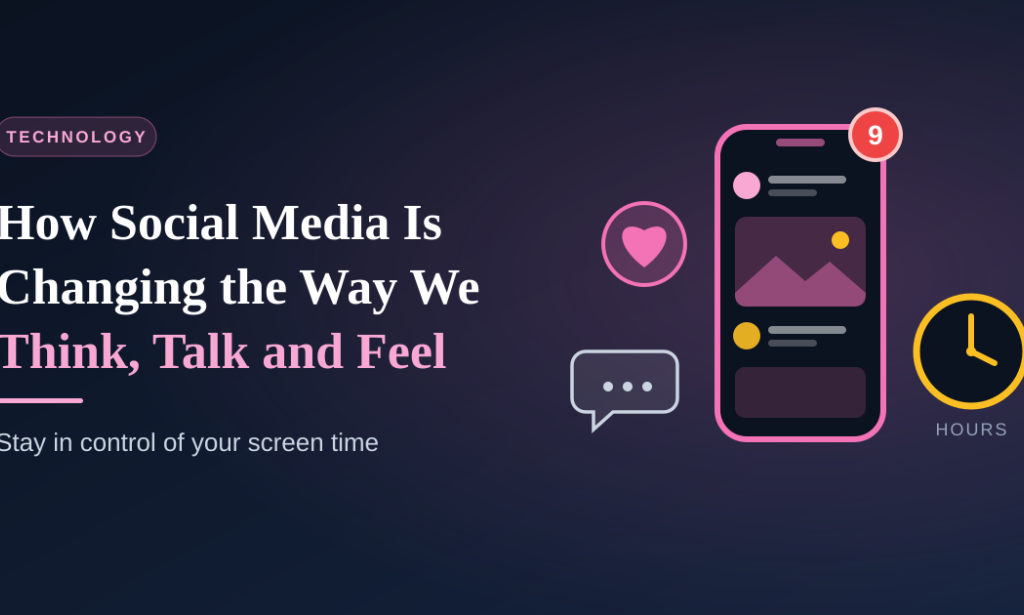
Think about the first thing you do when you wake up. For many people, it is checking their phone. Social media has become part of daily life so quickly that we rarely stop to ask how it is changing us. It has brought real benefits, but it also affects how we think, talk and feel about ourselves.
The good side❤️🩹
• Connection. You can chat with family abroad, reconnect with old friends and meet people who share your interests.
• Information and learning. Free tutorials, news and ideas are a few taps away.
• Opportunities. Small businesses, creators and freelancers can reach customers without a shop or a big budget.
• Voice. Ordinary people can share their stories and opinions with the world.
1. It shortens our attention👀
Feeds are built around short videos and quick posts. After hours of fast scrolling, long tasks like reading a chapter or studying for an hour can start to feel harder. Many people notice that their mind drifts more easily than it used to.
2. It changes how we compare ourselves🤳
People post their best moments: trips, new clothes, success and celebrations. When you compare your ordinary day to someone's highlights, you can feel behind or not good enough, even though you are seeing only a small, polished part of their life.
3. It can make real relationships thinner🤥
Sending a like or a quick comment is easy, but it is not the same as a long, honest conversation. Some people have hundreds of online friends yet feel lonely. A phone on the table during a meal can also make the people in front of us feel ignored.
4. It spreads information quickly, including false information📝
Posts that shock or anger people are shared the most, and not all of them are true. Fake news, edited videos and scams can spread before anyone checks them. It helps to pause before sharing and ask whether the source is trustworthy.
5. It affects sleep and mood 🙍
Scrolling late at night keeps the mind active and delays sleep. Poor sleep, in turn, can affect mood, focus and energy the next day.
How to stay in 🛂
1. Set time limits. Most phones have a screen time tool. Decide how much time you want to spend, and stick to it.
2. Turn off non-essential notifications. Each ping pulls your attention away.
3. Keep your phone away at bedtime. Charge it across the room, and avoid scrolling for the last 30 minutes of the day.
4. Follow people who add value. Mute accounts that make you feel bad or angry.
5. Check before you share. Look for a reliable source first.
6. Make time for real conversations. Call a friend or meet in person, with your phone put away.
7. Use it to build something. Learn a skill, share your work, or grow a small business instead of only consuming content.









































You must be logged in to post a comment.