

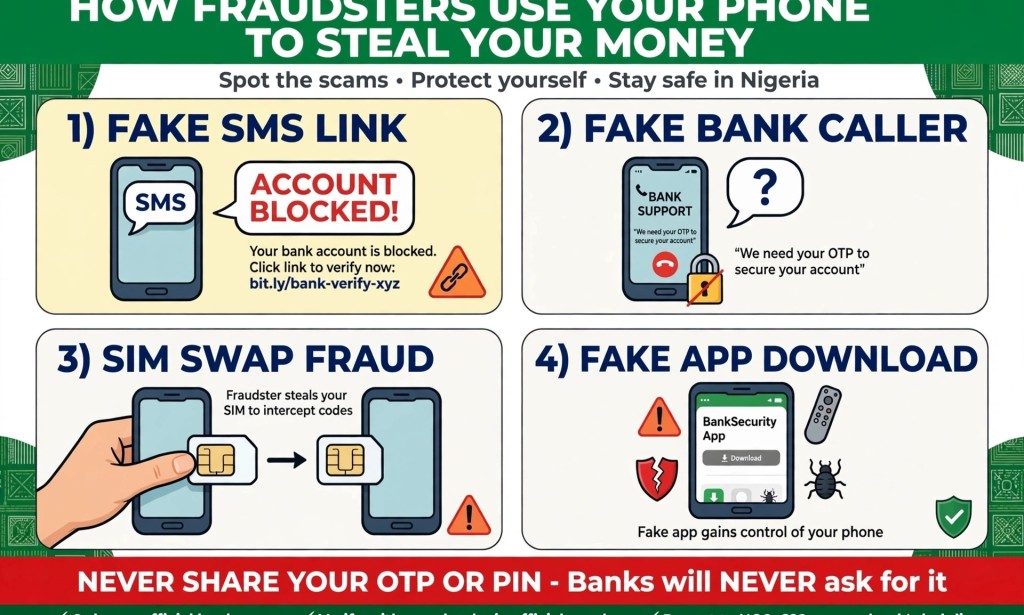
Mobile phones have become one of the most important parts of our daily lives. Almost everyone uses a mobile phone for communication, education, business, entertainment, and financial transactions. With the help of mobile phones, people can easily send and receive money, pay bills, buy goods, and communicate with people from different parts of the world. However, despite these benefits, mobile phones have also created opportunities for dishonest people to carry out fraudulent activities. Many fraudsters now use mobile phones as a tool to deceive innocent people and steal their hard-earned money.
One of the common ways fraudsters use mobile phones is through fake phone calls. They call people and pretend to be bank workers, government officials, business owners, or customer care representatives. During the call, they may tell the victim that there is a problem with their bank account or that their account needs to be verified. They then ask for sensitive information such as bank details, passwords, ATM PINs, and one-time passwords (OTPs). Once they obtain this information, they can use it to access the victim's account and steal money.
Another method is through fake text messages. Fraudsters send messages claiming that someone has received money, won a prize, or needs to update their bank information. These messages often contain suspicious links. When people click on the links and enter their personal information, scammers can use the information to commit fraud. Some messages also create fear by claiming that a person's bank account will be blocked if they do not respond immediately.
Furthermore, social media platforms such as WhatsApp, Facebook, Instagram, and Telegram are also used by fraudsters. Some scammers create fake accounts using pictures and names of other people. They may pretend to be friends, relatives, celebrities, or business owners. They use these fake identities to gain people's trust before asking them for money. In some cases, they hack someone's WhatsApp account and send messages to their contacts requesting urgent financial assistance.
Fraudsters also use fake online businesses to deceive people. They advertise phones, clothes, shoes, electronics, and other products at very cheap prices to attract customers. After convincing people to make payments, they disappear without delivering the goods. Some even block their victims after receiving the money. This has made online shopping risky for people who do not verify sellers before making payments.
In addition, fake investment platforms and giveaway promotions have become common methods of stealing money. Some fraudsters promise people that they will double their money within a short period if they invest in certain businesses or platforms. Others claim that people have won cash prizes, expensive phones, or other valuable gifts. They then demand registration fees, transportation fees, or processing charges before the victims can receive their supposed rewards. Unfortunately, after collecting the money, they disappear.
The activities of these fraudsters have serious effects on individuals, families, and society. Many people lose their savings and the money they worked hard to earn. Some victims become depressed, frustrated, and ashamed because of the financial losses they experience. Families may also suffer when their members lose money through fraudulent activities. Furthermore, phone fraud reduces people's confidence in online banking, mobile transactions, and internet businesses.
Young people are also at risk because many of them spend a lot of time using mobile phones and social media. Some are easily attracted by promises of quick money, fake job opportunities, online investments, and giveaways. This can expose them to financial exploitation and other dangers. Therefore, parents, teachers, and society should educate young people about the dangers of phone fraud and responsible phone usage.
There are several ways people can protect themselves from these fraudulent activities. First, nobody should share their ATM PIN, bank password, or OTP with another person, even if the person claims to be a bank official. Second, people should avoid clicking on suspicious links sent through text messages or social media. Third, they should always verify the identity of anyone requesting money, especially when the request comes through an unfamiliar phone number. People should also avoid making payments to unknown online sellers without checking their credibility.
Another important step is reporting suspicious phone calls, messages, and online accounts to the appropriate authorities. Banks should also continue educating their customers about common fraudulent activities and how to protect their accounts. Government agencies and security organizations should work together to identify and punish people involved in phone-related fraud.
In conclusion, mobile phones are useful devices that have made communication and financial activities easier. However, when used by dishonest people, they can become dangerous tools for stealing money and personal information. Everyone must learn to use mobile phones responsibly, remain alert, and avoid trusting unknown people online. By spreading awareness and taking necessary precautions, we can reduce phone fraud and create a safer digital environment for everyone.











































You must be logged in to post a comment.