

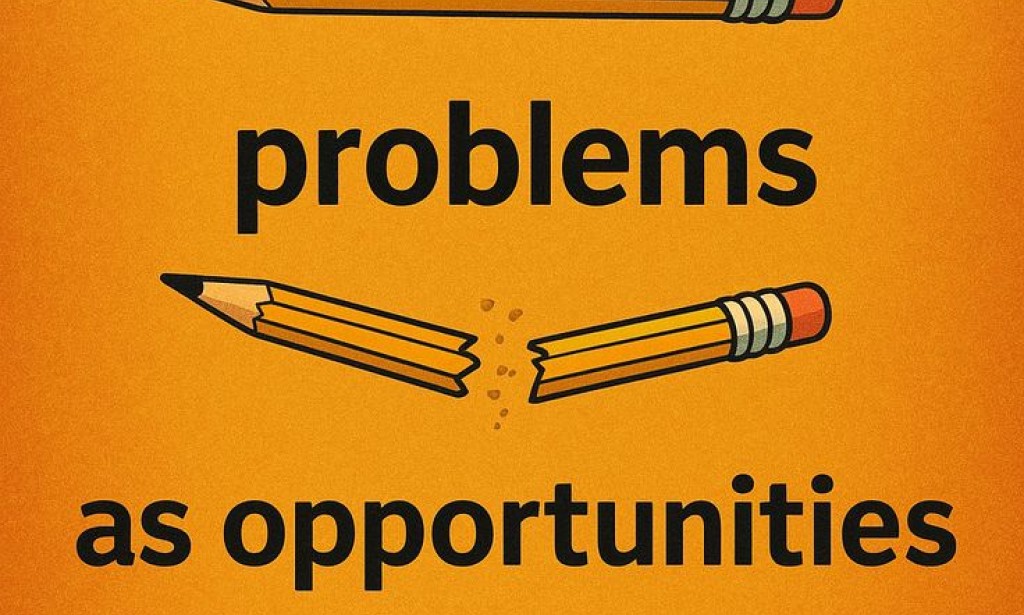
1. Develop a Positive Mindset
The first step towards turning problems into opportunities is developing a positive mindset.
When challenges arise, avoid immediately concluding that everything is over. Instead, take time to understand the situation and consider what you can do differently.
For example, if your business is not making enough profit, do not immediately abandon it. Examine your expenses, customer relationships, product quality, and marketing methods. You may discover areas that need improvement.
A positive mindset helps you focus on possible solutions rather than allowing difficulties to control your thinking.
2. Learn From Your Mistakes
Every mistake can provide an opportunity to learn something valuable.
If you lose money in a business, examine what went wrong. Perhaps you failed to conduct proper research, managed your expenses poorly, or trusted the wrong individuals.
Instead of repeating the same mistakes, use the experience to improve your decisions.
Failure does not necessarily mean you cannot succeed. Sometimes, it simply shows that your approach needs to change.
The important thing is to learn from your experiences and avoid making the same mistakes repeatedly.
3. Identify Opportunities Within Your Challenges
Sometimes, the problems we experience can reveal opportunities that we have not considered before.
For example, if individuals in your community struggle to access certain products or services, you may identify a business opportunity by providing what they need.
If you lose your job, you may use the opportunity to acquire new skills, start a small business or explore other legitimate ways of earning income.
Rather than focusing only on what you have lost, consider what you can build from your current situation.
4. Develop New Skills and Knowledge
Knowledge and skills can help you overcome many challenges in life.
If you are experiencing financial difficulties, learn about budgeting, saving, business management, and additional income opportunities.
If you are struggling to advance in your career, consider acquiring skills that can make you more valuable in the workplace.
You do not need to spend a lot of money to start learning. There are free online courses, educational videos, books and other resources that can help you improve yourself.
The more knowledge you acquire, the better prepared you become to identify opportunities and solve problems.
5. Take Action Instead of Complaining
Complaining about a problem without taking practical steps to solve it will rarely improve your situation.
Although it is normal to feel disappointed when things do not go as planned, you must eventually focus on what you can do to move forward.
For example, if you are struggling to save money, review your spending habits, reduce unnecessary expenses, and establish a realistic savings target.
If your business is losing customers, find out why and consider improving your products, services, or customer relationships.
You may not solve everything immediately, but taking small and consistent steps can produce meaningful results over time.
6. Be Willing to Change Your Approach
Sometimes, the method you are using may no longer produce the results you want.
A business strategy that worked several years ago may become ineffective because of competition or changes in customer preferences.
When this happens, do not be afraid to adjust your plans and explore new methods.
Learn to accept change, consider new ideas, and remain open to better opportunities.
Being flexible does not mean abandoning your goals. It means finding better ways to achieve them.
7. Surround Yourself With the Right Individuals
The individuals around you can influence your attitude, decisions, and ability to overcome challenges.
Surround yourself with individuals who encourage personal development, share useful knowledge, and offer constructive advice.
Learn from experienced business owners, professionals, mentors, and individuals who have successfully overcome similar difficulties.
Do not be afraid to ask questions or seek guidance when necessary. Sometimes, a useful conversation can help you discover a solution you had not considered.
CONCLUSION
Problems are part of life, but they should not prevent you from making progress. Every challenge presents an opportunity to examine your decisions, learn valuable lessons, and discover better ways of moving forward.
Instead of allowing difficulties to destroy your confidence, develop a positive mindset, learn from your mistakes, acquire new skills, and take practical action.
Remember that success does not mean living a life without problems. It means developing the ability to face challenges, learn from experiences, and continue working towards your goals.
The problem you are facing today should not define your tomorrow. With the right mindset, knowledge, patience, and determination, you can turn difficult experiences into valuable opportunities for a better future.












































You must be logged in to post a comment.