
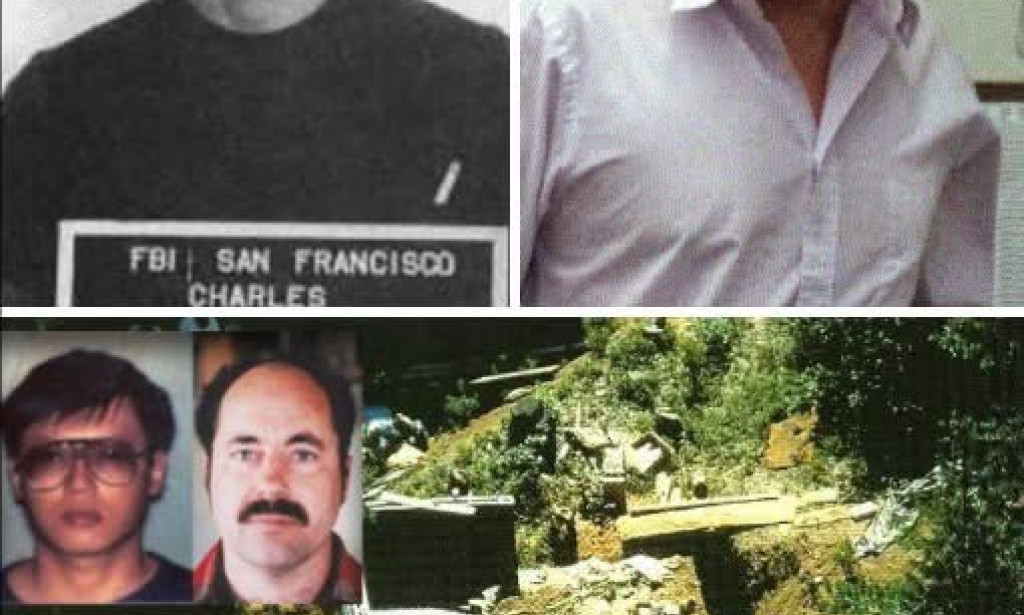
California
-----
American Chinese serial killer, imprisoned and tortured 11 people, self-taught in law and exploiting loopholes, is still alive.
He is an American Chinese serial killer who murdered at least 11 people in California, including children. To evade punishment, he studied American law in depth, constantly exploiting loopholes. His case became the longest and most expensive trial in California history, shocking the United States and even Hong Kong. However, this depraved killer is still alive…
On December 24, 1960, Christmas Eve, Wu Zhida was born in Hong Kong. His father was a high-earning corporate executive.
Therefore, Wu Zhida was a typical "rich second generation," enjoying a material life that his peers envied from a young age. However, he was also a troublemaker. His father often berated him for his mistakes.
Even in his youth, Wu Zhida's actions already revealed signs of antisocial personality disorder. According to his teachers at St. Joseph's College, a prestigious secondary school, he frequently fought with classmates and was very withdrawn. He was later expelled for attempting to set fire to a classroom.
As a wealthy second-generation heir, he never lacked money, but he frequently stole, and at the age of 15, he was arrested for burglary. Perhaps he found theft exciting.
To better discipline him, his father sent him to a boarding school in England. Not long after, Wu Zhida was expelled for stealing other students' personal belongings and returned to Hong Kong.
In 1978, at the age of 18, Wu Zhida was admitted to a university in California, USA. However, he withdrew after one semester. He was subsequently prosecuted for a hit-and-run accident.
To avoid criminal punishment, with the help of a Marine, he forged his identity, claiming to be an American citizen born in Indiana.
Because background checks were not strict during the US military recruitment process at the time, he easily fooled the recruiters and joined the Marine Corps, being promoted to Private First Class the following year.
However, his good fortune didn't last long; his old habit of stealing resurfaced. This time, he broke into the Navy armory and stole a handgun, night vision goggles, and grenades. He was caught, immediately discharged, and imprisoned.
According to his plea agreement, he was paroled in 1984 after serving 18 months.
After his release, Wu Zhida returned to California, where he met Leonard Lake, a fellow Marine who had also served.
Lake was born on October 29, 1945, and was a native of San Francisco, California. Lake's background wasn't as fortunate as Wu Zhida's; he was born into a poor family and grew up amidst his parents' constant arguments.
When Lake was six, his parents divorced. He then went to live with his grandparents and his sister.
Lake's grandmother was a psychopath. After Lake and his sister moved in, she forced Lake to do indecent things to his sister and demanded that he take many private photos of her.
Gradually, the adolescent Lake became obsessed with his sister.
In 1964, after graduating from high school, Lake enlisted in the army, becoming a radar operator. During his service, Lake was diagnosed with schizophrenia-like personality disorder, meaning he frequently experienced confused thinking and emotional instability. He was hospitalized for treatment and discharged in 1971.
After his discharge, Lake attended San Jose State University, but dropped out after one semester and returned to San Francisco, California.
In the following years, Lake entered into a marriage. However, his psychopathic nature was quickly exposed. His wife discovered that Lake possessed handcuffs, whips, and other tools, and that he was having affairs with other women, leading to their divorce.
In 1981, Lake was arrested for theft and received a year of probation. He met his second wife, Clarallin Balazs. After their marriage, the couple moved to a farm and had a child. Besides engaging in unspeakable, perverse activities with his wife daily, Lake had a hobby of collecting weapons.
It is said that when the case was solved, police found a notebook in a secret room in his house, containing some of Lake's thoughts: when the apocalypse came, weapons and women would be indispensable; weapons for defense, women for reproduction. The notebook even contained Lake's imagined nuclear massacre.
It is said that Wu Zhida heard about Lake's arrest for theft at a party and felt that Lake shared his interests. So he managed to contact Lake.
The two hit it off immediately, and Wu Zhida even moved into Lake's house.
One day, Lake accidentally killed his two younger brothers. This man, suffering from schizophrenia, was not afraid; instead, he shared the incident and his feelings with Wu Zhida.
Wu Zhida, who habitually sought thrills through theft and brawling, felt as if a new world had opened up for him after hearing this. The two quickly agreed to a plan, luring a sex worker to their residence, where they tortured, murdered, and dismembered her.
From then on, they built a cabin in the suburbs of California and began their insane killing spree.
Between 1983 and 1985, this deranged duo, Wu Zhida and Lake, murdered at least 25 people. Only the remains of 12 were recovered by police; the whereabouts of the rest remain unknown.
Victims included both men and women, even infants.
Some victims were entire families, all abducted. They would kill the men and children, then imprison the women in secret rooms and subject them to inhuman torture. Some women died within days of being tortured; others survived for months, but this was not a good thing, as they endured months of mental and physical torment.
No matter how compliant they were, death was the ultimate outcome. During this process, Wu Zhida and Lake would also record the acts insanely, categorizing and adding descriptions to each video.
While committing heinous crimes, Wu Zhida never forgot his original vice: theft.
On June 2, 1985, San Francisco police received a call reporting a theft at a grocery store. Upon arrival, the store clerk reported seeing an Asian man steal a pair of pliers, place them in the trunk of a car parked nearby, and disappear.
While police were investigating, Lake appeared next to the car, preparing to drive away.
Police immediately questioned him and found a silenced handgun inside the vehicle. Under the then-current US law, installing a silencer on a handgun was illegal.
He was then taken into custody.
Having killed so many people, Lake knew he would eventually be exposed, but he never expected to be caught because of a small hammer.
So, Lake immediately confessed to Wu Zhida, who couldn't control himself.
After confessing to Wu Zhida, Lake, taking advantage of a moment of inattention, suddenly bit off a piece of his collar and stuffed it into his mouth. Minutes later, Lake began convulsing and eventually went into shock. It turned out he had hidden a cyanide capsule in his collar all along, preparing for this day.
Theft isn't a serious crime, and illegally modifying a gun only carries a few years' sentence, so why would Lake commit suicide?
This aroused the police's suspicion, leading to a city-wide manhunt for Wu Zhida while simultaneously investigating the incident.
During their investigation of Lake's wife, Balazs, the police obtained a crucial clue: Lake frequently stayed with Wu Zhida in a small cabin in the forest, sometimes for more than ten days at a time. Lake never allowed her to go there; something was definitely wrong there.
Following this lead, the police found the cabin, a nearly isolated place.
The nearest neighbor was more than ten kilometers away, so even without a silencer, no one would hear the gunshot. Upon entering, the first thing the police saw was bloodstains all over the living room floor and multiple bullet holes in the walls.
Another set of audio equipment was found, and the investigation revealed it belonged to the nearby Harvey family. It turned out that the Harvey family of three had suddenly disappeared about a year ago.
Before their disappearance, they had placed an advertisement in the newspaper to sell the audio equipment. It seems the Harvey family was likely contacted by Wu Zhida and his gang under the pretense of buying the equipment, and then murdered.
In the bedroom closet, police also found many bloodstained women's underwear. Lifting the mattress revealed the bed frame was stained dark red. The scene was utterly gruesome, like a living hell.
In the backyard storage room, police found an incinerator. The furnace was surrounded by thick fire-resistant material, extremely heat-resistant.
On a wooden table, tools were scattered, including an axe and a saw covered in blood, seemingly used for murder or dismemberment.
With the help of police dogs, police also discovered a secret room, more like a dungeon than a secret room.
Inside were a double bed, a writing desk, several books, and a desk lamp.
Furthermore, 21 different photographs of women were found on one wall. The women, ranging in age from 12 to their early twenties, posed in various alluring and provocative positions, but their faces showed terror, clearly indicating they had been threatened.
Next, a pile of videotapes was found in a drawer. Two tapes were related to the case; one contained footage of Wu Zhida and his accomplice committing the assaults.
The other tape contained recordings of Lake threatening and luring some of the female victims.
Lake had referred to their crimes as "Operation Miranda." This is said to be likely inspired by John Fowles' novel *The Collector*, which tells the story of a reclusive young man who kidnaps and imprisons Miranda, a girl he secretly loves.
The identities of the 21 women in the videos were subsequently confirmed; 15 remained missing, and 6 survived.
Police found human remains in the incinerator. After several days of searching, police recovered approximately 25 kilograms of human bones, teeth, and body tissue, equivalent to at least 11 corpses.
In addition, 12 bodies were found: 7 men, 3 women, and 2 boys.
Based on the videotapes, credit cards, clothing, and other items recovered, the number of victims is estimated to be over 25, but their identities are difficult to confirm because their bodies were not found at the scene.
Furthermore, during the manhunt for Wu Zhida, he seemed to vanish into thin air.
Therefore, the police suspected he had likely fled the United States and issued a global warrant for his arrest.
Meanwhile, news came from the hospital that Lake had died four days after overdosing on drugs. For ordinary people, Lake's death was a cause for celebration, but for the police, it was too soon.
Having committed over twenty murders, one suspect is dead, and another has escaped; all the police can do is continue collecting evidence.
The FBI investigated Wu Zhida's background, learning he was from Hong Kong, and located and closely monitored all his family members living in Canada and other locations, laying a trap.
A few days later, a witness claimed to have seen a man resembling Wu Zhida at a train station in Ontario, Canada. Police showed the man a photograph of the suspect again, and he confirmed that the person he saw was indeed Wu Zhida.
Meanwhile, Canadian police received an anonymous tip from a man who claimed he had previously given Wu Zhida a ride to Chatham Kent, Ontario. The man stated he didn't know who Wu Zhida was at the time and was terrified after seeing the news.
FBI agents, upon receiving this information, immediately flew to Canada and began a thorough search for Wu Zhida, but they couldn't find him.
On July 6, 1985, after 34 days on the run, Wu Zhida was finally arrested in Canada. The reason for his arrest was almost like suicide.
He couldn't resist the temptation again, and was caught red-handed stealing a can of salmon at a shopping mall.
During a fierce resistance with security guards, Wu Zhida pulled out a gun and wounded one of them. He was quickly subdued by Canadian police who arrived at the scene.
Upon hearing the news of Wu Zhida's arrest, the FBI was greatly encouraged and immediately negotiated with Canada to extradite him to the United States for trial.
However, according to the extradition treaty between the two countries at the time, Wu Zhida had to be tried and imprisoned in Canada before being extradited back to the United States. Thus, the two sides dragged on for six years. In September 1991, Wu Zhida was finally extradited back to the United States.
During his imprisonment in Canada, Wu Zhida was under 24-hour surveillance, as police feared he might commit suicide like Lake. During interrogation, Wu Zhida stated that Lake had killed everyone, and that he had only assaulted and imprisoned the victims.
While serving his sentence, Wu Zhida didn't remain idle. He studied American law on his own, knowing full well that a "fierce battle" awaited him upon his return to the United States.
Although Wu Zhida was successfully extradited back to the United States, by this time he was well aware of legal loopholes and used every means to exploit them, resulting in a trial that lasted eight years before he was convicted.
For example, he would make a variety of excuses, such as poor prison conditions, food poisoning, unsuitable glasses, and motion sickness medication that would prevent him from appearing in court to defend himself, all in an attempt to buy time for his acquittal.
He repeatedly fired his defense lawyers because each time a new lawyer joined, the court had to allocate time to review the case. As a result, Wu Zhida's legal fees became astronomical. But don't forget, he was born into wealth.
It is said that this case was the most expensive trial in California history, costing nearly $20 million. The prosecution spent $19 million on the investigation, and the prosecution spent $6 million.
In October 1998, after a 13-year extradition battle and endless delaying tactics, suspect Wu Zhida finally stood in the dock.
The entire trial was extremely difficult. Wu Zhida vehemently denied everything, placing all the blame on the deceased Lake, claiming he was threatened and manipulated by Lake, but insisting that the video recordings they made wouldn't lie.
In February 1999, a California court delivered its final verdict, finding Ng guilty of murdering 11 people—6 men, 3 women, and 2 children. The remaining missing persons could not be identified due to insufficient evidence. The judge sentenced Ng to death.
Following the verdict, Ng and his legal team repeatedly appealed, arguing the sentence was "harsh." This process could take another six years and potentially cost millions more dollars.
Hundreds of pieces of physical evidence and witness testimonies, along with tens of millions of dollars in legal fees, have failed to bring a serial killer to justice.
This sounds truly unbelievable.
To this day, 59-year-old Ng remains incarcerated at San Quentin State Prison and has not been executed.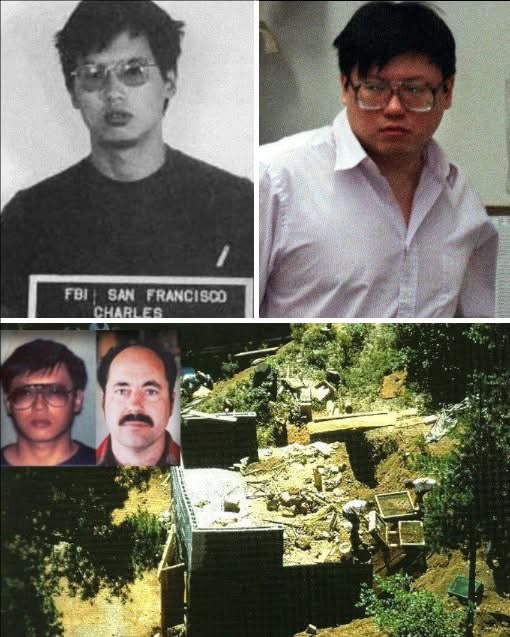


You must be logged in to post a comment.