

Your Eyes Would Fail in the Desert: The Shocking Survival Features Hidden Inside Camel Anatomy
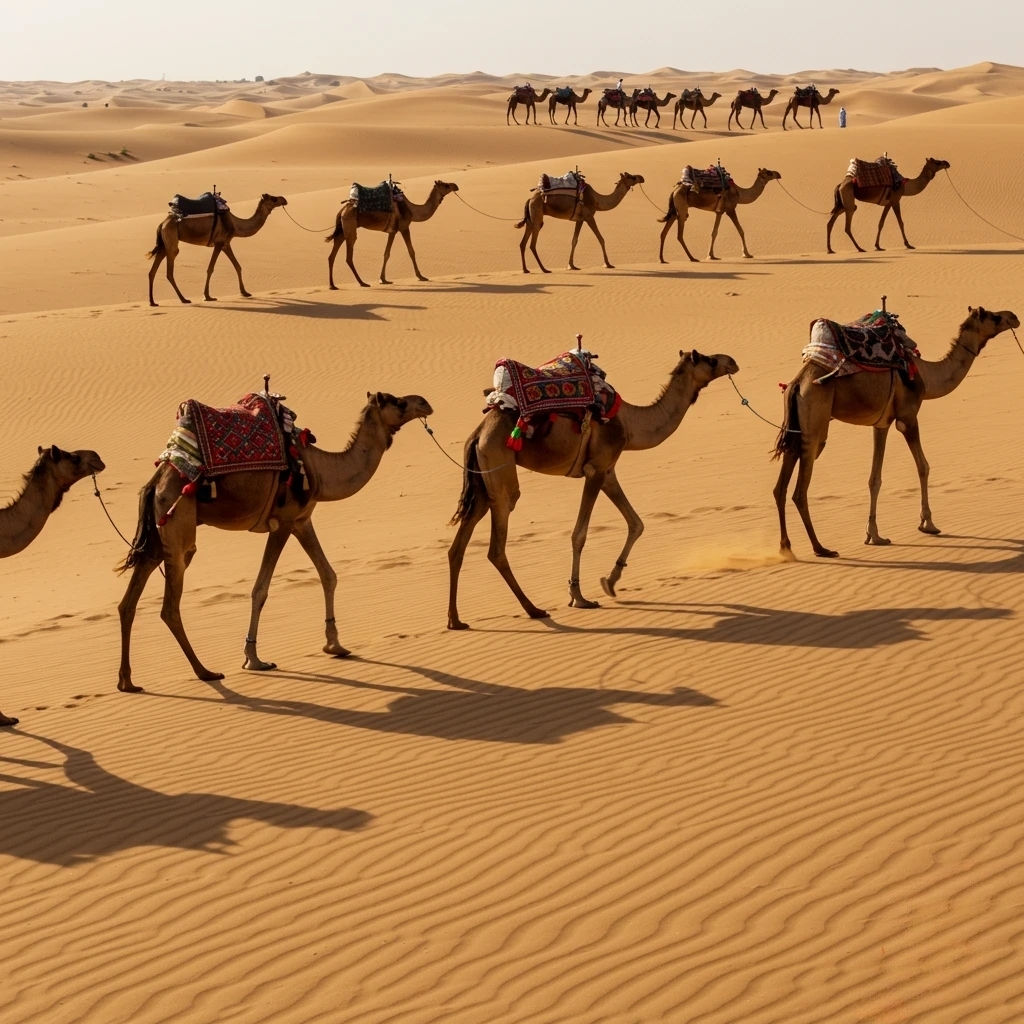
Introduction
Imagine standing in the middle of a scorching desert.
The sun burns your skin. Sandstorms slash across your face like tiny blades. Water is nowhere in sight. Your eyes dry out within hours. Your nose fills with dust. Your body overheats. Eventually, your organs begin shutting down.
Now imagine an animal walking calmly through that same nightmare as if it were designed for it.
Because it was.
Camels are not just desert animals — they are biological survival machines. Every part of their anatomy has evolved to defeat extreme heat, dehydration, sandstorms, and starvation. What looks awkward from the outside is actually one of nature’s most advanced engineering systems.
Their eyes can survive blinding sandstorms. Their blood resists deadly dehydration. Their nostrils literally close against the desert wind. Even their feet are designed to walk on burning sand without sinking.
The deeper scientists study camel anatomy, the more shocking the discoveries become.
This article reveals the hidden survival mechanisms inside camels that make human survival in the desert look almost impossible by comparison.
The Desert Is One of the Deadliest Places on Earth
Before understanding camel anatomy, it helps to understand the environment they were built to survive.
Deserts are brutally hostile because they combine multiple threats at once:
Extreme daytime heat
Freezing nighttime temperatures
Lack of water
Blowing sand
Scarce food
Intense UV radiation
Endless walking distances
Most animals die quickly in these conditions because the human body and many mammal bodies lose water too fast.
Camels evolved differently.
Instead of fighting the desert, their bodies became perfectly synchronized with it.
Camel Eyes Are Built Like Natural Sand Goggles

Double Rows of Eyelashes Protect the Eyes
One of the first things people notice about camels is their unusually long eyelashes.
They are not decorative.
Camels have double rows of thick eyelashes that act like protective filters against blowing sand. During sandstorms, these lashes reduce the amount of dust entering the eyes while still allowing vision.
Humans in the same conditions often experience:
Corneal irritation
Dryness
Blurred vision
Eye infections
Temporary blindness
A camel’s eye structure dramatically reduces these risks.
Transparent Third Eyelids
Camels possess a remarkable feature called the nictitating membrane, often called a third eyelid.
This transparent layer moves across the eye like a windshield wiper.
It allows camels to:
See during sandstorms
Remove dust particles
Keep the eyes moist
Protect the cornea from damage
Humans do not have this level of protection.
In severe desert storms, human eyes can become painfully inflamed within minutes.
Their Eyes Resist Dryness Better Than Ours
The desert air constantly steals moisture from exposed surfaces.
Camel eyes produce specialized tears that help slow evaporation. Their eye structure also reduces direct airflow across the eyeball, preventing excessive drying.
This adaptation is critical because dry eyes in the desert can quickly become damaged eyes.
Camel Nostrils Are Advanced Desert Filters
Camels Can Literally Close Their Nostrils
One of the most shocking survival features in camel anatomy is the ability to close their nostrils.
During sandstorms, powerful muscles partially seal the nostrils shut.
This prevents:
Sand inhalation
Lung irritation
Nasal damage
Water loss through breathing
Humans have no similar defense mechanism.
Their Noses Recycle Moisture
Every breath humans exhale contains water vapor.
In deserts, that moisture loss becomes dangerous.
Camel nostrils contain complex nasal passages that trap moisture from exhaled air and return it to the body.
This means camels lose far less water while breathing.
It is essentially a built-in biological water recycling system.
The Camel Hump Is Not What Most People Think

Camels Do Not Store Water in Their Humps
One of the biggest myths about camels is that their humps store water.
They do not.
Camel humps mainly store fat.
That fat acts as a powerful survival reserve when food becomes scarce.
Fat Storage Helps Prevent Overheating
Most animals store fat throughout the body.
Camels concentrate much of theirs inside the hump.
Why does this matter?
Because spreading fat across the entire body traps heat.
By localizing fat in one area, camels reduce insulation across the rest of the body, helping heat escape more efficiently.
This keeps them cooler in extreme temperatures.
The Hump Can Shrink Dramatically
When food supplies disappear, camels metabolize the fat inside the hump for energy.
As this happens, the hump may:
Shrink
Lean sideways
Become floppy
After feeding again, the hump gradually regains shape.
It acts like a visible survival battery.
Camel Blood Is Almost Supernatural
Most Animals Die From Severe Dehydration
Humans can lose only a limited percentage of body water before organs begin failing.
Dehydration thickens the blood, reduces circulation, and stresses the heart.
Camels evolved extraordinary defenses against this.
Camel Red Blood Cells Have a Unique Shape
Human red blood cells are circular.
Camel red blood cells are oval-shaped.
This unusual design allows them to continue flowing even when the blood becomes thick during dehydration.
Their cells are also extremely elastic.
When camels finally drink water, the cells can rapidly expand without bursting.
Camels Can Drink Massive Amounts of Water Quickly
A severely dehydrated camel can drink enormous quantities of water in a very short time.
For many animals, sudden rehydration after severe dehydration would be dangerous.
Camel physiology is specifically adapted to handle it.
This ability helps them survive unpredictable desert conditions where water may appear only occasionally.
Camel Body Temperature Works Differently

Humans Sweat Too Early
Human bodies try to stay near a fixed internal temperature.
When temperatures rise, we sweat heavily to cool ourselves.
In deserts, this becomes a disaster because sweating causes rapid water loss.
Camels Allow Their Body Temperature to Fluctuate
Camels use a completely different strategy.
Instead of constantly sweating, they allow their body temperature to rise during the day.
At night, they release stored heat as desert temperatures fall.
This reduces water loss dramatically.
It is one of the smartest desert survival adaptations ever evolved.
Thick Fur Actually Helps Them Stay Cool
At first glance, camel fur seems like it would make them hotter.
But the thick coat acts as insulation against external heat.
It reduces direct solar heating and protects the skin from intense sunlight.
Without this fur, their bodies could absorb dangerous amounts of heat much faster.
Camel Feet Are Designed for Burning Sand
Wide Feet Prevent Sinking
Desert sand behaves almost like snow.
Heavy animals can sink deeply into it.
Camels evolved wide, padded feet that spread body weight over a larger surface area.
This helps them:
Walk efficiently on sand
Prevent sinking
Reduce energy loss
Travel long distances
Thick Pads Protect Against Extreme Heat
Desert sand temperatures can become incredibly dangerous.
Camel feet contain thick protective pads that shield tissues from burning surfaces.
Humans walking barefoot under similar conditions can suffer severe burns quickly.
Camels Can Survive Extreme Hunger
Desert Food Is Scarce
The desert is not just dry — it is nutritionally poor.
Vegetation is limited, thorny, and often tough to digest.
Camels evolved digestive systems capable of extracting nutrients from harsh desert plants many animals avoid.
Tough Mouths Allow Them to Eat Thorny Plants
Camels possess thick, leathery mouth linings.
This allows them to chew thorn-covered desert plants without serious injury.
Many animals would suffer painful cuts or infections trying to eat the same vegetation.
Multi-Chambered Stomachs Improve Survival
Like other ruminants, camels have specialized stomach compartments that improve digestion efficiency.
This allows them to maximize nutrition from poor-quality food sources.
In survival conditions, efficiency means life.
Camel Kidneys Are Masters of Water Conservation
Humans Waste More Water Than We Realize
Every time humans urinate or sweat, valuable water leaves the body.
In deserts, excessive water loss quickly becomes deadly.
Camel Kidneys Produce Highly Concentrated Urine
Camel kidneys are incredibly efficient at conserving water.
They produce very concentrated urine containing minimal liquid waste.
Their intestines also absorb large amounts of water from food and waste material.
Even camel feces are unusually dry.
This extreme conservation system helps them survive for long periods with limited water access.
Camels Can Survive Sandstorms That Would Terrify Humans
Sandstorms Are More Dangerous Than They Look
Desert storms are not just windy.
They can include:
Blinding airborne sand
Breathing difficulties
Eye damage
Disorientation
Skin irritation
Humans caught unprotected in major sandstorms face serious danger.
Camel Anatomy Functions Like Survival Armor
During storms, camels rely on multiple built-in defenses simultaneously:
Long eyelashes shield the eyes
Third eyelids protect vision
Closable nostrils block sand
Thick fur protects skin
Strong legs maintain movement
Each feature works together like a complete desert survival suit.
Why Humans Would Struggle in the Same Conditions

Human Bodies Lose Water Too Fast
Compared to camels, humans are poorly designed for desert survival.
We depend heavily on:
Frequent hydration
Stable temperatures
Eye protection
Shade
Cooling mechanisms
Without external tools, humans deteriorate rapidly in harsh desert environments.
Our Eyes Are Especially Vulnerable
Human eyes are highly sensitive to:
Dry air
Sand exposure
UV radiation
Heat
Wind
A severe desert storm can damage human vision quickly.
Camel eyes evolved specifically to resist these exact threats.
That is why the title of this article is not an exaggeration.
Your eyes really would fail in the desert long before a camel’s would.
The Evolutionary Genius of Camel Anatomy
Every Feature Solves a Specific Problem
What makes camels extraordinary is not one adaptation alone.
It is the combination of many survival systems working together.
Their anatomy addresses nearly every major desert threat:
Desert ProblemCamel SolutionSandstormsEyelashes, third eyelids, closable nostrilsDehydrationSpecialized blood cells and kidneysHeatTemperature fluctuation and insulating furSoft sandWide padded feetFood scarcityFat hump and efficient digestion
Nature rarely creates such complete environmental specialization.
Camels Are Living Proof of Evolutionary Adaptation
Over thousands of years, camels developed into one of Earth’s most resilient large mammals.
Their survival mechanisms demonstrate how evolution can shape anatomy with incredible precision.
What seems strange or awkward to humans is actually highly optimized biological engineering.
Fascinating Camel Facts Most People Never Learn

Camels Can Survive Losing Huge Amounts of Water
Camels tolerate levels of dehydration that would kill many other mammals.
Their bodies remain functional even under extreme fluid loss.
They Can Go Days Without Drinking
Depending on temperature, workload, and food availability, camels can survive extended periods without direct water sources.
Their entire biology is built around water efficiency.
Baby Camels Already Possess Desert Adaptations
Young camels inherit many survival features immediately after birth.
This allows them to survive harsh environments from an early age.
Camels Were Essential to Human Civilization
For centuries, camels enabled trade routes across deserts that humans could not otherwise cross safely.
Without camels, many ancient desert civilizations and trade networks may never have flourished.
What Scientists Still Study About Camels
Modern researchers continue studying camel biology for surprising reasons.
Scientists are interested in:
Dehydration resistance
Heat tolerance
Eye protection systems
Blood cell flexibility
Kidney efficiency
Some discoveries may even influence future medical research or survival technologies.
Camel anatomy still holds mysteries scientists are trying to understand fully.
Conclusion
Camels are far more than desert animals.
They are living survival systems built through evolution to master one of the harshest environments on Earth.
Every part of their anatomy serves a purpose:
Eyes protected from blinding sand
Nostrils that conserve moisture
Blood cells built for dehydration
Humps storing survival energy
Feet engineered for burning dunes
Humans entering the same environment without technology would struggle quickly. Our eyes dry out. Our bodies overheat. Our water disappears.
Camels endure because their bodies were designed for a world that would overwhelm most living creatures.
The next time you see a camel, remember:
You are not looking at a simple animal.
You are looking at one of nature’s greatest survival masterpieces.
Frequently Asked Questions (FAQs)
1. Do camels really store water in their humps?
No. Camel humps mainly store fat, not water. This fat acts as an energy reserve when food is scarce. Their real water-saving abilities come from specialized blood cells, efficient kidneys, and moisture-conserving nostrils.
2. How do camels protect their eyes during sandstorms?
Camels have double rows of long eyelashes and a transparent third eyelid called the nictitating membrane. These features shield their eyes from blowing sand while still allowing them to see clearly in harsh desert conditions.
3. How long can a camel survive without water?
Camels can survive for several days — and sometimes much longer — without drinking water, depending on temperature, food availability, and activity level. Their bodies are specially adapted to minimize water loss.
4. Why do camels have wide feet?
Camel feet are wide and padded to help them walk on soft desert sand without sinking. The thick pads also protect their feet from extremely hot ground temperatures.
5. Can camels survive extreme heat better than humans?
Yes. Camels can tolerate much higher body temperature fluctuations than humans. Instead of sweating constantly, they allow their body temperature to rise during the day, which helps conserve water in desert environments.
6. What makes camel blood unique?
Camel red blood cells are oval-shaped instead of round. This unusual shape helps blood flow even during severe dehydration and allows the cells to safely expand when the camel drinks large amounts of water quickly.

You must be logged in to post a comment.