

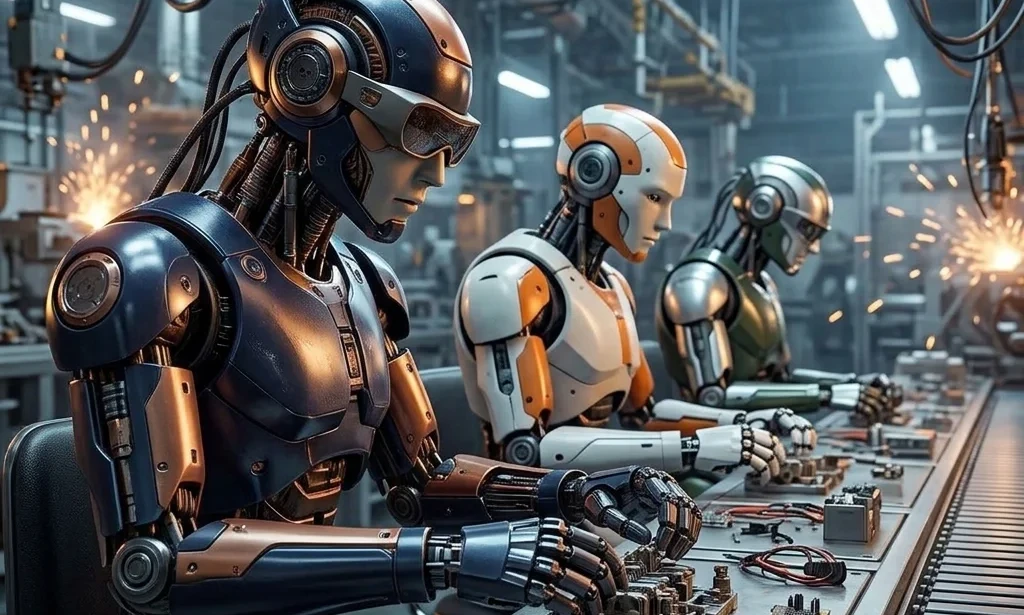
Artificial intelligence, popularly known as AI, is changing the way people live, work, learn and communicate. From helping students with their assignments to assisting business owners with everyday activities, AI is gradually becoming an important part of modern life.
However, when many people hear the word artificial intelligence, they immediately think of ChatGPT or computer-generated answers. What they may not realise is that AI can do far more than answer questions.
Some AI systems can understand pictures, analyse documents, create realistic images, translate languages and even help people manage complicated tasks.
Whether you are a student, teacher, business owner, employee or simply someone interested in technology, understanding these capabilities could open your eyes to new possibilities.
Here are ten things artificial intelligence can do that many people still don't know.
1. AI Can Understand and Analyse Pictures
Did you know you can show certain AI tools a photograph and ask questions about what is happening in it?
Modern AI systems can analyse uploaded images, identify objects, read visible text and describe scenes.
For example, you could upload a photograph of a damaged household appliance and ask the AI to identify the visible problem. You could also show it a picture of a handwritten document and ask it to extract the words.
Teachers can use this feature to prepare lessons, while students can use it to understand diagrams and educational illustrations.
However, AI does not always interpret pictures correctly. Its observations should be checked, especially when the information is important.
2. AI Can Create Images From Written Descriptions
Imagine describing a beautiful African village at sunset and watching an AI tool turn your description into an image.
That is already possible.
Some AI image generators can create pictures from ordinary written instructions. You can describe the people, clothing, background, lighting and atmosphere you want, and the system will attempt to produce an image based on your description.
This can be useful for:
- Authors who need book illustrations.
- Content creators designing thumbnails.
- Teachers preparing learning materials.
- Small businesses creating promotional graphics.
- People who want to explore their creative ideas.
You do not necessarily need advanced drawing skills to get started. Learning how to describe your ideas clearly is often an important part of the process.
3. AI Can Translate Different Languages
Language differences can make communication difficult, particularly when people from different countries need to work together.
AI-powered translation tools can help translate written text and, in some cases, spoken conversations between languages.
For example, someone who speaks English may use an AI translation tool to understand a message written in French, Spanish or another supported language.
Some tools can also help people practise pronunciation and learn unfamiliar words.
This creates opportunities for communication, education, international business and travel.
Nevertheless, translations involving local expressions, cultural meanings or specialised information should be reviewed because AI can sometimes misunderstand context.
4. AI Can Help You Learn Almost Any Subject
Many people think AI is only useful for finding information. But it can also act as a learning assistant.
You can ask an AI tool to explain a difficult mathematical problem, simplify a complicated scientific concept or teach you the meaning of unfamiliar English words.
For example, instead of simply asking, "What is photosynthesis?", a student can request an explanation suitable for a ten-year-old.
The AI can adjust its explanation to suit the learner's level.
It can also generate practice questions, create revision exercises and help users prepare for examinations.
However, students should use AI to understand their subjects rather than depend on it to complete every assignment without learning.
5. AI Can Analyse Large Amounts of Information
Imagine receiving a spreadsheet containing thousands of records and being asked to identify important patterns.
Going through everything manually could take a considerable amount of time.
Certain AI-powered tools can analyse data, identify patterns, organise information and produce summaries. Some can also create charts and explain what the figures may indicate.
Businesses can use these capabilities to study customer feedback, examine sales records and identify areas that may need improvement.
Researchers and students can also use them to organise information and explore data.
The important thing is to check the results, because inaccurate or incomplete data can lead to misleading conclusions.
6. AI Can Help You Communicate With Your Voice
Not everyone enjoys typing long messages. Fortunately, some AI systems allow people to communicate through voice.
You can speak to certain AI assistants, ask questions and receive spoken responses. Some can also transcribe speech into written words.
Imagine recording your thoughts while travelling and asking an AI tool to turn the recording into organised notes.
A busy professional could dictate ideas for a report, while a student could record revision notes.
Voice technology can also make digital services more accessible to people who find typing difficult.
7. AI Can Help People With Disabilities
One of the most meaningful applications of artificial intelligence is its potential to improve accessibility.
Some AI-powered applications can describe pictures aloud, convert speech into text, read written information and generate captions for videos.
These features can assist people with visual, hearing or communication difficulties.
For instance, a person with limited vision may use an image-description tool to understand what is in a photograph.
Someone who has difficulty hearing may benefit from automatic captions during a video presentation.
Although these technologies do not remove every accessibility challenge, they can make certain everyday activities easier and provide people with additional ways to access information.
8. AI Can Help You Write and Improve Your Work
AI can assist with many forms of writing.
It can help users draft emails, organise ideas, improve grammar, summarise long documents and make explanations easier to understand.
For example, a small business owner who struggles to write a professional advertisement can use AI to develop a first draft.
A student can ask it to explain why a sentence is grammatically incorrect, while a teacher can use it to prepare lesson outlines and classroom exercises.
Writers can also use AI to brainstorm story ideas, develop outlines and review their work.
However, AI-generated writing should not automatically be treated as perfect. It may contain mistakes, repetitive expressions or incorrect information. Human judgement and editing remain important.
9. AI Can Help Automate Everyday Tasks
Some people spend hours repeating the same activities every day. AI-powered automation can help reduce some of that workload.
Depending on the tools being used, AI can help organise emails, summarise meetings, sort information, prepare reports and support customer service.
For example, a business may use an AI-powered system to answer common customer questions while directing more complicated enquiries to a human employee.
Some advanced systems can also carry out a series of connected digital tasks when given instructions and the necessary permissions.
However, not every AI tool can perform these actions independently. Some require human approval, and users should be careful when granting access to private information or important accounts.
10. AI Can Help You Create Videos, Music and Other Digital Content
Another interesting ability of modern AI is its capacity to generate different forms of digital content.
Some AI tools can create short videos from written descriptions, generate background music, produce voice-overs and assist with editing existing content.
This can be useful for YouTubers, teachers, advertisers, social media managers and independent creators.
For example, someone preparing an educational video may use AI to develop a script, generate illustrations, create captions and produce a voice-over.
These tools can make content creation more accessible to people who do not have expensive equipment or advanced editing skills.
However, users should respect copyright rules, obtain permission where necessary and avoid presenting AI-generated material as genuine photographs or recordings of real events.
Should We Be Afraid of Artificial Intelligence?
As AI becomes more powerful, many people are worried about its effect on employment, education and human relationships.
These concerns deserve attention. Artificial intelligence can change the way certain jobs are performed, and some tasks may become automated.
However, AI is also creating new opportunities and helping people perform activities that previously required more time, specialised skills or expensive resources.
The important thing is not simply to fear the technology but to understand it.
People who learn how to use AI responsibly may discover useful ways to improve their productivity, develop new skills and solve everyday problems.
At the same time, AI should not replace human judgement, creativity, personal responsibility or the value of genuine human relationships.
Final Thoughts
Artificial intelligence is much more than a tool for answering questions. It can help us understand images, learn new subjects, communicate across languages, analyse information, create digital content and complete certain everyday tasks.
The technology is still developing, and new applications continue to emerge.
You do not need to become a computer expert before exploring AI. Start by learning about one useful feature, experiment with it and understand both its benefits and limitations.
The future will not necessarily belong to people who know everything about artificial intelligence. It may favour those who are willing to learn, adapt and use available technology wisely.
Which of these ten AI capabilities surprised you the most? Have you tried any of them? Share your thoughts in the comments.












































You must be logged in to post a comment.