

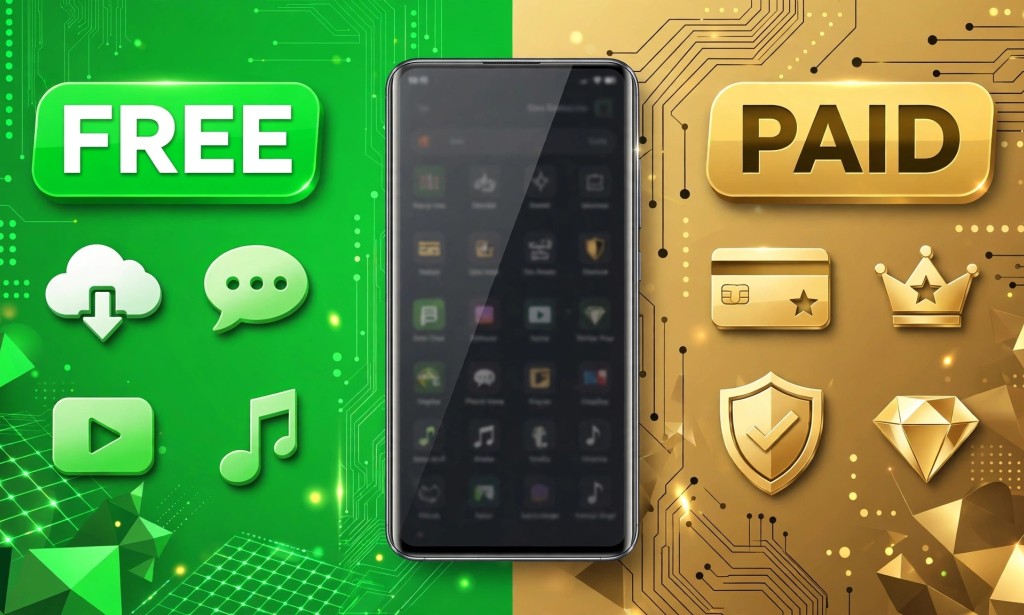
Almost everyone loves free things, especially when it comes to mobile applications. Whether you are downloading a photo editor, a productivity tool, a learning app, or a mobile game, seeing the word "Free" immediately makes the application more attractive. Why pay for something when you can get a similar service without spending money?
However, there is an interesting question worth discussing: Are free applications actually better than paid applications, or are we sometimes paying for convenience and a better experience?
The answer is not as straightforward as many people think.
The Attraction of Free Applications
Free applications have one major advantage: accessibility. Almost anyone with a smartphone and an internet connection can download and start using them without worrying about payment.
This is particularly important for people who want to save money or cannot afford monthly subscriptions. Students, freelancers, small business owners, and everyday smartphone users often depend on free applications to complete important tasks.
There are free tools for editing pictures, managing documents, learning new skills, communicating with people, and even running small businesses.
For someone who knows how to find the right applications, it is possible to accomplish many everyday tasks without spending money on software.
But Are Free Apps Completely Free?
This is where things become interesting.
Some free applications generate revenue through advertisements. Instead of charging users directly, they display adverts while people use their services.
Others offer basic features for free but require payment to unlock advanced functions. This is commonly known as the freemium model.
You might download an application expecting to enjoy all its features, only to discover that the most useful tools are locked behind a subscription.
There are also applications that limit how frequently users can perform certain activities unless they upgrade to a paid plan.
Consequently, an application being free to download does not necessarily mean everything inside it is free.
What Makes Paid Applications Different?
Paid applications often attract users who want additional features, fewer interruptions, and a more complete experience.
Depending on the application, paying may provide access to advanced editing tools, additional storage, professional features, better customer support, or an advertisement-free experience.
For people who depend on particular applications for work, these benefits can sometimes justify the cost.
However, paying for an application does not automatically guarantee quality. Some paid applications offer very little improvement over their free competitors.
This is why researching an application before purchasing it is important.
When Should You Choose a Free Application?
For everyday activities, free applications are often more than sufficient.
If you occasionally edit photographs, create documents, manage personal expenses, or play mobile games, there may be no reason to pay for premium features.
The important thing is finding a reliable application that performs the task you need.
Before downloading, check user reviews, recent updates, permissions, and whether the free version actually includes the features you want.
You should also be careful with applications that promise unrealistic rewards or request unnecessary personal information.
When Is Paying Worth It?
Paying becomes more reasonable when an application provides something you genuinely need and use regularly.
For example, a freelancer who depends on a particular productivity application every day might benefit from its premium features. Similarly, a business owner may find that paying for reliable software saves time and makes daily operations easier.
The key is to consider the value you receive rather than simply assuming that paid applications are better.
If a free application performs everything you need, spending money just because a premium version exists may not be a sensible decision.
So, Which One Is Better?
There is no universal winner.
Free applications are excellent for accessibility, experimentation, and saving money. Paid applications can offer additional convenience, features, and professional capabilities.
Ultimately, the better choice depends on your needs, budget, and expectations.
One thing is certain: You do not have to spend money to enjoy useful technology. Many free applications are genuinely powerful, and some people accomplish impressive things with tools that cost absolutely nothing.
What about you?
Do you prefer free applications, even when they contain advertisements and feature limitations, or would you rather pay for an application that offers a better experience?
Share your opinion. Your experience might help someone else make a better decision.








































You must be logged in to post a comment.