
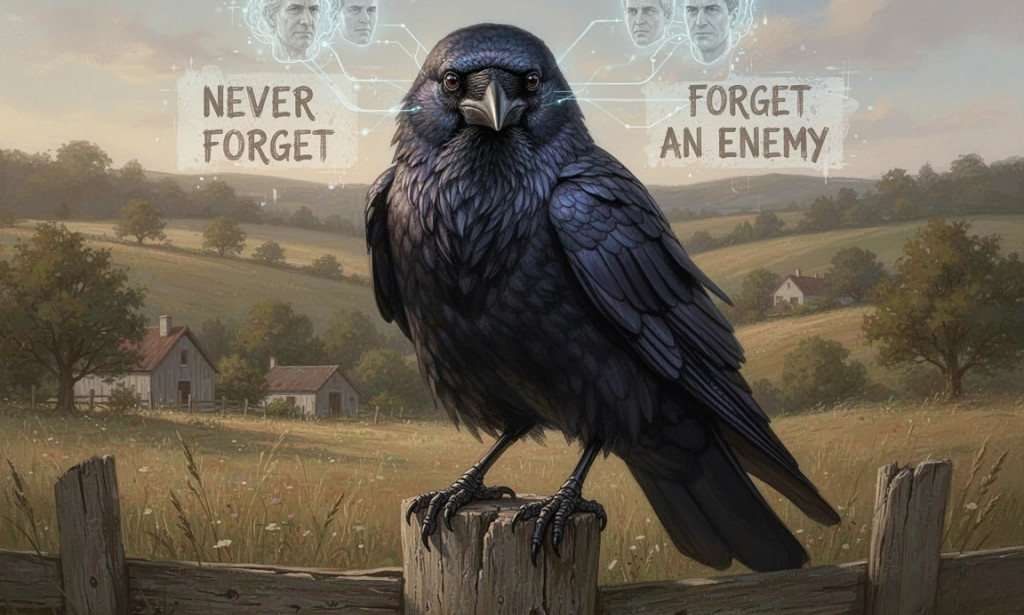
Birds That Can Recognize Human Faces — And Never Forget an Enemy
Introduction
Most people assume birds live by instinct alone. They chirp, fly, hunt, migrate, and survive without much thought beyond basic behavior. But modern research has revealed something astonishing: some birds can recognize individual human faces — and remember them for years.
Even more shocking, certain species can identify people they consider dangerous and warn other birds about them. In some cases, entire flocks learn to avoid a specific person simply because one bird had a bad experience.
This ability is not random. It is tied to advanced memory, social intelligence, and survival instincts that rival some mammals. Scientists now believe many birds possess cognitive abilities once thought unique to primates.
From crows holding grudges to magpies recognizing friendly humans, the bird world is far smarter than most people realize.
In this article, you’ll discover:
Which birds can recognize human faces
How scientists proved it
Why birds remember enemies
How they communicate danger to others
Whether birds can also remember kindness
The surprising intelligence hidden inside avian brains
The Science Behind Facial Recognition in Birds
Facial recognition is a highly advanced mental skill. It requires:
Visual processing
Long-term memory
Pattern recognition
Social learning
For years, scientists believed only humans and a few mammals could do this well. But bird studies changed that assumption completely.
Researchers discovered that some birds use specific parts of the brain to store visual information about individuals. Instead of simply seeing “a human,” they can distinguish one person from another.
That means birds may know:
Who feeds them
Who threatened them
Who captured them
Who destroyed nests
Who behaves safely
This is especially common in highly social bird species.
Why Birds Need to Remember Humans
Survival Depends on Memory
Wild birds constantly face threats from predators, environmental dangers, and humans. Recognizing dangerous individuals helps them survive.
Imagine a crow seeing the same person repeatedly disturbing nests. Over time, that crow learns:
“This human is dangerous.”
The bird may then:
Avoid the person
Alarm-call nearby birds
Dive-bomb the threat
Teach younger birds to fear that face
This memory system improves survival for entire bird communities.
The Most Famous Example: Crows
Crows Can Identify Human Faces
Crows are among the smartest animals on Earth. Scientists discovered they can remember human faces for many years.
One of the most famous experiments happened at the .
Researchers wore different masks while trapping and tagging wild crows for research. The trapped birds became stressed and associated the “dangerous” mask with threat.
Years later, crows still reacted aggressively to people wearing that same face.
Even more incredible:
Birds that were never trapped also attacked the mask
Younger crows learned from older birds
Entire groups recognized the “enemy”
This proved crows share information socially.
Crows Hold Long-Term Grudges
Scientists found some crows remembered threatening humans for over five years.
That means one negative interaction may permanently change how local crows respond to someone.
Signs a crow recognizes an enemy include:
Loud warning calls
Following from tree to tree
Dive-bombing behavior
Gathering other crows
Aggressive staring
Some researchers describe it as a “bird blacklist.”
Crows Teach Their Children About Dangerous Humans
One shocking discovery was cultural learning.
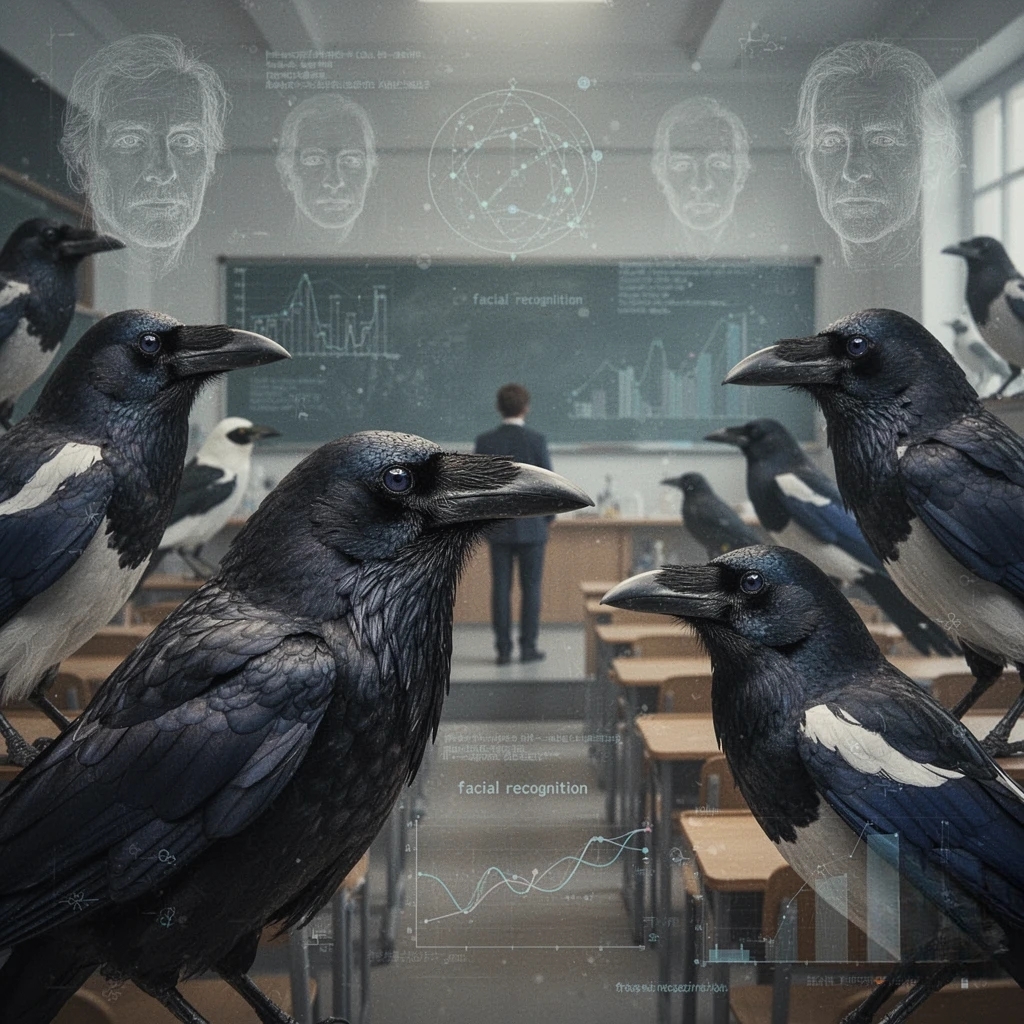
Parent crows pass knowledge to offspring. Young birds learn which humans are dangerous without direct experience.
This means fear can spread through generations.
In a way, crows create social memories within bird communities.
Ravens: The Master Strategists
Ravens Remember Both Kindness and Cruelty
Ravens belong to the crow family and possess extraordinary intelligence.
Studies show ravens can:
Recognize individual people
Remember cooperative humans
Distrust threatening individuals
Solve complex problems
Unlike simple instinctive animals, ravens appear capable of emotional association.
A human who regularly feeds ravens may gain their trust. A threatening human may be avoided for years.
Ravens Have Problem-Solving Skills Similar to Primates
Researchers observed ravens:
Using tools
Planning ahead
Hiding food strategically
Deceiving other birds
Remembering social relationships
Facial recognition likely evolved as part of this advanced intelligence.
Magpies Also Recognize Humans
Magpies Attack People They Remember
Magpies are famous in some countries for swooping at people during nesting season.
But they do not attack everyone equally.
Research suggests magpies can identify specific humans they see as threats.
If someone disturbed a nest previously, the bird may target that same individual later while ignoring others nearby.
This selective aggression shows facial recognition rather than random defense.
Urban Magpies Adapt Quickly
City-dwelling magpies are especially skilled at reading human behavior.
They learn:
Which people feed birds
Which areas are dangerous
Which humans approach nests
Which routes are safest
Urban intelligence in birds is becoming a major research field.
Pigeons Can Distinguish Between People
Pigeons Recognize Clothing and Faces
Many people think pigeons are unintelligent, but studies say otherwise.
Researchers found pigeons can distinguish between different humans, even when clothing changes.
In experiments:
One person behaved aggressively
Another behaved calmly
Pigeons later avoided the threatening individual specifically.
This indicates birds combine facial features, movement, and behavior to identify people.
City Pigeons Become Experts at Human Observation
Urban pigeons constantly interact with humans.
To survive, they learn:
Who feeds them
Who chases them
Which streets are safe
Which crowds are dangerous
Their success in cities may partly come from advanced observational learning.
Mockingbirds Never Forget Nest Threats
Mockingbirds Can Target Specific Humans
Researchers discovered mockingbirds quickly learn to recognize humans who approach nests repeatedly.
In studies:
Scientists approached nests several times
Birds became increasingly aggressive
Mockingbirds targeted the specific person involved
Even when other humans stood nearby, the birds focused on the known threat.
Their Accuracy Improves Over Time
The birds did not simply attack everyone.
Instead, they:
Tracked specific individuals
Increased aggression gradually
Remembered repeat offenders
This level of discrimination demonstrates remarkable visual memory.
Parrots Can Recognize Human Emotions
Parrots Read Faces and Body Language
Parrots are among the world’s smartest birds.
Pet owners often notice parrots reacting differently to various people. Science supports this observation.
Parrots can recognize:
Facial expressions
Voice tones
Emotional states
Familiar individuals
Some parrots bond strongly with certain humans while distrusting others permanently.
Emotional Memory Is Powerful in Parrots
Parrots are highly social animals.
Negative treatment can create long-lasting fear responses, while kindness builds trust.
Bird experts often warn owners:
“A parrot never forgets how you treated it.”
Owls and Human Recognition
Owls Use Observation More Than Social Learning
Owls are less social than crows, but some species still recognize familiar humans.
Captive owls often:
Prefer trusted handlers
Avoid strangers
Respond differently to familiar faces
Their recognition ability likely comes from repeated observation and memory.
How Birds Remember Faces
Birds Have Surprisingly Advanced Brains
Bird brains may look small, but size can be misleading.
Certain birds possess dense neuron concentrations comparable to primates.
Scientists discovered many intelligent birds process information extremely efficiently.
This allows abilities such as:
Facial recognition
Tool use
Memory mapping
Communication
Planning
The Role of the Avian Brain
The bird brain contains specialized regions associated with learning and memory.
Corvids — the family including crows and ravens — have especially advanced cognitive structures.
These birds excel at:
Social learning
Problem-solving
Individual recognition
Adaptive behavior
Birds Communicate Dangerous Humans to Others
Alarm Calls Spread Information
Birds often use alarm calls to warn others about threats.
But in intelligent species, these calls can become highly specific.
A crow spotting a known dangerous human may produce calls that attract nearby birds.
Soon:
More birds gather
Young birds observe reactions
The threat becomes socially recognized
This creates a network of shared knowledge.
Social Learning Creates “Bird Culture”
Scientists increasingly believe birds possess culture-like behaviors.
Knowledge passes socially rather than genetically.
Examples include:
Food strategies
Migration routes
Tool use
Predator recognition
Human identification
Some bird communities maintain traditions for generations.
Can Birds Recognize Friendly Humans?
Yes — Birds Remember Kindness Too
Not all memories are negative.
Birds can also remember humans associated with:
Food
Safety
Rescue
Gentle treatment
Crows, ravens, parrots, and pigeons often approach trusted humans more comfortably over time.
Some birds even leave gifts for humans who feed them regularly.
Reported “gifts” include:
Buttons
Small sticks
Shiny objects
Pieces of metal
This behavior may represent social bonding.
Birds That Bring Gifts to Humans
Crow Gift Stories Fascinated Scientists
One famous case involved a child feeding neighborhood crows daily.
Over time, the birds began leaving objects behind.
While scientists debate whether this is intentional gratitude, the behavior clearly demonstrates:
Recognition
Social association
Repeated memory
The birds knew exactly who the human was.
Why Bird Intelligence Was Underestimated
Old Myths About “Bird Brains”
For decades, “bird brain” meant stupidity.
Modern science completely overturned this belief.
Birds now rank among the most intelligent non-human animals.
Some species outperform dogs and even certain primates in specific tasks.
Birds Evolved Intelligence Differently
Bird brains are structured differently from mammal brains.
But different does not mean inferior.
Evolution created multiple paths toward intelligence.
Birds developed highly efficient neural systems that support:
Memory
Learning
Communication
Recognition
Social behavior
The Evolutionary Advantage of Facial Recognition
Smart Birds Survive Better
Recognizing humans provides enormous survival benefits.
Birds living near humans face constant decisions:
Is this person dangerous?
Will this human provide food?
Should I flee or stay?
Mistakes can be deadly.
Natural selection therefore favors birds capable of accurate recognition.
Cities Are Accelerating Bird Intelligence
Urban environments challenge birds daily.
City birds must navigate:
Traffic
Crowds
Buildings
Noise
Human behavior
Birds that adapt survive and reproduce more successfully.
Some scientists believe urban life is accelerating cognitive evolution in birds.
Birds With the Strongest Memories
Top Bird Species Known for Human Recognition
Here are some of the best-known birds capable of recognizing people:
Bird SpeciesRecognition AbilityMemory StrengthCrowsExtremely advancedVery long-termRavensAdvanced social memoryExceptionalMagpiesNest-threat recognitionStrongParrotsEmotional recognitionVery strongPigeonsUrban human recognitionModerate to strongMockingbirdsThreat trackingStrong
Strange Real-Life Encounters
People Report Being Followed by Crows
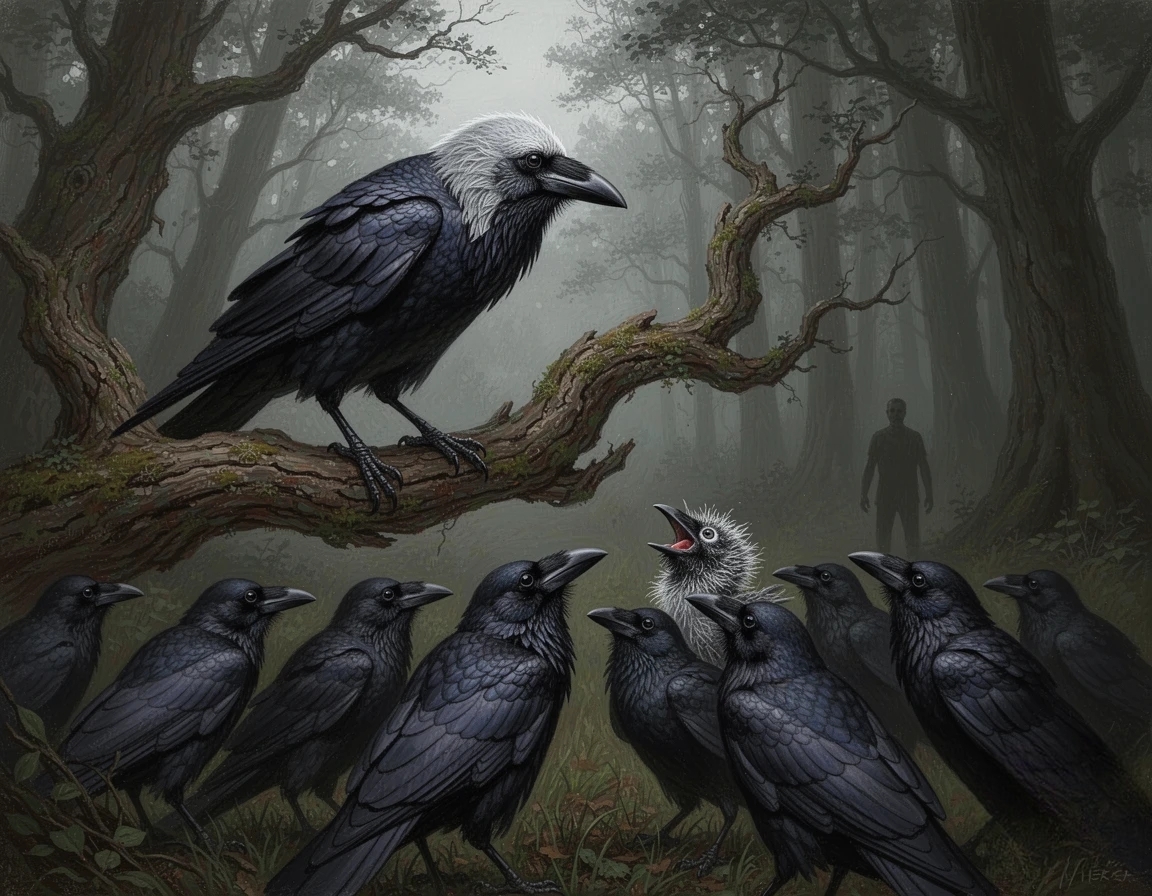
Many individuals describe unusual encounters after angering crows.
Stories include:
Crows following people for blocks
Groups gathering overhead
Repeated scolding calls
Sudden dive-bombing
While sometimes exaggerated, research confirms crows truly remember faces.
Friendly Birds Also Return Repeatedly
Bird enthusiasts often develop long-term relationships with wild birds.
Examples include:
Ravens visiting the same homes
Crows waiting for familiar feeders
Parrots greeting favorite humans
Pigeons recognizing daily commuters
Bird memory shapes these interactions.
What This Means About Animal Intelligence
Birds Challenge Human Assumptions
The idea that a bird can:
Recognize your face
Judge your behavior
Warn others about you
Remember you for years
…forces humans to rethink animal intelligence completely.
Birds are not simple creatures driven only by instinct.
Many possess:
Individual awareness
Social complexity
Emotional learning
Long-term memory
How Humans Affect Bird Behavior
Human Actions Leave Lasting Impressions
People often underestimate how much wildlife observes them.
Repeated human behavior changes bird responses dramatically.
Positive actions can build trust.
Negative actions can create fear that spreads socially through bird populations.
Ethical Lessons From Bird Intelligence
Wildlife Notices More Than We Think
Bird intelligence reminds humans that animals are active observers of the world.
They are not merely background creatures.
Our behavior influences their survival, stress, and adaptation.
Understanding bird cognition encourages more respectful treatment of wildlife.
Conclusion
Birds that recognize human faces reveal one of nature’s most astonishing truths: intelligence evolved far beyond humans and mammals.
From crows holding grudges for years to parrots remembering emotional treatment, birds demonstrate memory and awareness once thought impossible for creatures with tiny brains.
The next time a crow stares at you from a rooftop or a magpie watches from a fence, remember:
It may not just be looking at “a human.”
It may be looking at you specifically — and remembering exactly who you are.
Frequently Asked Questions (FAQs)
Can birds really recognize human faces?
Yes. Scientific studies show species like crows, ravens, pigeons, magpies, and mockingbirds can distinguish individual humans using facial features and behavior patterns.
Which bird has the best memory for humans?
Crows are considered among the best at recognizing and remembering human faces, sometimes for many years.
Do birds remember kindness?
Yes. Many intelligent birds remember humans who regularly feed or protect them and may become more trusting over time.
Why do crows attack certain people?
Crows may identify someone as a threat based on past experiences such as disturbing nests, trapping, or aggressive behavior.
Can birds teach other birds about dangerous humans?
Yes. Research suggests birds like crows communicate threats socially, allowing younger birds and nearby flocks to learn who to avoid.
Are birds smarter than we once believed?
Absolutely. Modern studies show many birds possess advanced memory, problem-solving skills, social learning, and emotional intelligence.


Content it is true bird are smart
Soooo confused
Birds are smart
You must be logged in to post a comment.