
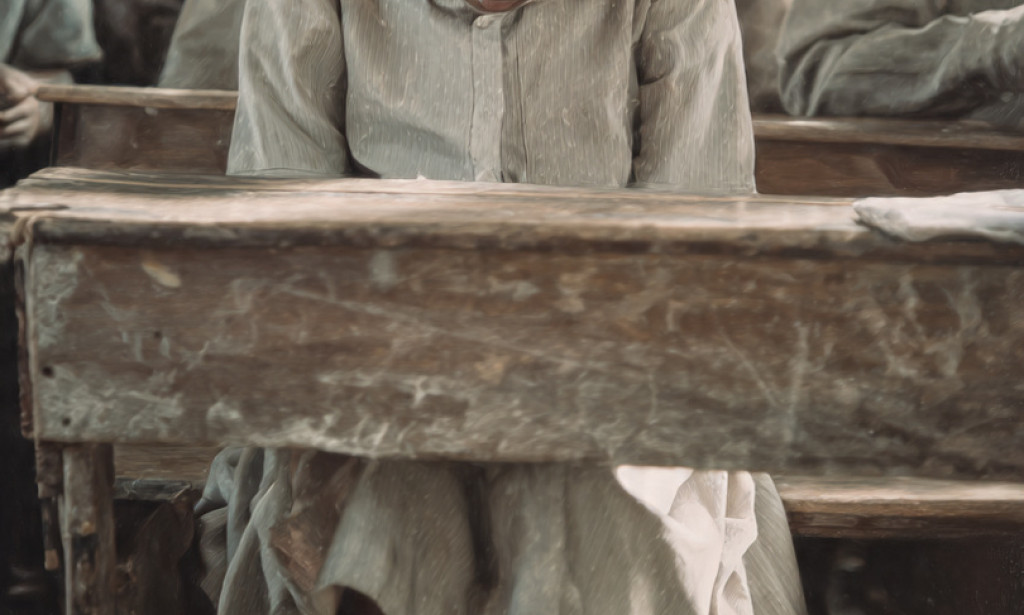
It was 12 the day I understood what shame felt like.
It wasn’t when the other kids laughed at my torn uniform. It wasn’t when I carried water for three hours before school. It was the day my father stood outside the shoe shop, holding my hand, and said, “Next month, Chioma. I promise.”
He never said it again.
My father was a bricklayer in Enugu. Strong hands, bent back, and eyes that had forgotten how to dream. Every evening he came home covered in cement dust, his lungs heavy, his pocket lighter. My mother sold akara by the roadside until the smoke in her eyes made her stop. We weren’t poor by choice. We were poor because life didn’t ask if we were ready.
I wore plastic sandals to school for two years. When it rained, they slapped against my feet and filled with mud. The girls in class had canvas shoes, white and clean. They whispered when I walked past. I learned to walk with my head down. Not because I was shy, but because I was tired of pretending it didn’t hurt.
The turning point wasn’t big. It was small, and it happened on a Tuesday.
I failed a math test. 18%. My teacher, Mr. Obi, didn’t scold me. He called me after class and said, “Chioma, you’re smart. But smart people who are tired cannot think. What’s wrong?”
I told him everything. About the water, about the sandals, about my father’s promise. I expected pity. I got something better.
“Come back tomorrow at 6 AM,” he said. “We study before school. And wear those sandals. They’re honest.”
For six months, I woke up at 4:30 AM. I fetched water, studied with Mr. Obi, and sat for class with red eyes and a full brain. My grades climbed. 18% became 45%. Then 67%. Then 89%.
In JSS 3, I won the state essay competition. The prize was ₦20,000 and a scholarship for senior secondary school.
The first thing I did with the money was not buy food. Not pay rent. I walked to the same shoe shop from three years ago. My father was with me again. His hair was grayer. His hands were shakier.
“Daddy,” I said, “pick any shoe you want.”
He looked at the prices, then at me, and his eyes filled. “Chioma, you don’t have to—”
“I know,” I said. “But I want to.”
He chose a simple pair of black leather shoes. Not expensive. But real leather. The kind that doesn’t tear in the rain.
That night, he wore them to church even though we had nowhere to go. He just sat by the door, looking down at his feet, smiling like a man who had finally kept a promise.
I’m in university now. Studying Education. I still have those plastic sandals. They’re in a box under my bed. Not as a reminder of shame, but as a reminder of strength.
Strength isn’t about never falling. It’s about getting up when nobody is watching. It’s about a 12-year-old girl who decided that her father’s broken promise would not become her broken future.
If you’re reading this and you feel stuck, hear me: Your “next month” might be late. But it’s not dead. Keep showing up. Keep studying in the dark. Keep walking in those sandals.
One day, you’ll buy the shoes. And it will mean more than any victory you win easily.


You must be logged in to post a comment.