

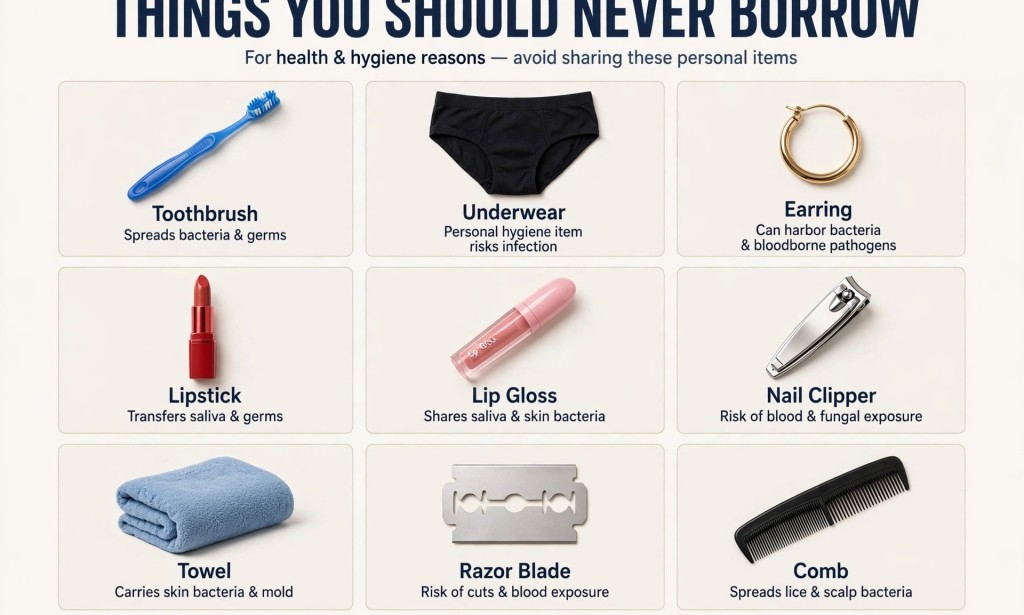
Things You Should Never Borrow From Other People to Protect Your Health
Borrowing things from friends, neighbours, colleagues or family members is something many people do. Sometimes, you may need something urgently and decide to use another person's belongings because you do not have yours available.
Although borrowing can be helpful, not everything should be shared. Some personal belongings can carry bacteria, fungi, viruses and other microorganisms that may affect your health.
Here are 10 things you should avoid borrowing from other people.
1\. Toothbrushes
A toothbrush is one of the most personal items anyone can own. Sharing a toothbrush can expose you to bacteria and viruses through saliva and traces of blood from the gums. Always use your own toothbrush, even when you are visiting someone.
2\. Underwear
Underwear should never be borrowed or shared. It comes into direct contact with sensitive parts of the body and may carry sweat, bacteria and other microorganisms. Wearing someone else's underwear can increase the risk of irritation and certain infections.
3\. Towels
Towels absorb moisture from the body and can carry germs, especially when they remain damp for a long time. Sharing towels may spread certain skin infections, including fungal infections. It is better to have your own bath towel.
4\. Razors and Blades
Never borrow another person's razor or shaving blade. These items can cause tiny cuts on the skin and may carry traces of blood. Sharing contaminated shaving equipment can expose you to serious blood-borne infections.
5\. Hairbrushes and Combs
Hairbrushes and combs can collect dead skin, hair and other particles. Sharing them may spread head lice and certain scalp infections. Keeping your own comb is a simple way to maintain good personal hygiene.
6\. Earrings
Earrings come into contact with the ears, and some pass through pierced skin. Borrowing earrings that have not been properly cleaned can expose you to bacteria and cause irritation or infection.
7\. Shoes and Slippers
Sharing shoes and slippers may expose your feet to fungi that cause conditions such as athlete's foot. Footwear can also collect sweat and moisture, creating an environment where some microorganisms survive.
8\. Lipsticks and Lip Gloss
Lipsticks and lip glosses come into direct contact with the lips. Sharing them may spread infections such as cold sores, especially when the products are used by someone with an active infection.
9\. Nail Clippers
Nail clippers can collect dirt, fungi and bacteria. If they accidentally cut the skin, they may also come into contact with blood. Sharing unclean nail clippers can increase the risk of infections.
10\. Eye Makeup
Mascara, eyeliner and other eye makeup products should not be shared. They can become contaminated with bacteria and may spread eye infections. Always use your own eye makeup products and avoid using products that are expired or contaminated.
Why You Should Avoid Borrowing Personal Belongings
Your health should always come first. Some items may look clean but still carry microorganisms that cannot be seen with the naked eye.
Before borrowing anything, consider whether it comes into contact with your mouth, skin, hair, blood or other sensitive parts of your body.
If an item is designed for personal use, it is safer to keep it personal. Reusable items that can be shared should be properly cleaned and disinfected when appropriate.
Conclusion
Borrowing is not necessarily a bad habit, but knowing what to borrow and what to avoid is important.
Toothbrushes, underwear, towels, razors, combs, earrings, shoes, lipsticks, nail clippers and eye makeup are among the personal belongings you should avoid sharing.
Remember, protecting your health starts with small everyday decisions. Sometimes, the best thing you can do for yourself is to use your own belongings rather than borrow from someone else.







































You must be logged in to post a comment.